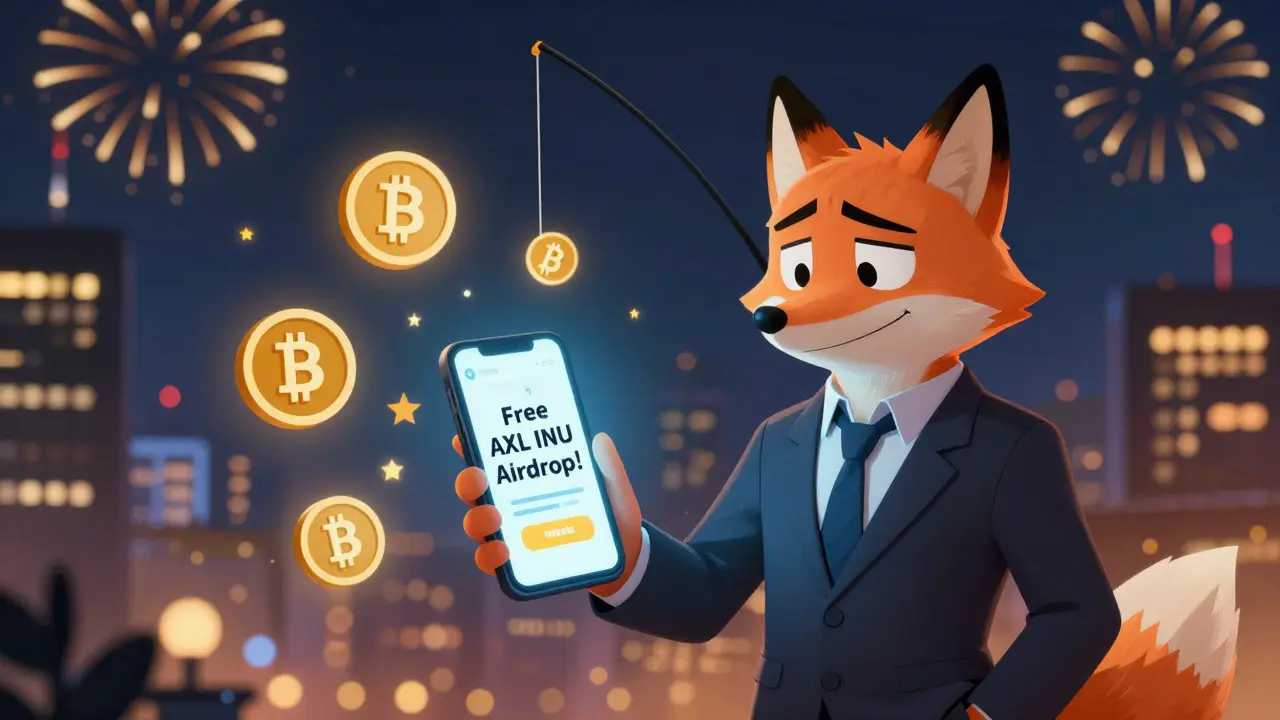
AXL INU Phishing: How to Spot and Avoid Crypto Scams
When you hear about AXL INU phishing, a type of crypto scam that tricks users into giving up private keys or signing malicious transactions under the guise of a popular token. It's not just another fake coin—it's a targeted attack designed to look like a real airdrop or wallet update. These scams often use Telegram groups, fake Twitter accounts, and cloned websites to copy the branding of legitimate projects like AXL INU, which is a meme coin with a small but active community. If you’ve ever gotten a DM saying "Claim your free AXL INU tokens now!" or seen a link that looks like the official site but has a tiny spelling mistake, you’ve seen phishing in action.
Phishing attacks, a method where fraudsters impersonate trusted entities to steal sensitive data. Also known as crypto scams, they don’t need to hack your wallet—they just need you to click, sign, or enter your seed phrase. And once you do, your coins are gone. These scams rely on urgency and excitement: "Limited time!" "Only 100 spots left!" "Your reward is waiting!" They’re not subtle. They’re loud, fast, and designed to bypass your logic. The same tactics show up in fake airdrops like ZWZ and MOWA Moniwar, which we’ve covered before. Those projects vanished after collecting millions of participants. AXL INU phishing follows the same playbook: build hype, collect wallets, disappear. And because meme coins have low liquidity and no real governance, there’s no team to warn you or reverse the damage.
Fake airdrops, a common vector for crypto fraud where scammers promise free tokens in exchange for access to your wallet. They often ask you to connect your MetaMask or Trust Wallet to a site that then drains your balance. Even if you don’t send any crypto, signing a transaction can give them permission to take everything. Always check the official website and social channels before clicking anything. Look for verified badges, real team members, and clear documentation. If it feels too good to be true, it is. You don’t need to be an expert to avoid this. You just need to pause. Slow down. Never trust a link sent in a DM. Never sign anything you don’t fully understand. And never, ever share your seed phrase—not even with "support."
Below, you’ll find real examples of how these scams unfold, what they look like, and how to protect yourself. No theory. No fluff. Just what you need to see before you click.