Qubic AI: What It Is, How It Works, and Why It Matters in Crypto
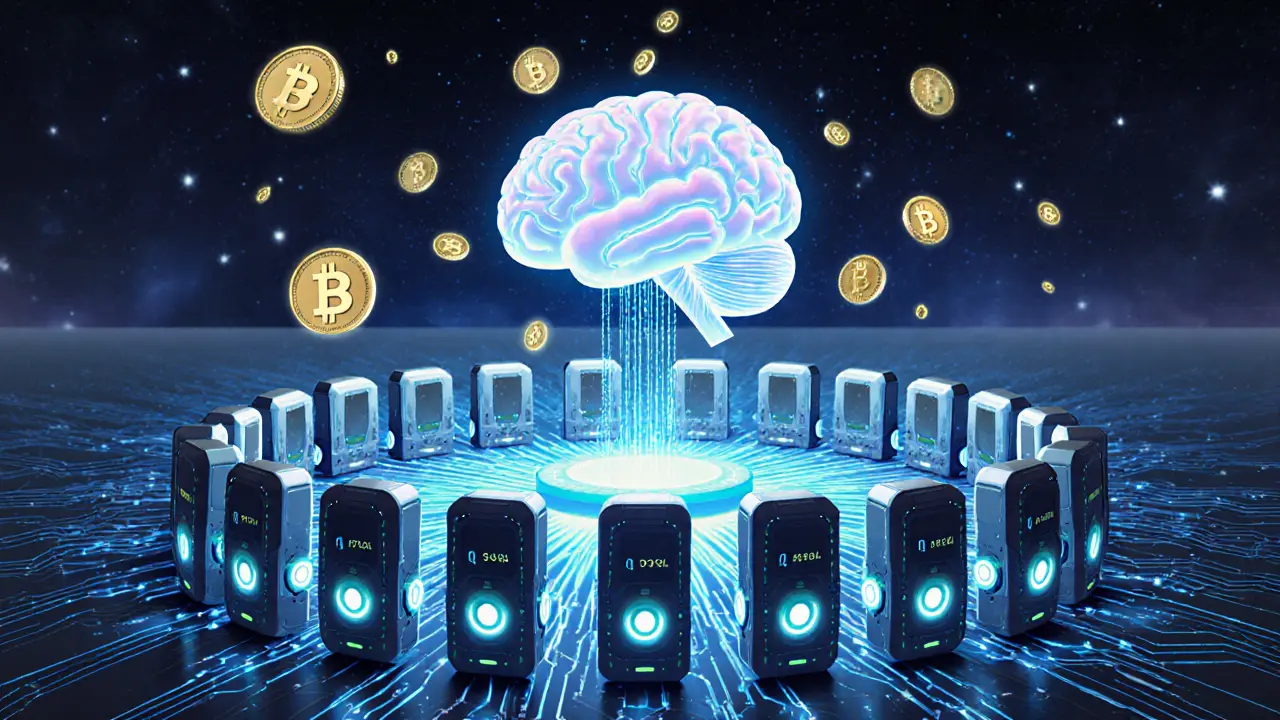
When you hear Qubic AI, a blockchain-based platform that uses AI agents to automate data processing and smart contract execution. Also known as Qubic, it attempts to merge artificial intelligence with decentralized ledger technology to create self-managing network nodes. Unlike most crypto projects that just slap "AI" on their whitepaper, Qubic AI claims to run actual machine learning models directly on its blockchain—no cloud required. That’s a big deal if it works.
What makes Qubic AI different is its focus on AI-driven blockchain, a system where AI agents validate transactions, optimize resource allocation, and even adjust protocol rules based on real-time network behavior. Think of it like having robot miners that don’t just solve math problems—they learn which problems are worth solving, when to scale up, and how to avoid bottlenecks. This isn’t theoretical. Some of the posts in this collection show how similar systems, like Rivalz Network, a blockchain that lets AI agents access computing power and data, are already being tested in real DeFi environments. Qubic AI takes that idea further by embedding the AI inside the chain itself, not as an external tool.
But here’s the catch: most AI crypto projects, like Numogram, a token claiming to track AI agent communication on blockchain, have little to show beyond a website and a token price chart. Qubic AI has the same risk—if there’s no working product, no active development, and no real users, it’s just speculation. The posts here don’t confirm whether Qubic AI has moved past the whitepaper stage. What they do show is a pattern: when AI and crypto collide, the winners are the ones delivering actual utility, not hype. Projects like CreatorBid and Rivalz Network are already letting creators and developers use AI agents to earn or automate tasks. Qubic AI needs to do the same—or fade into the noise.
If you’re looking at Qubic AI, you’re not just checking a coin. You’re asking whether decentralized AI can become more than a buzzword. Can a blockchain run its own brain? The answer isn’t in the price chart. It’s in the code, the community, and whether anyone is actually using it. Below, you’ll find posts that cover similar projects, their real-world results, and the red flags to watch for. Some of these might be the next big thing. Others? They’re already gone.