Imagine a trading platform where you don't just trade coins, but you actually decide which ones get listed. That was the big promise when Bgogo is a cryptocurrency exchange launched in July 2018 that focuses on community-driven governance and transparency. It entered the scene claiming to be "of the community, by the community," and it brought some pretty wild ideas to the table, like the supernode system and negative trading fees. But in a world dominated by giants, does a niche player from 2018 still hold water in 2026?
The Supernode System: Trading Power to the People
The most interesting part of the Bgogo ecosystem is undoubtedly its supernode structure. Most exchanges have a secretive committee that decides which tokens to list, usually after taking a hefty fee from the project. Bgogo flipped this. They introduced Supernodes is a specialized status within the Bgogo platform that grants holders the authority to nominate new cryptocurrencies for listing ].
If you hold this status, you get "One Vote, One Listing" privileges. This means you can personally pick a coin to bring onto the platform. But it's not just about power; there's a financial incentive. Supernode holders earn a 20% share of the trading commissions generated by the specific coin they nominated for the lifetime of that asset. It's essentially a way to turn your market research into a passive income stream.
To keep things honest, the platform lists the BGG token is the native utility token of the Bgogo exchange used for fee rebates and governance ] holding positions of all supernodes directly on their website. You don't have to guess who the whales are; they are listed in plain sight, which is a level of transparency most exchanges would find terrifying.
BGG Token and the "Negative Fee" Logic
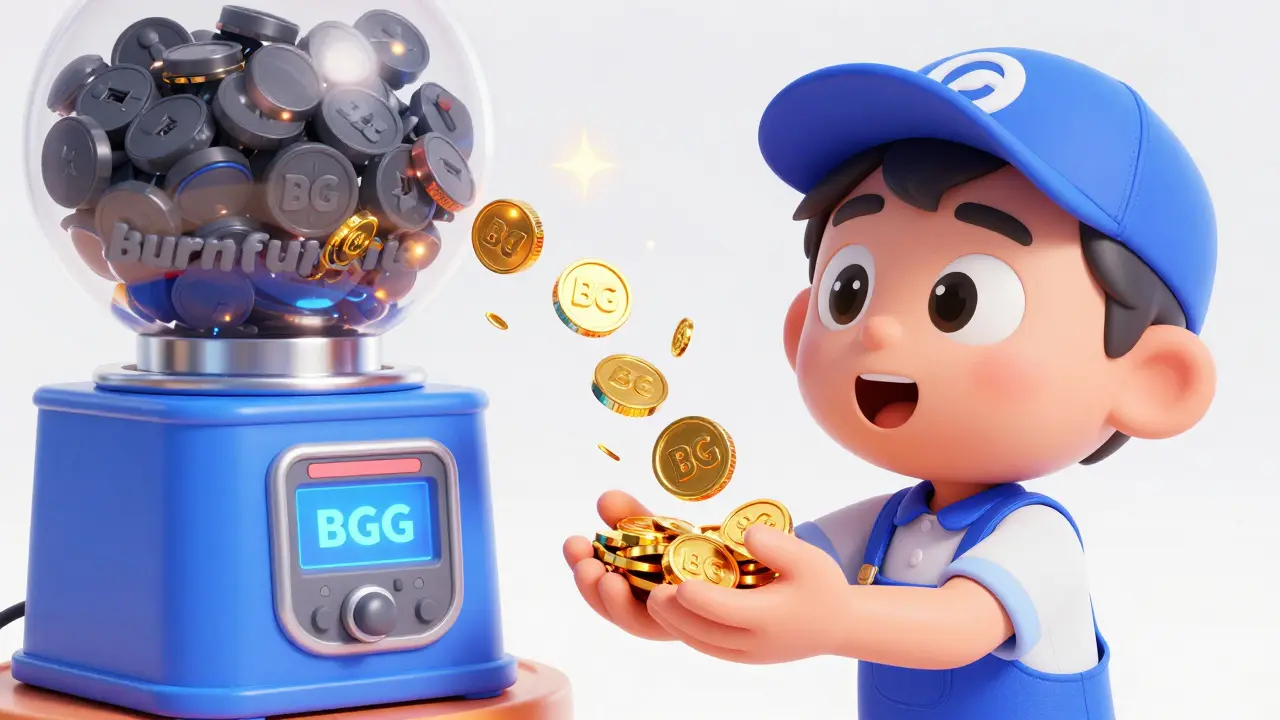
Let's talk about the money. Most of us are used to paying a percentage to the exchange every time we buy or sell. Bgogo tried to kill that model with a high-frequency trading fee rebate. Instead of just taking your money, they give you BGG tokens equivalent to 105% of your trading fee within 30 minutes of your trade.
Mathematically, this creates a "negative trading fee." You're essentially being paid to trade. To sustain this, the exchange uses 100% of its trading commissions to buy back BGG tokens daily from the market. These repurchased tokens are then sent to a public burn address. This is a classic deflationary move: by reducing the total supply of BGG, the platform aims to push the price up over time, rewarding those who hold the token and actively trade on the site.
| Feature | Mechanism | User Benefit |
|---|---|---|
| Listing Authority | Supernode Voting | Community decides new assets |
| Trading Fees | 105% BGG Rebate | Effectively free or paid trading |
| Tokenomics | Daily Buyback & Burn | Deflationary price pressure |
| Transparency | Public Whale List | Verified supernode holdings |
Backing and Technical Pedigree
A platform can have great ideas, but it needs a solid engine and deep pockets to survive. On the funding side, Bgogo managed to secure strategic investment from Pantera Capital is one of the world's most influential blockchain investment firms ]. Getting a nod from Pantera is like getting a seal of approval from the industry's elite; it suggests that the underlying business model had serious institutional backing.
The technical side is equally impressive on paper. The team consists of engineers and professionals who previously worked at tech titans like Google, Facebook, and IBM. This level of expertise is crucial for managing an order book and securing a wallet system against hacks. They've developed a mobile app (available via Aptoide for Android) that handles everything from real-time market tracking to asset deposits and withdrawals.
The Reality Check: Where is Bgogo Now?
Here is where the review gets tricky. If you look at the promotional materials from their launch, everything looks gold. But when you dig into current data, there's a worrying silence. Most of the hype around Bgogo peaked around 2018 and 2019. While the Bgogo crypto exchange review process usually looks for trading volume and liquidity, those numbers are currently hard to find for this platform.
When you compare Bgogo to a giant like Binance is the world's largest cryptocurrency exchange by trading volume ] or Coinbase is a leading US-based cryptocurrency exchange known for its regulatory compliance ], the gap is massive. Big exchanges have millions of active users and instant liquidity. Bgogo's current operational status is murky. There aren't many recent user reviews or updated performance benchmarks. For a trader, a lack of current data is a red flag. You don't want to put your funds into an exchange where the "latest news" is several years old.

How to Use and Access Bgogo
If you are still curious about testing their community-led model, here is how the process generally works:
- Acquiring BGG: Since it's a native token, you can find it on various decentralized exchanges. Many users utilize guides from larger platforms to navigate the purchase.
- Account Setup: Register via their official website (bgogo.com) and set up your security credentials.
- Mobile Trading: Since it's not on the standard Google Play Store, Android users typically use Aptoide to download the app for managing their wallets and tracking assets.
- Community Engagement: Join their Telegram or Reddit communities to see if the supernode voting is still active and which coins are being nominated.
Final Verdict: Innovation vs. Execution
Bgogo was arguably ahead of its time. The idea of giving listing power to users and providing a rebate that makes trading "free" is a brilliant way to attract a loyal community. The backing of Pantera Capital and a team from Google and IBM gave it a foundation that most startups would kill for.
However, innovation doesn't always equal longevity. In the crypto world, if a project stops talking, it's often because it has stopped growing. While the supernode system remains a fascinating case study in decentralized governance, the lack of current transparency regarding their trading volumes and user base makes it a risky choice for anyone not already deep in their ecosystem. If you're looking for a place to park a large portfolio, you might want to stick with the established giants until Bgogo proves it's still in the game.
What is a supernode on Bgogo?
A supernode is a special status on the Bgogo exchange that gives the holder the power to nominate a cryptocurrency for listing. Additionally, they receive 20% of the trading commissions generated by the coin they nominated for as long as it stays on the platform.
Does Bgogo really have negative trading fees?
Yes, they implement a rebate system where users receive 105% of their trading fees back in BGG tokens within 30 minutes of a trade. This effectively means you earn more in tokens than you pay in fees.
Is BGG token deflationary?
Yes. Bgogo uses 100% of the trading commissions collected from users to buy back BGG tokens from the market and then sends those tokens to a public burn address, reducing the total supply.
Who owns or leads Bgogo?
The organization is led by CEO Ms. Zhang Yibo, who has extensive experience in asset management and private equity in both Hong Kong and Mainland China.
Is Bgogo safe to use in 2026?
Caution is advised. While the platform had strong backing from Pantera Capital and a high-tier technical team, there is a significant lack of recent operational data, trading volumes, and updated user reviews, which increases the risk profile compared to major exchanges.

14 Comments
Prachi Bhadarge
Oh sure, because "community-led" is always the gold standard for not getting your funds vanished into thin air. 🙄
Andrew Southgate
It is actually quite fascinating to see the evolution of these governance models, and while the current silence is concerning, the original intent of the supernode system provided a blueprint for what we now see in many decentralized autonomous organizations. I remember when the concept of negative fees first hit the forums and everyone thought it was a mathematical impossibility, but the buyback and burn mechanism is a classic way to create synthetic demand, provided there is actually enough volume to fuel the engine in the first place. If the team is still active, they might just be pivoting in stealth mode, which happens quite often with these mid-tier exchanges that get overshadowed by the massive marketing budgets of the top three platforms. It's always a bit of a gamble, but that's the nature of the beast in the crypto space, especially when you're dealing with legacy projects from the 2018 era that survived the first major crash.
Kevin Lư
I just think it's kind of a shame that the community didn't push harder to keep it alive. We have a responsibility to support these smaller players if we actually want a decentralized future, right?
Robert Preston
The red flags here are pretty glaring. Lack of volume data is the number one killer for any exchange. You can have the best tech team from Google and IBM, but if the order book is empty, the platform is essentially a ghost town. I'd strongly advise anyone thinking of depositing here to stick to the majors until there's a verified audit of their current reserves.
Michelle Stanish
I think the giants are worse.
Jeff Barlett
Wait, let me get this straight. We're supposed to trust a platform that isn't even on the Play Store? What a total joke! Absolute chaos!
Trudy Morse
It's called side-loading, honey. Not everything needs a corporate gatekeeper to approve it.
Nishant Goyal
Still an interesting experiment. Hope it bounces back.
Gaurav Undirwade
It is a profound failure of leadership. One must adhere to the highest standards of transparency, and this lack of current data is an affront to the very principle of decentralized finance. It is simply unacceptable.
Sean Douglas
My soul literally aches for the tragedy of this project. To have such a shimmering, iridescent promise of community power only to be swallowed by the void of irrelevance is a poetic nightmare! The sheer audacity of the negative fee dream, now reduced to a mere whisper in the digital wind!
Kaitlyn Wu
Let's keep the discussion focused on the risk management here. The point is that without liquidity, the technical pedigree doesn't matter. Period.
Adedamola Oyebo
Check the BGG contract on Etherscan!!! Volume is definitely low!!!
Vicky Duffala
Everything is a cycle! Maybe this is just the dormant phase before a huge awakening. We need to look at the bigger picture of how governance evolves over decades, not just years. ✨ Keep believing in the decentralized dream!
Evan Iacoboni
The supernode 20% commission is the only part that actually matters here. That's a massive incentive for whales to manipulate the listings.