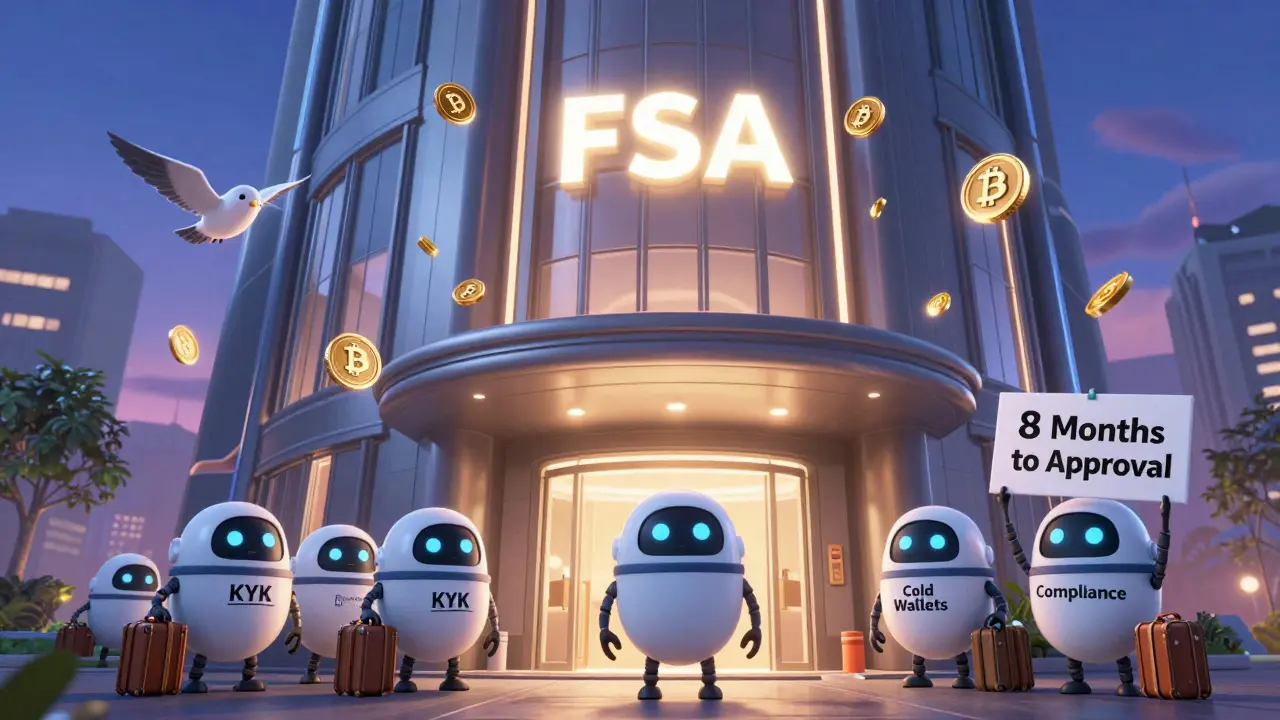
When you trade crypto in Japan, you’re not just using an app-you’re operating under one of the strictest financial oversight systems in the world. The Financial Services Agency (FSA) is Japan’s primary financial regulator responsible for overseeing all cryptocurrency exchange service providers (CAESPs). It doesn’t just watch the market-it shapes it with rules so detailed, most global exchanges struggle to meet them.
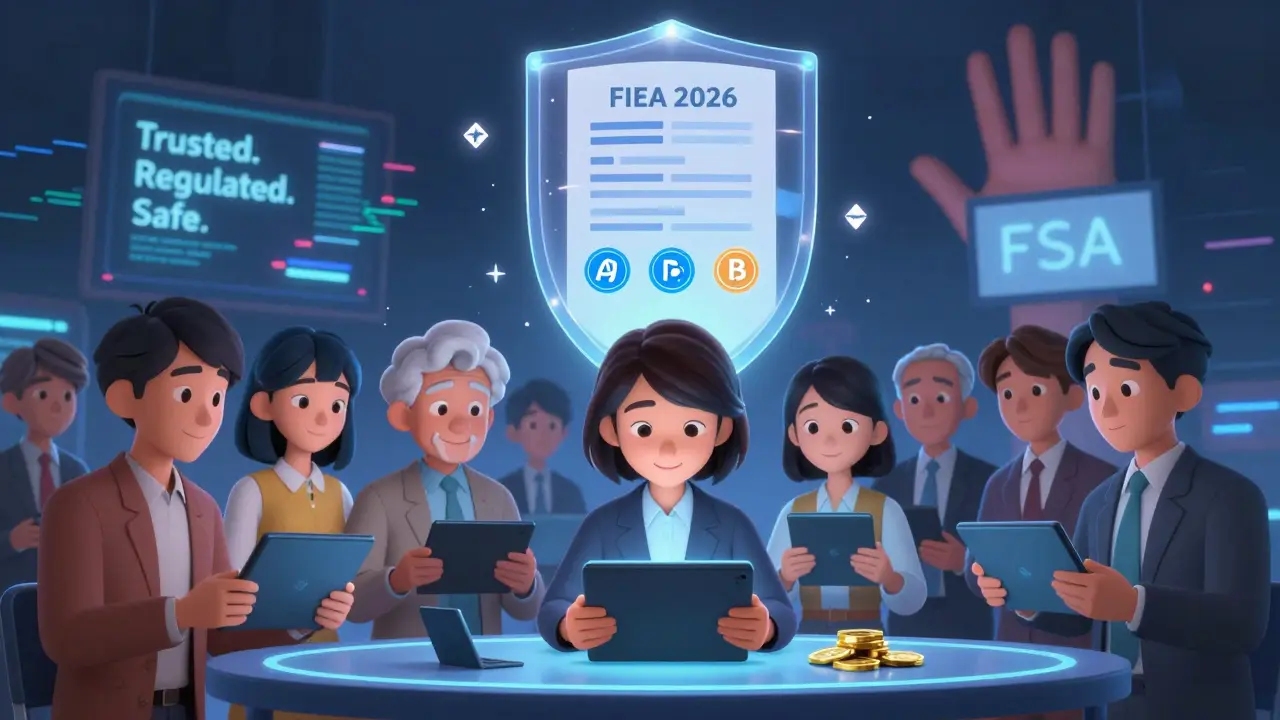
Before 2025, Japan’s crypto rules lived under the Payment Services Act (PSA). That law, updated in 2017 and again in 2023, was already tough. Exchanges had to register with the FSA, keep customer funds separate from their own money, store at least 95% of assets in offline cold wallets, and run full KYC and AML checks on every user. But in September 2025, everything changed. The FSA announced a major shift: digital assets with investment features are now being brought under the Financial Instruments and Exchange Act (FIEA). This is the same law that governs stocks, bonds, and mutual funds. It’s not a tweak-it’s a full upgrade.
What Changed Under the FIEA?
The FIEA reclassification targets tokens that act like securities. If a token gives you a share of profits, voting rights, or promises future returns, it’s no longer just a ‘crypto coin.’ It’s a security. That means issuers must file disclosure documents, follow insider trading rules, and face strict market manipulation checks. For investors, this is huge. You’re no longer buying into a wild west market-you’re buying into something with legal protections.
One of the biggest outcomes? Spot Bitcoin ETFs are now legally possible in Japan. Unlike the U.S., where regulators drag their feet, Japan’s FSA gave clear legal pathways. By mid-2026, you could see regulated Bitcoin ETFs trading on Japanese exchanges-backed by real investor protections, not just hype.
How Strict Are the Rules Really?
Let’s get specific. If you run a crypto exchange in Japan, you need to:
- Have a physical office inside Japan-not a remote server, not a mailbox, but a real office with staff.
- Keep at least 95% of user funds in cold storage. That means air-gapped hardware wallets, no internet connection, locked in vaults.
- Separate customer assets from company capital. If your exchange goes bankrupt, your users’ Bitcoin aren’t part of your debt.
- Pass a full security audit by an FSA-approved third party every year.
- Report every transaction over ¥100,000 to the FSA within 24 hours.
- Train every employee on AML procedures and update them quarterly.
And that’s just the baseline. The Japan Virtual Currency Exchange Association (JVCEA), a self-regulatory body, adds even more. Their standards require exchanges to use multi-signature wallets, conduct penetration testing, and maintain cybersecurity insurance. Many exchanges spend more on compliance than on marketing.
Why Do Exchanges Still Operate in Japan?
Because the upside is real. Japan’s crypto market is one of the largest in the world. As of July 2025, over 12 million people held crypto on FSA-registered exchanges. Trading volumes hit $1.8 trillion in 2025, up 34% from the year before. Users trust Japanese platforms because they’ve seen what happens when rules aren’t enforced-remember Mt. Gox? That collapse in 2014 wiped out $450 million in Bitcoin. The FSA learned from it.
Exchanges like bitFlyer, Coincheck, and Zaif aren’t just compliant-they’re competitive. Their security reputation lets them attract institutional investors and global users who want safety over low fees. Sure, trading fees are higher than on unregulated platforms. But users don’t mind. They know their funds are safer.

What About DeFi and Stablecoins?
The FSA isn’t ignoring innovation. It created a formal DeFi Study Group in early 2024. This group meets every two months with blockchain developers, academics, and regulators to map out how decentralized finance should be regulated. They’re not shutting it down-they’re figuring out how to make it safe.
Stablecoins? They’re under review. If a stablecoin is backed by real assets and used for payments, it might fall under the PSA. If it’s used as collateral in lending protocols, it could be treated as a security under the FIEA. The FSA’s approach is simple: no matter how techy it sounds, if it acts like money or an investment, it gets regulated like one.
How Long Does It Take to Get Licensed?
Don’t expect a quick approval. The average time to get FSA registration is 8 to 14 months. You need:
- Legal counsel familiar with Japanese financial law
- A compliance officer with documented experience
- Proof of cybersecurity infrastructure (firewalls, encryption, breach response plans)
- Financial statements showing at least ¥100 million in capital
- On-site inspections by FSA auditors
Many startups fail before they even submit. Others spend millions on consultants just to get through the door. But once approved, they get something rare: legitimacy. Japanese exchanges are trusted by banks, payment processors, and even foreign regulators.
What’s Next for Japan’s Crypto Rules?
The big one? The formal FIEA bill is expected in early 2026. Once passed, it will be the most comprehensive digital asset law in the world. It won’t just regulate exchanges-it will regulate token issuers, staking services, and even decentralized protocols that interact with Japanese users.
Also on the table: tax reforms. In August 2025, the FSA proposed a flat 20% tax on crypto gains, with a new rule allowing investors to carry forward losses for three years. That’s a win for long-term holders. It’s not about punishing traders-it’s about making the market predictable.
Japan’s model is being studied by the EU, Singapore, and even the U.S. SEC. Countries want to attract crypto businesses-but not at the cost of investor safety. Japan proved you can have both.
What This Means for You
If you’re a trader in Japan: your assets are safer than almost anywhere else. Your exchange is audited, your funds are segregated, and your rights are protected by law.
If you’re a developer or startup: the bar is high, but the reward is global trust. Building a compliant exchange in Japan means you can operate anywhere else with confidence.
If you’re a regulator elsewhere: Japan’s playbook is here. No guesswork. No loopholes. Just clear, enforceable rules that work.
Is Bitcoin legal in Japan?
Yes. Japan was the first country to legally recognize Bitcoin as a payment method in 2017. It’s not considered currency, but it’s a legal asset that can be used for transactions. All exchanges handling Bitcoin must be FSA-registered.
Can I trade crypto without using a Japanese exchange?
Technically yes, but it’s risky. Unregistered foreign exchanges aren’t allowed to market to Japanese users. If you use one, you lose legal protections. The FSA actively blocks access to non-compliant platforms. Your funds aren’t protected if something goes wrong.
Are NFTs regulated in Japan?
It depends. If an NFT is just digital art with no financial rights, it’s not regulated. But if it grants royalties, profit-sharing, or voting rights, the FSA treats it as a security under the FIEA. Issuers must disclose details and comply with financial reporting rules.
What happens if an exchange gets fined by the FSA?
Fines can range from ¥10 million to over ¥1 billion, depending on severity. The FSA can suspend operations, revoke licenses, or even refer cases to prosecutors. In 2024, one exchange lost its license for failing to report 12,000 suspicious transactions. The FSA doesn’t warn twice.
Do I need to report my crypto trades to the FSA?
No, individual traders don’t report to the FSA. Exchanges do. But you must report crypto gains on your annual tax return. The FSA shares data with tax authorities, so undeclared trades are easily caught.



24 Comments
Katrina Smith
lol so japan just turned crypto into a 1000-page tax form with a side of bureaucracy? 🤡 i traded on binance for 3 years and never once had to prove my ‘cybersecurity infrastructure’… but sure, let’s all move to tokyo and get our cold wallets notarized.
Anastasia Danavath
imagine spending 14 months just to get a license lmao 🥱 i just want to buy btc and go to sleep
Patty Atima
this is actually kinda cool. safety over sketchy apps any day. 🤝
Lucy de Gruchy
Let’s be real: the FSA doesn’t care about investor protection. They care about control. Every rule they add is another leash on innovation. And don’t even get me started on how they’re quietly preparing to ban DeFi by stealth. This isn’t regulation-it’s crypto euthanasia.
Tobias Wriedt
people who trade crypto without using a japanese exchange are just asking to get robbed. 🤦♂️ you think your offshore wallet is safe? it’s just a digital parking ticket waiting to be towed.
Manali Sovani
The structural integrity of Japan’s regulatory framework is unparalleled. One must acknowledge the epistemological rigor with which the FSA has operationalized fiduciary accountability in a decentralized ecosystem. Truly, a masterclass in institutional foresight.
Konakuze Christopher
they’re gonna ban us next. mark my words. the fsa is already working with the fbi to track private wallets. they’ll seize your btc under ‘national security’. this is the beginning of the end.
Heather James
finally, someone’s doing it right. no more rug pulls. no more ‘oops we got hacked’ excuses. just clean, clear rules. respect.
Arlene Miles
you think this is strict? imagine being a dev trying to build something new under this. it’s like trying to plant a tree in a courtroom. but honestly? it’s worth it. when your money’s safe, you don’t mind the paperwork. keep going, japan.
Tony Weaver
The FSA’s approach is textbook regulatory capture. They’ve weaponized compliance to create an oligopoly where only entities with >$50M in legal fees can operate. This isn’t safety-it’s a pay-to-play cartel disguised as consumer protection. The irony? The market is thriving because it’s artificially suffocated.
Carol Lueneburg
i love this. finally, a country that gets it. no more chaos. no more ‘crypto is the future’ without the backbone to back it up. 🙌 japan’s leading the way. we should all be watching.
Sahithi Reddy
this is amazing news for real users not just traders
George Hutchings
as someone who’s lived in 5 countries, japan’s balance of innovation and caution is rare. not perfect, but real. this is what global leadership looks like.
Anastasia Thyroff
they’re gonna ban staking next. i know it. i just know it. they’re scared. they know crypto is going to eat their whole banking system. they’re trying to kill it with paperwork. i’m not falling for it.
Christopher Hoar
ok but like… 95% cold storage? why not 100%? why not just give everyone a usb drive and call it a day? this whole thing feels like a tax writeoff for security firms.
Robert Kunze
i dont know if i trust this. what if the fsa gets hacked? then they have all the data. what if they just… disappear? i mean, its a gov agency. they’re not exactly known for being bulletproof.
Sarah Hammon
if you’re a dev or founder, this is gold. yes it’s hard. yes it takes time. but once you’re licensed in japan? you can walk into any bank in europe or asia and they’ll take you seriously. that’s worth more than low fees.
iam jacob
they’re just scared of losing control. crypto is freedom. and freedom scares them. they’ll regulate until there’s nothing left to regulate. and then they’ll regulate the air.
Jesse Pals
this is why i moved my portfolio here. yeah the fees are higher, but i sleep better. no more nightmares about some offshore exchange vanishing with my life savings. peace of mind > ponzinomics.
Diane Overwise
so japan made crypto boring? 🤔 that’s the real win. no more moon emojis. no more ‘to the moon’ memes. just solid rules. i kinda respect it. even if it’s kinda sad.
Ann Liu
The FIEA reclassification aligns digital assets with established financial instruments, ensuring parity in legal recourse, transparency, and systemic risk mitigation. This is not overregulation-it is maturation.
Dionne van Diepenbeek
why do they need a physical office? why not just a po box? i dont get it. its not like they can walk in and grab my btc. this is so extra
Graham Smith
The FSA’s framework exemplifies a neoclassical regulatory paradigm-prioritizing systemic stability over market efficiency. While laudable, this creates structural inefficiencies that stifle liquidity, particularly for retail participants operating under asymmetric information regimes.
Jerry Panson
The regulatory architecture described is not merely stringent-it is foundational. It redefines the social contract between financial institutions and the public. To dismiss this as overreach is to misunderstand the historical precedent of financial crises born of regulatory vacuum.