
Crypto Tax Calculator for Jordanians
Step 1: Enter your cryptocurrency purchase price in JOD
Step 2: Enter your selling price in JOD
Step 3: Calculate to see your potential tax liability
Key Requirement: Under Jordan's Virtual Assets Transactions Regulation Law (Law No. 14 of 2025), capital gains exceeding JOD 5,000 per year must be reported and taxed.
Note: This calculator assumes a 0% tax rate for demonstration purposes. The actual tax rate would depend on Jordan's current income tax brackets. Always consult a tax professional for specific advice.
When Jordanian investors first tried to dip their toes into digital money, Jordan cryptocurrency trading refers to the practice of buying, selling, or exchanging crypto assets while living in Jordan faced a wall of banking bans.
1. The pre‑2025 regulatory climate
For years the Central Bank of Jordan (CBJ) treated crypto as a forbidden commodity. Official statements warned that digital coins carried high money‑laundering and volatility risks, and the bank explicitly barred any crypto‑related activity inside the formal financial system. This policy placed Jordan alongside neighbours like Kuwait, Egypt and Iraq, all of which maintained a hard‑line stance.
Without a clear legal pathway, Jordanians could not open bank accounts linked to crypto exchanges, could not use debit cards to buy Bitcoin, and faced the constant threat of account freezes if any crypto link was discovered. The vacuum forced the community to look elsewhere for access.
2. How Jordanians turned to Peer‑to‑Peer (P2P) markets
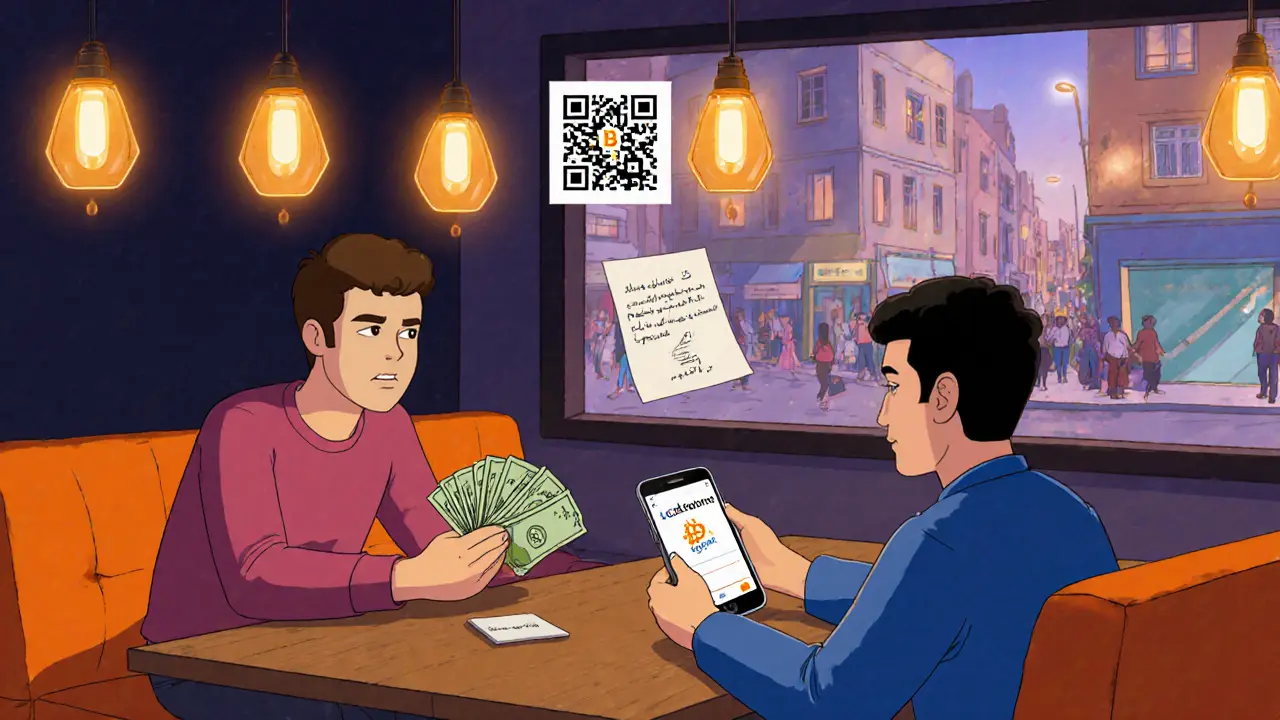
The most common workaround was the Peer-to-Peer crypto markets. Platforms such as LocalBitcoins, Paxful, and regional Telegram groups enabled direct trades between a seller who already owned crypto and a buyer who wanted to purchase it with Jordanian dinars (JOD).
Typical steps looked like this:
- Find a reputable seller on a P2P forum.
- Agree on price, payment method (often cash‑in‑person, bank transfer to a foreign account, or mobile‑money services).
- Exchange the funds for the crypto wallet address provided by the seller.
- Confirm receipt in the blockchain explorer before releasing the cash.
This method bypassed the CBJ’s banking restrictions because the transaction never touched a Jordanian bank. Instead, it relied on personal trust networks, escrow services offered by the platform, or simple cash hand‑offs.
Local success stories include the founding team of CoinMENA. Co‑founder Talal Tabbaa often recounts how, before 2025, the only way for him and his peers to invest was through such unregulated channels. The experience pushed many talent to look abroad for a supportive ecosystem.
3. Risks hidden in the underground
Operating outside legal oversight came at a price. Without licensing requirements, P2P traders faced several red flags:
- No consumer protection: If a seller disappeared after receiving cash, there was no regulator to appeal to.
- Security vulnerabilities: Many users stored private keys on mobile phones without backups, leading to loss after device theft.
- Legal ambiguity: Although the CBJ banned crypto, enforcing the ban on peer‑to‑peer exchanges proved difficult, leaving participants in a gray area that could invite future prosecutions.
- Limited liquidity: Large trades often required multiple counterparties, driving up slippage and transaction costs.
These risks made the community wary and highlighted the need for a clear regulatory framework.
4. The 2025 Virtual Assets Transactions Regulation Law - a game changer
On September 14, 2025 Jordan enacted Law No. 14 of 2025, the Virtual Assets Transactions Regulation Law. Issued by King Abdullah II and overseen by the Jordan Securities Commission (JSC), the law finally gave crypto a legal definition and a licensing path.
Key definitions:
- Virtual Assets: Digital representations of value that can be traded, transferred, or used for payment (e.g., Bitcoin, Ethereum, stablecoins not issued by a central bank, NFTs with economic value).
- Exclusions: Central‑bank‑issued digital fiat, digital securities already regulated by the JSC, and investment funds under separate legislation.
Licensing requirements now apply to:
- Virtual asset exchanges
- Custodial service providers
- Payment processors that accept crypto
- Token‑sale platforms and issuers
Any entity must obtain a license from the JSC, maintain a registered office in Jordan, and comply with AML/KYC standards. Unlicensed promotion is explicitly prohibited, giving the law teeth that the old CBJ warnings lacked.
5. Side‑by‑side: Informal P2P vs. Regulated VASP
| Aspect | Informal P2P (pre‑2025) | Regulated VASP (post‑2025) |
|---|---|---|
| Legal status | Operating in a gray area; no official permission | Fully legal under Law No. 14 of 2025 |
| Consumer protection | None; disputes resolved informally | JSC oversight, mandatory dispute resolution mechanisms |
| AML/KYC compliance | Voluntary, often absent | Mandatory AML/KYC for all licensed entities |
| Access method | P2P platforms, cash‑hand‑off, foreign bank accounts | Local exchanges, crypto‑friendly banks, approved payment apps |
| Risk of fraud | High - no regulatory oversight | Reduced - licensing and audits required |
| Tax reporting | Unclear, often unreported | Obligatory reporting to Jordanian tax authorities |
The table makes it obvious why the new regime matters: it swaps uncertainty for accountability.

6. How to trade crypto legally in Jordan today
If you’re a Jordanian resident looking to buy Bitcoin, Ethereum, or a stablecoin, follow this checklist:
- Choose a licensed exchange: Look for the JSC’s approved list (published on the commission’s website). Examples include local platforms that received a VASP license in Q4 2025.
- Complete KYC: Prepare a national ID, proof of address, and a selfie. The exchange will run AML checks before you can fund your account.
- Fund via a Jordanian bank or approved fintech: The law now permits banks to hold crypto‑linked accounts, so you can transfer JOD directly.
- Execute the trade: Use the exchange’s order book or instant‑buy feature. Fees typically range from 0.1 % to 0.3 %.
- Consider custodial vs. self‑custody: Licensed custodians offer insurance; if you prefer full control, export the private key to a hardware wallet.
- Report taxes: Capital gains on crypto are taxable in Jordan. Keep transaction records for the JSC‑mandated annual filing.
For those still skeptical about the new system, you can test the waters with a small amount (e.g., 0.001 BTC) to become comfortable with the exchange UI and the verification steps.
7. Looking ahead - what the future may hold
The law’s 90‑day implementation window ended in December 2025, and early reports show a surge of licensed exchanges registering users. Analysts predict that by 2027 Jordan could host a regional crypto hub, mirroring the United Arab Emirates’s Dubai International Financial Centre model.
Key trends to watch:
- DeFi integration: Licensed providers are beginning to offer decentralized finance services (staking, liquidity mining) under the new AML framework.
- Cross‑border payments: With regulated crypto bridges, Jordanian SMEs may use stablecoins to settle invoices with Gulf partners, cutting transaction costs dramatically.
- Talent retention: A 2026 survey by the Jordan Tech Association shows a 30 % drop in fintech talent migration, attributing the change to the clearer regulatory environment.
In short, the era of secretive P2P trades is fading. Jordanians now have a legitimate, protected route to participate in the global crypto economy.
Can I still use P2P platforms after the new law?
Yes, but you’ll face higher risk because they remain unlicensed. The law encourages users to switch to licensed VASPs for legal protection and better AML compliance.
Which Jordanian banks now support crypto transactions?
As of early 2026, Bank of Jordan and Jordan Islamic Bank have launched crypto‑friendly accounts in partnership with licensed exchanges. Check each bank’s official website for the latest list.
Do I need to report crypto gains to the tax authority?
Yes. The 2025 law ties crypto activity to the Jordanian Income Tax Law. Keep transaction logs; gains above JOD 5,000 per year are taxable at the standard rate.
What’s the biggest advantage of the new regulation?
Legal certainty. You can now trade, hold, and use crypto without fearing hidden penalties, and you get consumer safeguards from the Jordan Securities Commission.
How do I verify that an exchange is licensed?
Visit the JSC’s official portal, where all VASP licenses are listed with the company’s registration number and scope of activity.



15 Comments
Tom Glynn
It's fascinating how a community can turn obstacles into opportunities 😊; the Jordanian crypto pioneers showed that ingenuity thrives when regulation says "no way". By connecting through P2P platforms, they kept the spirit of financial freedom alive, proving that even strict banks can't silence the desire for innovation. Keep the faith and keep exploring ✨.
Johanna Hegewald
The post explains the steps clearly: find a trusted seller, agree on price, pay in JOD, and verify the transfer on the blockchain before releasing cash. This simple checklist helped many avoid scams.
Benjamin Debrick
One must acknowledge, with a modicum of intellectual humility, that the pre‑2025 regulatory milieu in Jordan epitomized a bureaucratic quagmire, a labyrinthine conundrum wherein the Central Bank's categorical interdiction, though ostensibly prudent, inadvertently catalyzed a clandestine economy; consequently, the populace resorted to peer‑to‑peer mechanisms, which, while ostensibly expedient, engendered a panoply of latent hazards-ranging from fiduciary opacity to systemic fragility-thereby underscoring the paradoxical nature of prohibition.
Anna Kammerer
Oh great, another perfect recap of how “risky” everyone was being. Sure, the lack of consumer protection made things scary, but hey, at least they got to say they were “resourceful”, right?
Mike GLENN
The evolution of Jordan's crypto landscape is a testament to resilience; it shows how grassroots initiatives can thrive under pressure. Before 2025, the scarcity of formal avenues forced traders to rely on personal networks, which built a strong sense of community. Those early adopters learned to safeguard private keys, often improvising with hardware wallets or encrypted USB drives. They also discovered the importance of diversification, spreading risk across multiple exchanges and assets. Over time, this collective knowledge created an informal education system, where newcomers were mentored by veterans. The introduction of the 2025 Virtual Assets Transactions Regulation Law marked a pivotal shift, offering legitimacy and protection. Licensed exchanges now provide AML/KYC compliance, reducing the likelihood of fraud. Regulatory clarity also encouraged foreign investment, as international firms felt more comfortable entering the market. Moreover, tax reporting requirements have increased transparency, allowing authorities to monitor capital flows. The emergence of crypto‑friendly banks has streamlined fiat on‑ramps, making it simpler for average users to fund accounts. This infrastructure development has lowered entry barriers for retail investors. Meanwhile, DeFi services are gradually being integrated within licensed platforms, expanding user options beyond simple spot trading. Cross‑border payments using stablecoins are now viable for SMEs, cutting transaction costs dramatically. Talent retention improves as local fintech professionals see a supportive ecosystem, reducing brain drain. By 2027, Jordan could become a regional hub, rivaling Dubai's financial centers. Overall, the journey from underground P2P markets to regulated exchanges illustrates how policy can transform an industry, fostering growth, security, and innovation.
BRIAN NDUNG'U
Indeed, the concise summary provided earlier serves as an excellent reference for newcomers seeking to navigate the post‑law environment; the emphasis on licensing and KYC aligns with best practices.
Donnie Bolena
Wow!! What a detailed critique!; you really captured the essence of the pre‑2025 chaos!!
Elizabeth Chatwood
yeah i think the sarcasm is kinda overdone lol
Tom Grimes
Honestly, reading about the old P2P scene makes me uneasy; I can't help but wonder if some of those traders are still haunted by lost keys and vanished sellers. It feels like a ghost story that keeps replaying whenever someone mentions cash‑hand‑offs. The fear of legal repercussions must be a constant undercurrent for many, whispering doubts at night.
Paul Barnes
Sure, regulations are good until they become another way for elites to control the market.
Joy Garcia
Oh, the drama of a nation finally waking up to crypto! It's like watching a thriller where the villain is bureaucracy and the hero is the audacious trader, battling shadows of suspicion and tax nightmares. The stakes couldn't be higher, and the stakes are so deliciously chaotic!
mike ballard
From a fintech perspective, Jordan's shift illustrates a classic market‑entry paradigm: regulatory sandboxes → licensing frameworks → ecosystem scaling 🚀. The integration of AML/KYC protocols aligns with global compliance standards, while the emergence of crypto‑friendly banking APIs unlocks new liquidity pools. This synergy between legacy finance and blockchain tech will likely catalyze fintech innovation across the MENA region.
Molly van der Schee
It's encouraging to see such forward momentum; the community's patience and adaptability truly paid off. Remember, staying informed and supportive of one another makes this journey smoother for everyone.
Mike Cristobal
We must hold ourselves to the highest ethical standards; embracing crypto without moral responsibility is simply unacceptable. 😊
Erik Shear
Let's keep the dialogue constructive and focus on solutions.