
When international sanctions cut Iran off from global banking, the country didn’t just sit still-it built its own financial underground. And the backbone of that system? Cryptocurrency.
Why Iran Turned to Crypto
In 2025, Iran still couldn’t use SWIFT. Its banks were locked out of most international transactions. Dollars were hard to get. Euros? Forget it. Traditional trade routes collapsed under U.S. and EU sanctions. But oil still needed to be sold. Imports like medicine and machinery still had to come in. So Iran turned to something that couldn’t be easily blocked: digital assets. Bitcoin, Ethereum, and Tron became the new currency of survival. Not because people loved crypto-many didn’t-but because there was no other way to move money across borders. The government didn’t outlaw it. It regulated it. And then weaponized it. The Central Bank of Iran started requiring licenses for every mining operation. It shut down rial-based payment gateways for exchanges to stop people from cashing out locally. But it allowed crypto to be used for imports. That’s the twist: you couldn’t pay for your groceries with Bitcoin, but you could use it to buy industrial equipment from Turkey or China. The goal wasn’t to replace the rial-it was to bypass the dollar.The Mining Boom That Strained the Grid
Iran became one of the world’s top Bitcoin producers. By 2022, over 10,000 licensed mining farms were running. At its peak, the country mined nearly 5% of all new Bitcoin globally. That’s not small. That’s a national infrastructure project disguised as energy policy. But here’s the catch: Bitcoin mining eats electricity. And Iran’s power grid was already stretched thin. In 2024 and early 2025, rolling blackouts hit major cities. People blamed the mining farms. Farmers in Isfahan and Kerman said their irrigation pumps stopped because the grid couldn’t handle the load. The government started cracking down-not because it hated crypto, but because it couldn’t afford the blackouts. The state didn’t shut down mining. It just took control. Only licensed miners could buy subsidized electricity. Unlicensed rigs got cut off. The goal? Keep the mining going, but make sure the state got paid and the lights stayed on.Nobitex: The Heart of Iran’s Crypto Ecosystem
If you wanted to trade crypto in Iran in 2025, you used Nobitex. It wasn’t just the biggest exchange-it was the only one that mattered. With over 11 million users, it handled billions in trades every month. People sold their Bitcoin for rials to pay rent. Businesses bought foreign crypto to pay for imports. The government turned a blind eye… until it didn’t. By mid-2025, intelligence firms like Elliptic linked Nobitex to wallets tied to the Islamic Revolutionary Guard Corps. The exchange wasn’t just a marketplace-it was a pipeline. Oil sales in Asia? Paid in crypto. Payments to suppliers in Dubai? Sent through Nobitex wallets. The system worked-until it didn’t. On June 18, 2025, Nobitex was hacked. Over $90 million vanished in a single attack. The breach wasn’t just a security failure. It was a strategic blow. For the first time, Iran’s entire crypto trade network was exposed as fragile. The government scrambled to freeze accounts. Users panicked. The message was clear: even your state-backed crypto lifeline could vanish overnight.
The 0 Million Shadow Network
The U.S. Treasury didn’t sit back and watch. In September 2025, OFAC unveiled a $600 million Iranian shadow banking network. It wasn’t just one exchange. It was a web of front companies, fake invoices, and crypto wallets spread across Turkey, the UAE, and Malaysia. The network moved over $100 million in crypto directly tied to Iranian oil sales between 2023 and 2025. One key figure? Arash Estaki Alivand. His Ethereum and Tron wallets were publicly listed by OFAC. He wasn’t some anonymous hacker-he was a known operator with ties to the IRGC Quds Force. His network used crypto to pay for shipping, insurance, and even bribes. Blockchain analysis firms tracked every move. The transparency of Bitcoin and Ethereum? That’s what brought him down. Iran thought crypto was invisible. It wasn’t. Every transaction left a digital fingerprint. Chainalysis and Elliptic didn’t need inside sources-they just needed public blockchain data and smart mapping. The result? Wallets were frozen. Banks cut off connections. Trade partners got scared.The Flaw in the Plan
Iran’s crypto strategy looked smart on paper: mine Bitcoin with cheap gas, sell it abroad, use the proceeds to buy what you need. But reality was messier. First, mining ate too much power. Second, the global crypto market didn’t want to touch Iranian coins. Exchanges like Binance and Coinbase blocked Iranian IPs. Even decentralized platforms started filtering Iranian wallets. Third, the government couldn’t control the flow. While it allowed crypto for imports, ordinary Iranians used it to buy iPhones and luxury goods. That wasn’t the plan. And then there was the Nobitex hack. It wasn’t just about the money lost. It was about trust. If the state’s own exchange could be breached, how safe was your crypto? If your import payment went through a wallet tied to the IRGC, were you risking U.S. sanctions too? The strategy wasn’t failing because crypto was bad. It was failing because it was too visible, too risky, and too dependent on a single point of failure: Nobitex.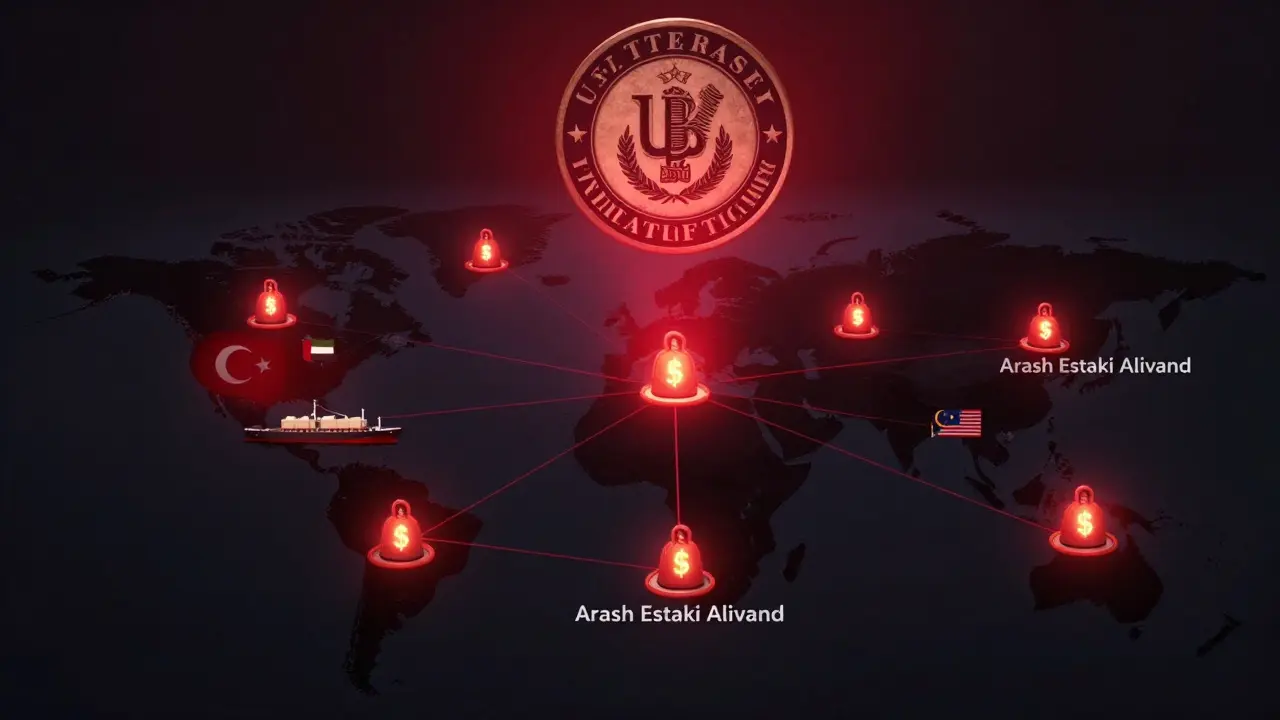



21 Comments
Patricia Amarante
This is wild. I never thought crypto could become a lifeline like this.
Jesse Messiah
Man, i just read this and my brain is like... wow. Iran didn't just adapt, they hacked the whole system. Respect.
Samantha West
The inherent paradox of state-controlled decentralization is not merely ironic it is ontologically unstable. When sovereignty attempts to colonize the permissionless it creates a dialectical rupture wherein the tool becomes the cage
Rebecca Kotnik
It's fascinating how necessity drives innovation. Iran didn't choose crypto because it was ideal-it chose it because it was the only option left. And yet, the very transparency that makes blockchain so revolutionary also became its Achilles’ heel. Every transaction, every wallet, every hash became a trail the U.S. could follow. The irony is thick: the technology meant to liberate became the instrument of its own exposure. The state wanted control, but control required visibility-and visibility invited scrutiny. What began as a workaround became a manifesto written in public ledger.
Dionne Wilkinson
i wonder if people in tehran ever felt like they were trading one kind of prison for another. the dollar was gone but now your money’s tied to a blockchain that someone else can freeze. it’s not freedom. it’s just a different kind of lock.
SeTSUnA Kevin
Pathetic. A nation reduced to mining rigs and shadow wallets. This isn’t innovation-it’s desperation dressed in blockchain.
Timothy Slazyk
Let’s be real-this wasn’t a strategy. It was a house of cards built on subsidized electricity and wishful thinking. The government thought they could weaponize crypto without consequences. They forgot one thing: blockchains don’t lie. Every transfer, every miner, every exchange left a trace. And now? The world’s watching. The sanctions didn’t break. They just got smarter.
Madhavi Shyam
Hyperledger integration could’ve mitigated the OFAC exposure. Permissioned chains with zero-knowledge proofs would’ve obfuscated the IRGC-linked flows. This was a crypto-101 failure.
Sean Kerr
sooo... the whole thing blew up because someone hacked nobitex?? 😱 like... imagine if your bank got robbed and then the whole economy collapsed. that’s wild. but also... kinda sad. 🥲
Heather Turnbow
The resilience of the Iranian people in the face of systemic isolation is profound. Yet the structural fragility of their solution reveals a deeper truth: economic sovereignty cannot be sustained through technological circumvention alone without institutional legitimacy and broad-based trust.
Terrance Alan
They thought they were clever. They thought they could outsmart the West. But they just made themselves a bigger target. Now the whole world knows exactly how they’re moving money. And guess what? Everyone’s scared to touch them now. They didn’t break the system. They painted a bullseye on it.
Sally Valdez
So what? The U.S. is just mad because Iran found a way to survive. If you block their banks they’ll use crypto. If you block crypto they’ll use pigeons. You can’t stop people from surviving. That’s not a threat-that’s justice.
Sammy Tam
Iran turned crypto into a national power grid with a side of oil sales. That’s not just clever-it’s punk rock economics. No banks? Fine. We’ll mine our own. No SWIFT? Cool. We’ll send ETH like it’s a text message. The world’s still stuck in 1999. Iran? They’re already in 2030.
Jonny Cena
It’s heartbreaking but inspiring. People just wanted medicine and food, and they built a whole new system just to get it. That’s not crime-that’s survival. We should be asking why we forced them into this corner in the first place.
George Cheetham
History will look back on this as the moment the global financial order began to fracture-not from revolution, but from necessity. When a nation is locked out of the system, it doesn’t beg for entry. It builds a new one. And the blockchain? It didn’t betray Iran. It exposed the fragility of the entire dollar-based hegemony.
Tom Joyner
Crypto was never meant for sanctioned regimes. This is a textbook case of technological naivety meeting geopolitical hubris. The fact that they thought blockchain could bypass sanctions reveals a fundamental misunderstanding of both finance and power.
Abby Daguindal
They should’ve known better. Using crypto tied to the IRGC? That’s not resistance. That’s suicide. No one wants to touch that. Not even the black market.
Donna Goines
Wait... did you know the Nobitex hack was actually a CIA operation? They planted malware through fake mining software. The whole thing was staged to discredit Iran’s crypto efforts. The blockchain doesn’t lie? Maybe-but the U.S. government sure does.
Greg Knapp
they mined bitcoin with their kids' school electricity and now they're crying about blackouts? lol. you don't get to burn the whole country down and then act like the victim. this is what happens when you choose war over peace
Shruti Sinha
Interesting case study. The state’s attempt to regulate decentralized systems reveals a fundamental tension: control vs. autonomy. The outcome was predictable.
Cheyenne Cotter
Okay but let’s be real-this whole thing was doomed from the start. You can’t just slap crypto onto a broken economy and expect it to fix everything. People were using it to buy iPhones? Of course they were. That’s human nature. And now the government’s trying to act like it’s in charge? Please. They lost control the moment they let people trade. And now they’re just trying to clean up their own mess with ID checks and paperwork. It’s like trying to plug a dam with duct tape.