Bitcoin fork: What it is, why it happens, and what it means for your crypto
When a Bitcoin fork, a permanent divergence in the Bitcoin blockchain that creates two separate versions of the ledger. Also known as blockchain fork, it happens when developers or miners can’t agree on the rules of the network—like how big blocks should be, who gets to validate transactions, or how fast payments should confirm. This isn’t a glitch. It’s a deliberate split, and it’s how Bitcoin has evolved since 2009.
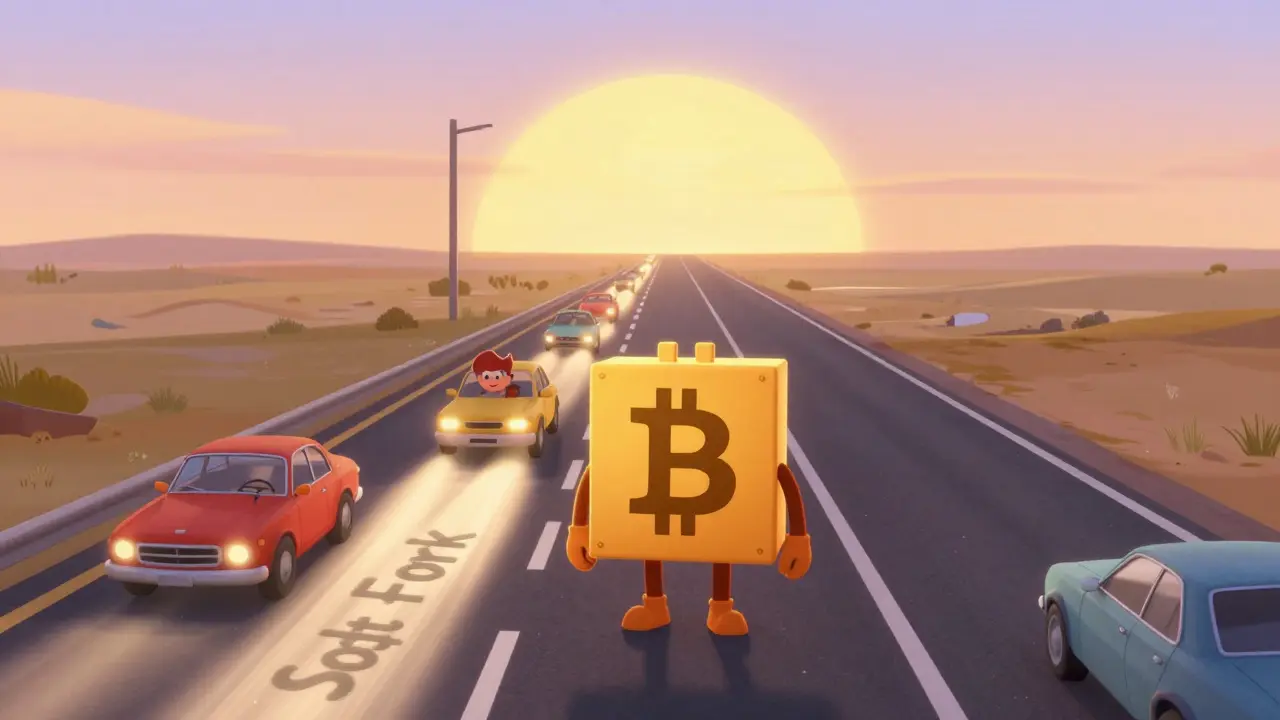
There are two main types: hard fork, a change that makes old nodes incompatible with new ones, forcing everyone to upgrade or get left behind and soft fork, a backward-compatible update where old nodes still recognize new blocks, even if they don’t fully understand them. Hard forks are the big ones—like Bitcoin Cash in 2017, which changed the block size to handle more transactions. Soft forks are quieter but just as important—like SegWit, which fixed transaction malleability and paved the way for the Lightning Network.
Why does any of this matter to you? Because when a hard fork happens, you might get free coins. If you held Bitcoin at the exact moment of the split, you often got an equal amount of the new coin—like Bitcoin Cash or Bitcoin SV. But it’s not free money. Some forks fail. Others get ignored. And some are outright scams designed to trick you into downloading malware or sending your coins to a fake wallet. Knowing the difference between a real fork and a fake one can save you thousands.
It’s not just about new coins. Forks reveal what the community values. Was it speed? Lower fees? Decentralization? Privacy? The way a fork plays out tells you who’s really in charge—miners, developers, or users. And it shows you how fragile consensus can be in a system that’s supposed to be unstoppable.
Some forks live on. Bitcoin Cash still trades. Bitcoin SV faded fast. Others, like Bitcoin Gold, barely made a dent. But each one leaves behind a trail of data—wallets that got drained, exchanges that hesitated, and traders who got burned. The posts below dig into the real stories behind these splits: how SHA-256 keeps them secure, why some forks never gain traction, and what happens when a blockchain splits but no one notices.
You’ll find guides on what to do when a fork happens, how to claim coins safely, and which forks actually delivered on their promises. No hype. No fluff. Just what worked, what didn’t, and what you need to watch for next time.