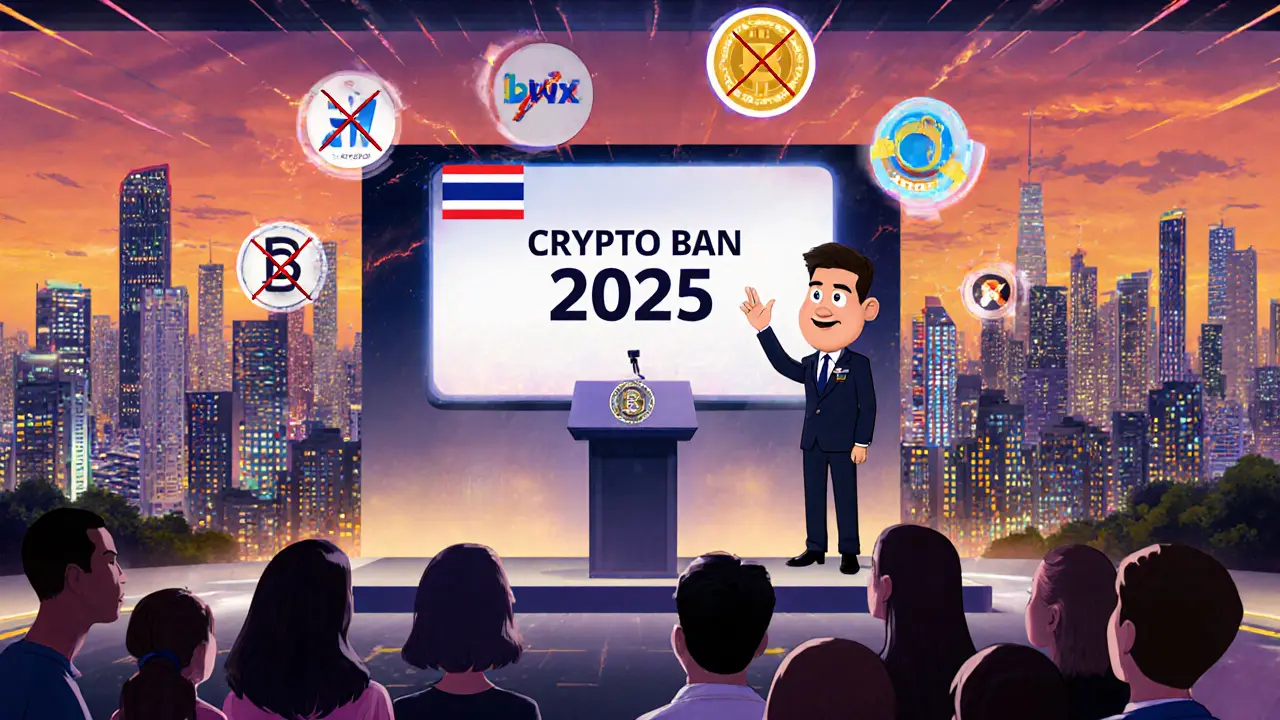
Thailand's 2025 Ban on Foreign P2P Crypto Platforms: What You Need to Know
Thailand's 2025 crackdown bans foreign P2P crypto platforms, imposes heavy penalties, and forces users onto licensed local exchanges. Learn why, how, and what to do next.
When working with digital asset regulation 2025, the global framework of rules that govern cryptocurrencies, tokens, and blockchain services in 2025. Also known as 2025 crypto law landscape, it sets the tone for compliance, market entry, and investor protection. Digital asset regulation 2025 doesn’t happen in a vacuum – it pulls in stablecoin regulations, rules that define how stablecoins are issued and managed, SEC crypto enforcement, U.S. securities watchdog's actions against crypto firms, and national statutes like the Jordan Virtual Assets Law, Jordan's 2025 legal path for crypto trading and P2P markets. Together they shape who can launch a token, how exchanges stay licensed, and what penalties await non‑compliant projects.
One clear semantic link is that digital asset regulation 2025 encompasses stablecoin regulations, requires adherence to SEC crypto enforcement, and influences national frameworks such as Jordan’s Virtual Assets Law. Those connections create a three‑part chain: global rules → regional enforcement → local market behavior. If you ignore any link, you risk fines, exchange bans, or having your token delisted.
First, stablecoin regulations have become a litmus test for how regulators view crypto maturity. The EU’s MiCA and the U.S. GENIUS Act, for example, lay out capital reserves, audit requirements, and consumer‑protection clauses. Projects that can spell out compliance with both frameworks instantly gain credibility and can tap into cross‑border liquidity.
Second, SEC crypto enforcement has shifted from a handful of headline cases to a systematic fine‑making engine. The 2024 $4.68 billion penalty spree shows that the agency now targets everything from unregistered token sales to deceptive marketing. Understanding the enforcement pattern helps you draft token sale documents that pass legal review.
Third, regional laws are moving fast. Jordan’s Virtual Assets Law turned a black‑market P2P scene into a licensed ecosystem, giving traders a safe gateway to convert crypto into fiat. Meanwhile, Vietnam’s Directive 05/CT‑TTg imposes strict capital thresholds on exchanges and bans certain stablecoins, forcing local players to redesign their product stacks.
Finally, underground markets in places like Egypt and Ecuador illustrate what happens when regulation is absent or contradictory. These cases reveal risk‑management gaps, such as reliance on unvetted wallets or lack of AML controls, that regulated exchanges have already solved. Studying those gaps can inspire better compliance checks for your own platform.
All these pieces weave a fabric where one rule often triggers a cascade of operational changes. For instance, a stablecoin that meets MiCA requirements will automatically satisfy many SEC reporting obligations, making it easier to list on regulated exchanges that must obey both jurisdictions. Likewise, an exchange that secures a Jordan Virtual Assets Law license can more readily partner with regional fintechs that need a vetted gateway.
What does this mean for you today? If you’re a token creator, you’ll want a checklist that covers stablecoin reserve ratios, SEC filing triggers, and any local licensing steps. If you run an exchange, you’ll need a compliance dashboard that flags changes in Vietnam’s capital rules or new SEC fine thresholds. And if you’re a trader, understanding the legal backdrop lets you pick platforms that won’t disappear overnight because of a regulatory surprise.
Below you’ll find a curated collection of articles that break down each of these angles. From a deep dive into Jordan’s new virtual assets pathway to a side‑by‑side comparison of MiCA and the GENIUS Act, the posts give you actionable insights, real‑world examples, and clear next steps. Dive in to see how the 2025 regulatory puzzle pieces fit together and how you can stay ahead of the curve.
 18 Oct 2025
Thailand's 2025 crackdown bans foreign P2P crypto platforms, imposes heavy penalties, and forces users onto licensed local exchanges. Learn why, how, and what to do next.