The crypto world is full of wild ideas, but few are as extreme as Shanghai Inu (SHANG). At first glance, it looks like just another dog-themed meme coin - think Dogecoin or Shiba Inu - but there’s more to it than just a cute logo. SHANG claims to be a futuristic, AI-powered, Ethereum-based project built around the idea of the Shanghai Upgrade. But does it deliver anything real? Or is it just a speculative gamble with trillions of tokens and almost no trading volume?
What is Shanghai Inu (SHANG)?
Shanghai Inu (SHANG) is a meme cryptocurrency launched in April 2023 on the Ethereum blockchain. It’s an ERC-20 token with a total supply of 1 quadrillion (1,000,000,000,000,000) tokens. The project markets itself as a "futuristic cyborg hybrid dog" - a strange mix of internet culture and blockchain buzzwords. Unlike older meme coins that started as jokes, SHANG tries to sound serious by tying itself to the Ethereum Shanghai Upgrade - the real-world event in April 2023 that let stakers withdraw their locked ETH. The idea? SHANG will ride the wave of liquidity released by that upgrade. But here’s the catch: there’s no proof it’s doing anything beyond existing as a token on Uniswap.
How does SHANG work?
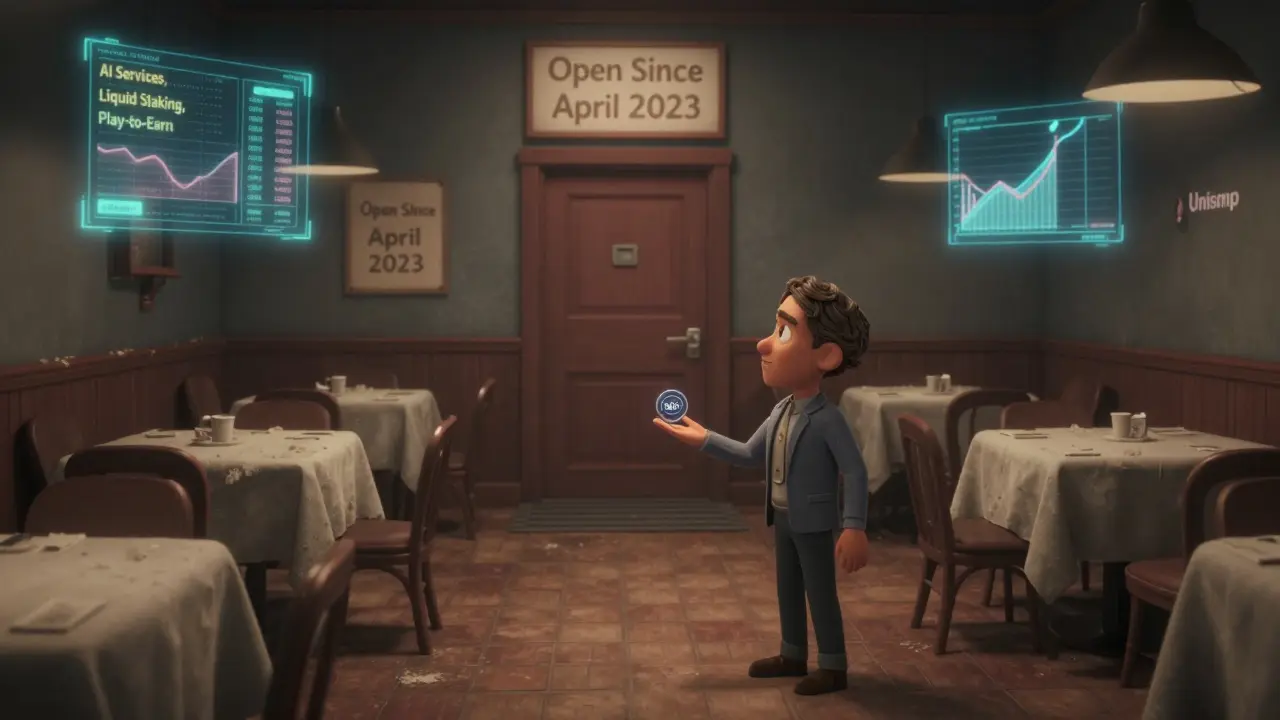
Technically, SHANG runs on Ethereum like thousands of other tokens. You can buy it on Uniswap V2 using ETH, store it in a MetaMask wallet, and track it via its contract address: 0xee772cec929d8430b4fa7a01cd7fbd159a68aa83. But that’s about it. The project says it will offer AI services, liquid staking, and play-to-earn games. No whitepaper. No GitHub repo. No development updates. No team disclosures. Just promises.
There’s no evidence of any of those features being built. No testnet. No beta. No code commits. It’s like a restaurant that has a fancy menu but never opens its doors. The whole thing feels like a narrative built on timing - using the name of a real Ethereum upgrade to give a worthless token some credibility.
Current price and market data
As of February 27, 2026, SHANG trades at around $0.00000000005686. That’s half a trillionth of a dollar. To own one dollar’s worth of SHANG, you’d need over 17 billion tokens. That’s not a feature - it’s a red flag. This kind of ultra-low price is designed to trick people into thinking they’re getting "rich" by buying trillions of tokens. But price per token doesn’t matter. What matters is market cap and real demand.
The total market cap hovers around $42,640. That’s less than what a small business makes in a week. The fully diluted valuation (FDV) - which assumes every single token is in circulation - is about $56,860. That’s still tiny. For comparison, Dogecoin’s market cap is over $15 billion. SHANG is a drop in the ocean.
Trading volume is a mess. CoinGecko says it’s around $92 per day. CoinMarketCap says $0. That kind of inconsistency doesn’t happen by accident. It usually means one of two things: either no one is trading it, or someone is washing their own trades to make it look active. Either way, liquidity is near zero. You could buy $100 of SHANG, but selling it later might be impossible.
Who holds SHANG?
There are only about 3,480 wallet addresses holding SHANG. That’s not a community - that’s a small group of people, possibly the creators themselves. Most meme coins have tens of thousands of holders. SHANG has barely over a thousand. The top 10 wallets likely hold over 70% of the supply. That’s a classic setup for a rug pull. If those few wallets dump their tokens, the price crashes. Fast.
The all-time high was $0.00000007121 in May 2023. Today’s price is 99.9% lower. That’s not a correction. That’s a collapse. And the daily volatility? Around 0.7%. That sounds low, but it’s deceptive. When your entire market cap is under $50,000, even a $100 trade can move the price 10%.
Why is SHANG still around?
It survives because of two things: hope and hype.
First, meme coin traders love the idea of "the next big one." They look at SHANG’s 15% weekly gain and think, "This could be it." But that spike? It’s not because the project improved. It’s because someone bought in, and others followed, hoping to get out before the crash. It’s gambling with a story.
Second, the name "Shanghai Inu" is catchy. It sounds official. It borrows from a real Ethereum upgrade. That gives it a veneer of legitimacy. But legitimacy doesn’t come from a name. It comes from code, audits, transparency, and users. SHANG has none of that.
Can you trade SHANG anywhere?
No. Not on Coinbase. Not on Binance. Not on Crypto.com. Crypto.com explicitly says SHANG "is not tradable yet." The only place you can buy or sell it is Uniswap V2 - a decentralized exchange that requires you to already own ETH, understand wallet transactions, and accept full responsibility for your trades. No customer support. No chargebacks. No safety net.
If you don’t know how to use MetaMask or interact with smart contracts, you shouldn’t touch SHANG. It’s not for beginners. It’s not for casual investors. It’s for people who are okay losing everything because they believed a slogan.
Is Shanghai Inu a scam?
It’s not labeled a scam. But it checks every box for one.
- No team. No names. No LinkedIn profiles.
- No code. No audits. No GitHub activity.
- No roadmap. No updates. No communication.
- Extremely low liquidity. Wild price swings.
- Massive token supply with minimal holders.
- Trading volume data is inconsistent across platforms.
The Ethereum Shanghai Upgrade happened over two years ago. The project’s entire story is based on a past event. There’s no future plan. No development. No progress. Just a token sitting on Uniswap with a pretty name and empty promises.
Should you invest in SHANG?
If you’re looking for a serious crypto investment - no. SHANG has no utility, no adoption, no transparency, and no future.
If you’re okay with gambling $10 or $20 on a meme with a 99% chance of going to zero - sure. But treat it like a lottery ticket, not an asset. Never invest more than you’re willing to lose. And if you do, don’t expect anything back.
There are thousands of crypto projects out there. Some are risky. Some are scams. SHANG sits at the very top of the scam list - not because it’s malicious, but because it’s meaningless. It’s a ghost. A shadow of a token. A name with no substance.
And in crypto, that’s the deadliest kind of coin.
Is Shanghai Inu (SHANG) a real cryptocurrency with utility?
No. Shanghai Inu claims to offer AI services, liquid staking, and play-to-earn gaming, but there is no evidence these features exist. No code, no whitepaper, no development updates. It operates as a meme token with no real utility beyond trading.
Where can I buy Shanghai Inu (SHANG)?
SHANG can only be bought on Uniswap V2 using Ethereum (ETH). It is not listed on any major centralized exchanges like Coinbase, Binance, or Crypto.com. You need a wallet like MetaMask and some ETH to trade it.
Why is the price of SHANG so low?
The price is low because the token has a maximum supply of 1 quadrillion coins, and only a fraction are in circulation. With a market cap under $50,000 and minimal trading volume, the price per token is artificially tiny. This creates a psychological illusion of affordability - but it doesn’t reflect value.
Is Shanghai Inu a scam or a rug pull?
It’s not officially labeled a scam, but it has all the warning signs: no team, no code, no updates, low liquidity, and inconsistent trading data. The project’s narrative is based on a past event (the Shanghai Upgrade), with no future development. Many experts consider it a high-risk, low-value asset with a high chance of becoming worthless.
How many people hold SHANG tokens?
As of February 2026, only about 3,480 wallet addresses hold SHANG. This extremely low number suggests minimal community adoption and high risk of whale manipulation. Most legitimate tokens have tens of thousands of holders.
Can SHANG ever become valuable?
Theoretically, yes - if the team suddenly delivered on its promises, launched functional products, and gained real adoption. But with zero development activity for over two years, that’s extremely unlikely. The odds are far better that SHANG fades into obscurity like hundreds of other abandoned meme tokens.
23 Comments
Jeremy buttoncollector
so like... shanghai inu is basically a ghost token with a cool name and zero substance? i mean, the whole "ai-powered cyborg dog" thing is just a marketing gimmick wrapped in ethereum jargon. they’re riding the coattails of a real upgrade like a parasite. no code, no team, no audits. just a 1 quadrillion supply designed to trick people into thinking they’re getting "rich" by buying trillions of coins. lol. this isn’t innovation, it’s psychological manipulation with a dog logo.
Amanda Markwick
you know what i love? how people still chase these tokens like they’re the next bitcoin. shanghai inu? more like shanghai ghost. it’s not even a scam-it’s an afterthought. but hey, if you wanna throw $20 at a meme because it has a cute pupper and a fancy name, go for it. just don’t cry when it vanishes into the blockchain ether. we’ve seen this movie 100 times. the real win is walking away before the hype hits.
Sriharsha Majety
bro i bought like 500b shang last month and now its down 99 percent but i still believe in it like its my spiritual path or something idk man the dog just vibes with me lol
Tabitha Davis
OMG YOU GUYS ARE SO Naive. This isn’t even a coin-it’s a honeypot. The top 10 wallets hold 70%? That’s not a community, that’s a rug-pull waiting to happen. And the fact that CoinGecko says $92/day while CoinMarketCap says $0? That’s not inconsistency-that’s fraud. Someone’s pumping it with bots. If you’re still holding, you’re either brainwashed or paying for therapy.
Vishakha Singh
While I appreciate the enthusiasm behind meme coins, I must emphasize the importance of due diligence. Shanghai Inu lacks foundational elements such as a whitepaper, audited smart contracts, and a transparent development team. These are not optional features-they are essential safeguards for any digital asset. Investing without them is akin to building a house on sand. Please consider projects with verifiable progress, not just catchy names.
Cory Derby
Just want to say-don’t let the low price fool you. A coin at $0.00000000005686 isn’t "cheap." It’s meaningless. Market cap matters, not per-token price. If you’re buying trillions of tokens because "it’s affordable," you’re falling for the oldest trick in the book. Look at the numbers. 3,480 holders? $42k market cap? That’s not a project-it’s a spreadsheet with a logo.
Colin Lethem
bro i just bought 100 trillion SHANG and now i feel like a crypto wizard. like imagine if this goes to 1 cent? i’d be a billionaire. also the dog logo is cute. why does everyone hate on it? it’s just a meme. chill. we all know it’s gonna crash but the ride is fun. 🐶🚀
Michelle Mitchell
so... it's a meme. with no utility. no team. no code. just a name that sounds official. yeah. i get it. it's a scam. can we move on now?
Kaitlyn Clark
SHANG is the crypto version of a TikTok trend that went too far 😭💔 i mean... the dog is cute but the whole project is like a 3am drunk tweet turned into a token. if you're not holding ETH, don't touch this. also... if you're still buying it, send help. or at least send memes. 🐕✨
christopher luke
man i still believe in shanghai inu. i know its risky but i feel like its gonna explode. the name is too perfect. shanghai upgrade + inu? destiny. 🙏 maybe i'm delusional but hey, i've lost less than $50. worth it for the dream. 🐶
Don B.
you people are so desperate for something to believe in. this isn’t crypto. it’s a cult. they didn’t build a token-they built a narrative. and you? you’re the believers. chanting "it’s the next big one" while your wallet empties. congrats. you’re the fuel in the engine of someone else’s exit scam.
Arya Dev
...And yet, despite all this, the fact remains: the Shanghai Upgrade did happen. And SHANG? It’s not lying about that. It’s leveraging a real event. Isn’t that clever? Or is it just... opportunistic? I’m conflicted. Also, the dog logo is too good to ignore.
Leslie Cox
Oh please. You think this is a scam? I’ve seen worse. At least this one has a *story*. The Ethereum upgrade? Real. The dog? Adorable. The price? Irrelevant. You’re all so obsessed with numbers you forget crypto is about belief. If you don’t believe in the myth, you don’t belong here. This isn’t finance-it’s folklore. And folklore doesn’t need audits.
Andrew Hadder
just wanna say-i read the whole post. very thorough. thanks for laying out the facts. i used to think low price = good deal. now i get it. market cap > token price. also, 3,480 holders? that’s not a community. that’s a test group. i’m out.
Derek Sasser
For anyone still considering SHANG: if you don’t know how to check a contract address on Etherscan, or what a liquidity pool is, don’t touch it. This isn’t a coin-it’s a puzzle only experienced users should attempt. And even then, the answer is "don’t." There’s zero reason to hold it. Zero. Not even for the meme.
Molley Spencer
Let’s be honest: this isn’t even a meme coin anymore. It’s a ghost. A spectral residue of a failed marketing campaign. The fact that it still exists is a testament to how easily humans cling to illusions. The price is a mirage. The volume? Fabricated. The holders? Probably bots. This isn’t crypto. It’s a psychological experiment. And we’re all the lab rats.
John Fuller
Shanghai Inu? Nah. Zero utility. No team. Gone.
Lucy Simmonds
...and you know what’s REALLY scary? The fact that people still believe this. I mean... what if this is all part of a bigger plan? What if the "Shanghai Upgrade" was never real? What if the whole thing was a government-backed crypto distraction? I’ve seen the patterns. They’re hiding something. I’m not saying it’s a scam-I’m saying it’s a cover-up.
Maggie House
honestly i think the dog is kinda cute and if someone wants to spend $10 on it for fun? cool. but please don’t go all in. i know it’s tempting. i’ve been there. just remember: if it feels too good to be true, it probably is. and also... the logo is adorable. 🐶💕
Dana Sikand
i had a dream last night that shanghai inu became the next bitcoin. woke up laughing. then checked the chart. cried. then bought 10 more trillion. i don’t know why i do this. but i need to believe in something. even if it’s a ghost dog with a 99.9% crash rate. 🐕💔
Robert Kromberg
appreciate the breakdown. really clear. i used to think low price meant opportunity. now i see it’s just a trap. i’m done with meme coins. too many ghosts. time to move on.
Sean Logue
shanghai inu? sounds like a ramen place in tokyo. but hey, if it’s got a dog and a story, i’m in. also, i live in shanghai. and no, we don’t have any inus here. just street dogs and dumplings.
Carl Gaard
the dog is too cute to ignore 😭❤️🔥 i know it’s probably a scam but i bought 500 trillion anyway. if i lose it? fine. at least i smiled. 🐶✨