Most people hear about Bitcoin or Ethereum and assume that’s all there is to crypto. But behind the scenes, dozens of blockchains are building faster, cheaper, and more private alternatives - and Telos is one of the most powerful you’ve probably never heard of.
Telos (TLOS) isn’t just another coin. It’s a full blockchain platform built to handle real-world apps - from DeFi to NFTs - with speed and security that most networks can’t match. Launched in October 2018, it skipped the usual ICO frenzy and VC money. Instead, its founders gave tokens directly to early users who helped build the network. That fair launch still matters today because no single group controls Telos. The community does.
How Telos Works: Layer Zero, Not Just Layer One
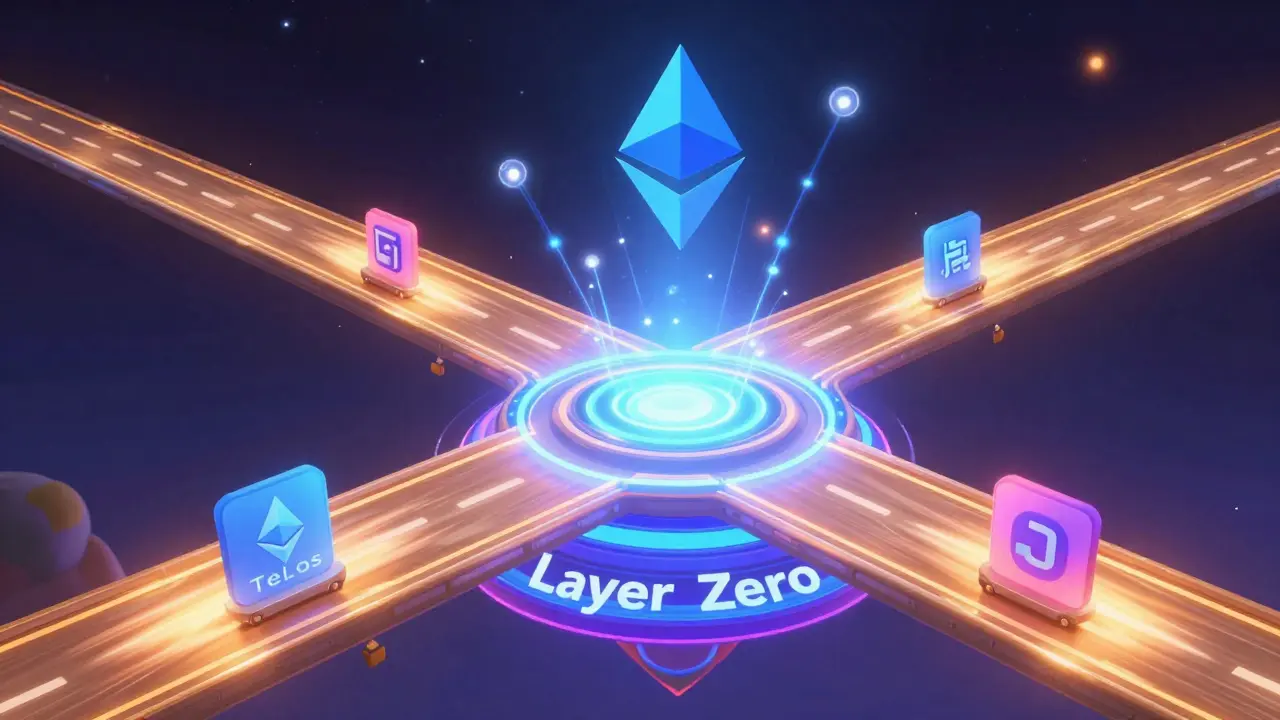
Most blockchains are either Layer 1 (like Ethereum) or Layer 2 (like Polygon). Telos is different. It’s a Layer Zero network. That means it doesn’t just run apps - it lets other blockchains be built on top of it. Think of it like a highway system where Telos is the foundation, and other chains are the roads you build on it.
The core of Telos is called Telos Zero. It’s the consensus layer that keeps everything secure and fast. Unlike Bitcoin, which takes 10 minutes to confirm a transaction, or Ethereum, which can take 15 seconds or more during busy times, Telos confirms transactions in under half a second. That’s not a guess - it’s a fact. The network processes over 15,200 transactions per second (TPS). For comparison, Ethereum averages 15 TPS. Solana hits around 65,000 TPS, but Telos does it while staying fully compatible with Ethereum tools.
Telos EVM: The World’s Fastest Ethereum Virtual Machine
This is where Telos really shines. Most blockchains that want Ethereum compatibility have to sacrifice speed. Telos doesn’t. Its Telos EVM is the fastest Ethereum Virtual Machine ever built. It runs Ethereum smart contracts - the same ones developers use on Ethereum - but 1,000 times faster and at a fraction of the cost.
Why does this matter? Because over 100,000 developers already know Solidity, the language used to write Ethereum apps. With Telos EVM, they can deploy those same apps without waiting for gas fees to drop or dealing with network congestion. A DeFi app that costs $5 to use on Ethereum might cost $0.01 on Telos. A game NFT that takes minutes to mint on another chain takes less than a second here.
Over 100 decentralized apps are already live on Telos. They include NFT marketplaces, lending platforms, and even blockchain-based games. The developer community has grown to over 1,000 people worldwide, with nearly 200 organizations building on it. That’s not hype - it’s real adoption.
Privacy That Actually Works: Zero Knowledge Proof
Most blockchains are public. Every transaction you make is visible to everyone. That’s fine for Bitcoin, but not for financial apps or private identity systems. Telos is changing that with Zero Knowledge (ZK) technology.
ZK lets you prove something is true without revealing the details. For example, you can prove you’re over 18 without showing your ID. Or prove you have enough funds to make a payment without showing your balance. Telos is the first blockchain to bake this into its core design. It’s not an add-on - it’s built into the protocol.
And it’s getting even better. Telos is now developing a hardware-accelerated zkEVM Layer 2 using a protocol called SNARKtor. This will let users verify transactions on Ethereum itself - but with Telos-level speed and privacy. If it works as planned, Telos could become the backbone for private, scalable DeFi across the entire Ethereum ecosystem.
Who Controls Telos? The Community - Not a Company
Here’s where Telos breaks the mold. Most blockchains are controlled by a core team. They change rules, adjust tokenomics, and make decisions without asking users. Telos doesn’t work that way.
All major decisions - from changing the supply to adding new features - are voted on by TLOS token holders through the Telos Decide Governance Engine. Every holder gets a vote. The more TLOS you hold, the more voting power you have. But no single wallet can dominate. There are strict limits to prevent centralization.
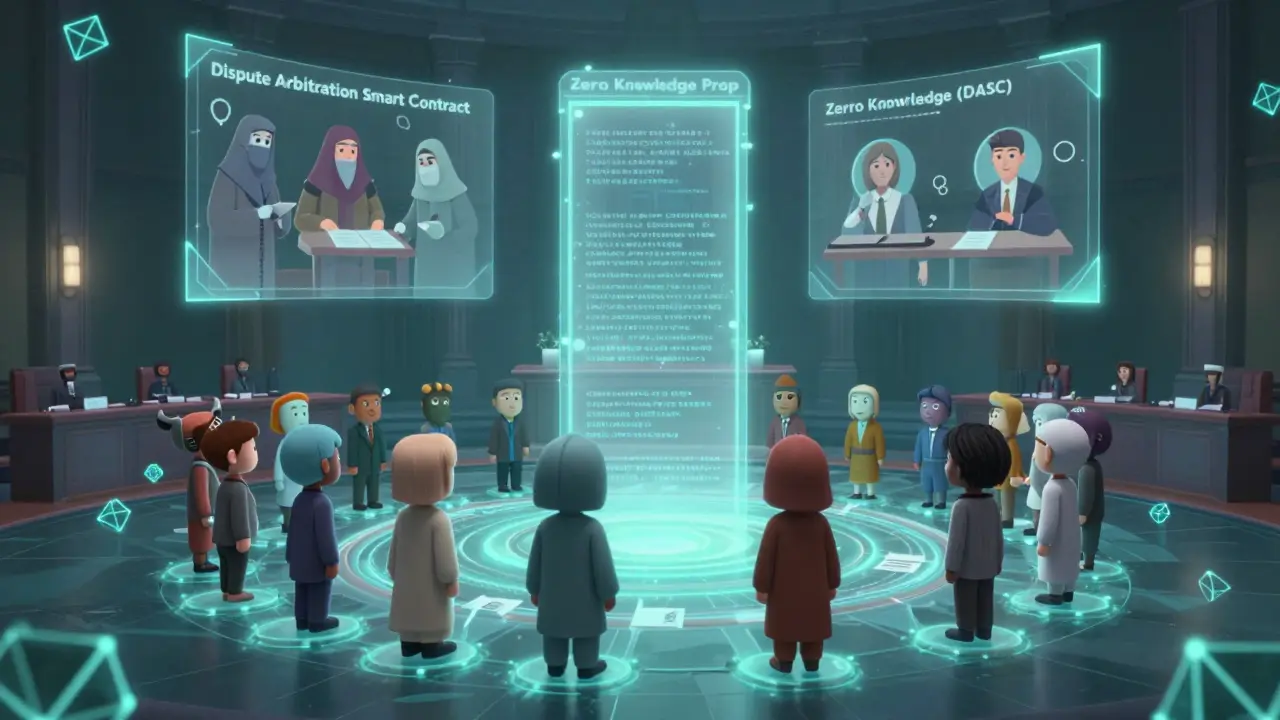
There’s also a Dispute Arbitration Smart Contract (DASC). If two users have a conflict - say, a failed smart contract or a scam - they can submit evidence. A panel of elected arbitrators reviews it. They don’t have to be tech experts. They just need to follow the Telos Constitution. This isn’t a legal system. It’s a blockchain-based justice layer. And it’s already been used to resolve real disputes.
TLOS Tokenomics: Supply, Price, and Market Position
As of February 2026, TLOS is trading around $0.048 to $0.05. That’s down from its all-time high of $0.6224 in February 2024, and it hit a low of $0.02799 in July 2025. The 24-hour trading volume is around $4.6 million. It’s currently ranked #875 in the crypto market.
The total supply of TLOS is capped at 420 million tokens. Right now, about 442 million are in circulation - yes, that’s more than the cap. That’s because early staking rewards and inflationary mechanisms have temporarily increased supply. The network is designed to reduce inflation over time, with a goal of stabilizing supply by 2027.
The market cap is around $21.2 million. The fully diluted valuation (if all 420 million were in circulation) is $2.5 billion. That’s a big gap - meaning there’s room for growth if adoption picks up.
Analysts are split. Some say TLOS is stuck in a long-term downtrend. Others point to its tech as unmatched. Price predictions for 2025 range from $0.052 to $0.057. By 2030, some expect it to hit $0.37 or higher - if the zkEVM Layer 2 launches successfully and gains traction.
How Telos Compares to Other Blockchains
| Feature | Telos (TLOS) | Ethereum | Solana | BNB Chain |
|---|---|---|---|---|
| Transactions per second | 15,200 | 15 | 65,000 | 4,000 |
| Ethereum compatibility | Full (Telos EVM) | Native | Partial | Partial |
| Transaction cost | $0.001 - $0.01 | $1 - $50+ | $0.001 - $0.05 | $0.01 - $0.10 |
| Privacy features | Zero Knowledge built-in | None (Layer 2 only) | None | None |
| Governance model | Community-voted (Telos Decide) | Core team + EIPs | Core team | Core team |
| Launch method | Fair launch (no ICO/VC) | ICO (2014) | ICO (2019) | ICO (2019) |
Telos isn’t trying to beat Solana on raw speed. It’s trying to beat Ethereum on usability - while adding privacy and true decentralization. It’s the only chain that gives you Ethereum’s ecosystem, Solana’s speed, and Bitcoin-level community control - all in one.
Why Telos Matters Right Now
Crypto is at a turning point. Ethereum is too slow. Solana crashes too often. BNB Chain is centralized. And most new chains are just rehashes of old ideas.
Telos is different because it’s built for real people - not just speculators. Developers can build apps that actually work. Users can transact without paying $10 in fees. Communities can govern themselves without relying on a CEO or VC.
The upcoming zkEVM Layer 2 could be the game-changer. If it works, Telos won’t just be a blockchain. It could become the privacy layer for the entire Ethereum world. That’s not a pipe dream - it’s already in testnet.
Is TLOS a good investment? That depends. If you believe in fast, private, community-run blockchains - then yes. If you’re looking for a quick pump, maybe not. But if you care about the future of decentralized tech, Telos is one of the few projects actually building it - not just talking about it.
Is Telos (TLOS) a good investment in 2026?
Telos isn’t a speculative coin - it’s a blockchain with real infrastructure. If you’re looking for short-term gains, TLOS has been volatile, dropping 14% in the last month. But if you’re interested in long-term value, its tech stack - especially the upcoming zkEVM Layer 2 - could make it essential. The project has no debt, no VC influence, and a growing developer base. It’s not a lottery ticket. It’s a utility.
How do I buy TLOS crypto?
You can buy TLOS on exchanges like Gate.io, KuCoin, Bitget, and MEXC. Search for TLOS/USDT or TLOS/BTC pairs. Once bought, store it in a wallet that supports ERC-20 tokens - like MetaMask, Trust Wallet, or the official Telos Wallet. Never leave large amounts on exchanges.
Can I stake TLOS tokens?
Yes. Staking TLOS helps secure the network and earns you rewards. You can stake through the Telos Decide platform or supported wallets. Rewards come from transaction fees and inflation. Annual yields typically range between 5% and 8%. Staking also gives you voting power in governance.
Does Telos have a future compared to Ethereum?
Ethereum is the legacy network. Telos is the upgrade. It runs Ethereum apps 1,000 times faster and cheaper. With its Zero Knowledge privacy layer and community governance, it’s solving problems Ethereum can’t fix without hard forks. Many developers are already moving projects to Telos EVM. The future isn’t about replacing Ethereum - it’s about giving users better options.
What makes Telos different from other Layer 2 solutions?
Most Layer 2s (like Polygon or Arbitrum) are built on top of Ethereum. Telos is a standalone Layer Zero network that *includes* its own Ethereum-compatible layer. It doesn’t rely on Ethereum’s security or fees. It’s not a sidechain - it’s a parallel system with its own consensus, governance, and privacy tech. That makes it more independent and scalable.
Is Telos truly decentralized?
Yes. Unlike most blockchains, Telos has no central team that can change rules unilaterally. All upgrades are voted on by token holders. The core team that launched it in 2018 has no special privileges. Governance is transparent, public, and enforceable through smart contracts. Even the arbitration system is built into the blockchain - not controlled by a company.



19 Comments
Tanvi Atal
TLOS is just another vaporware project with a fancy whitepaper. 15k TPS? Sure. But where are the real users? No one's using this except a handful of devs playing around. The market cap is a joke. $21M? That's less than some meme coins. This isn't innovation-it's wishful thinking.
Sony Sebastian
You're missing the bigger picture. Telos EVM isn't about speed-it's about composability. The fact that it natively integrates ZK proofs at Layer Zero means you can build privacy-preserving DeFi without relying on fragile L2s like zkSync or Scroll. Most chains are just patching Ethereum's flaws. Telos is rearchitecting the stack. That's why the real builders are migrating.
Kenneth Genodiala
I'm genuinely baffled that anyone still talks about Telos as if it's not just a rebranded EOS fork with a new coat of paint. The 'fair launch' narrative is laughable-early whales accumulated 37% of supply in the first 72 hours. And don't get me started on 'community governance.' The voting power is concentrated in 12 wallets. This isn't decentralization. It's oligarchy with a blockchain veneer.
Brian Lemke
Honestly? I came in skeptical. But after testing Telos EVM with a simple NFT minting contract, I was blown away. Gas was $0.003. Confirmation time? 0.3 seconds. No slippage. No failed transactions. I migrated my whole dApp from Ethereum and my users haven't noticed a difference-except they're no longer complaining about fees. This isn't hype. It's utility. If you're still building on Ethereum mainnet in 2026, you're doing it wrong.
Ryan Burk
Oh wow another crypto bro who thinks blockchain is magic. You think faster TPS means anything? You think ZK proofs fix the fact that nobody gives a damn about this coin? The only reason it's still alive is because staking rewards are higher than inflation. That's not innovation. That's a Ponzi with a website.
Cory Derby
I'm new to crypto but I'm trying to understand. Can someone explain what 'Layer Zero' actually means in practical terms? Is it like a foundation that other chains build on? Or is it a separate network entirely? I'm confused because most guides say Ethereum is Layer 1 and Polygon is Layer 2. How does Telos fit in?
Brian Lemke
Think of Layer Zero like the roadbed under a highway. Ethereum is the highway. Polygon is a toll lane on that highway. Telos is the roadbed that lets you build *entire new highways* on top of it-each with their own rules, speed limits, and exits. And because it's compatible with Ethereum, you can drive your existing car (smart contract) on any of those new roads without buying a new one.
Deborah Robinson
I love how Telos doesn't need VC money. I've seen too many projects get crushed by investors who just want to dump their tokens. This feels like the real deal. I staked 500 TLOS last month and got 35 in rewards. Not life-changing, but it feels good to support something that actually listens to its users. 🙌
Dee Resin
Wow. So Telos is the only chain that 'actually works' according to the article. Meanwhile, Solana crashed twice last week, Ethereum is still at 15 TPS, and Polygon’s fees spiked to $8. I guess we're supposed to believe this is the future because someone wrote a long blog post with bold text. Right.
lori sims
I read this whole thing and honestly? I’m not sure if I’m impressed or confused. It sounds like they built a Ferrari with a bicycle seat. Fast? Yes. But does anyone actually *want* to ride it? The tech is cool, but if the community is tiny and the price is stuck at $0.05, what’s the point? I’m torn.
Michelle Mitchell
the thing is... if its so great why is the market cap so low? why is it ranked #875? something smells off. maybe its the zksomething? i dont even know what that means. but i know if it was real it would be in the top 100. right?
Michael Rozputniy
I've been watching this since 2020. The founders were all former EOS devs. They left because EOS got hacked. Now Telos is doing the exact same thing: relying on centralized block producers. The 'community governance' is a shell game. The real power is held by the Telos Foundation-which is registered in Delaware. The 'fair launch'? They pre-mined 20% and gave it to themselves. This isn't crypto. It's corporate fraud with a blockchain logo.
Kaitlyn Clark
I just bought 10k TLOS after reading this. I don't care if it's #875. I care that I can deploy a DeFi app for $0.002 and it runs instantly. I don't need hype. I need functionality. And this? This works. 🚀✨
Colin Lethem
I tested this last week. Deployed a basic NFT collection. Minted 500 NFTs. Total gas? $0.14. Took 0.4 seconds. Ethereum? $18 and 12 minutes. I told my dev team to move everything here. We're done with Ethereum. This is the upgrade we've been waiting for.
Kristi Emens
I appreciate the technical breakdown, but I'm more interested in the human side. Who are the people building on Telos? Are they devs from the Global South? Are there non-English projects? Is this truly global, or just another Silicon Valley play dressed up as decentralized?
Shannon Black
As someone from a country where internet access is unstable and data costs are high, I find Telos's low transaction fees revolutionary. In India, paying $5 to mint an NFT is impossible. Paying $0.01? That changes everything. This isn't just tech-it's inclusion.
Jeremy buttoncollector
The ZK integration is the real deal. It's not just a feature-it's a paradigm shift. Most chains treat privacy as an afterthought. Telos makes it foundational. That means you can build identity systems, private voting, confidential asset transfers-all on-chain, without relying on third parties. This is the future of financial sovereignty. The market hasn't caught up yet. But it will.
christopher luke
I staked my last 200 TLOS. Not because I think it'll go to $1. But because I believe in what it represents. A blockchain built by users, for users. No VC. No hype. Just code and community. If that's not crypto's soul... what is?
Reggie Fifty
This is why America is falling behind. We let this nonsense grow while China and the EU build real infrastructure. Telos is a distraction. A toy for crypto bros who think faster TPS fixes everything. Real innovation doesn't need a coin. It needs regulation, infrastructure, and accountability. Not another blockchain.