Crypto Payment Cost Calculator
Important: Businesses in Nigeria must use SEC-licensed VASPs to accept crypto payments. You cannot hold crypto directly—you must convert to Naira immediately.
Can a business in Nigeria legally accept Bitcoin, Ethereum, or USDT as payment? The short answer is: not directly-but there’s a legal way to do it through licensed intermediaries. If you’re running a shop, an online store, or a service business and want to take crypto from customers, you need to understand the real rules, not the rumors.
Bitcoin isn’t money in Nigeria-here’s why
Nigeria doesn’t treat cryptocurrency as money. That’s not a technicality; it’s the law. The Central Bank of Nigeria Act from 2007 says only the Naira is legal tender. That means if you’re selling a phone, a haircut, or a website design, your customer must pay you in Naira to complete a legal transaction. Even in 2025, after sweeping changes to crypto regulation, this hasn’t changed.The 2025 Investments and Securities Act (ISA) gave digital assets a new status-but not as currency. The SEC now classifies Bitcoin, Solana, and other tokens as securities, like stocks or bonds. That means they can be traded, held as investments, or used in financial products. But they can’t be used to buy coffee, pay rent, or settle invoices like cash.
This distinction matters because it blocks businesses from accepting crypto as direct payment. If you’re a small business owner and you let someone pay you in USDT, you’re technically violating the law-even if the customer thinks it’s fine. The SEC has sent warning letters to dozens of small e-commerce sellers who tried this in early 2025. One Lagos-based fashion store shut down its crypto payment option after receiving a formal notice.
How businesses actually accept crypto legally
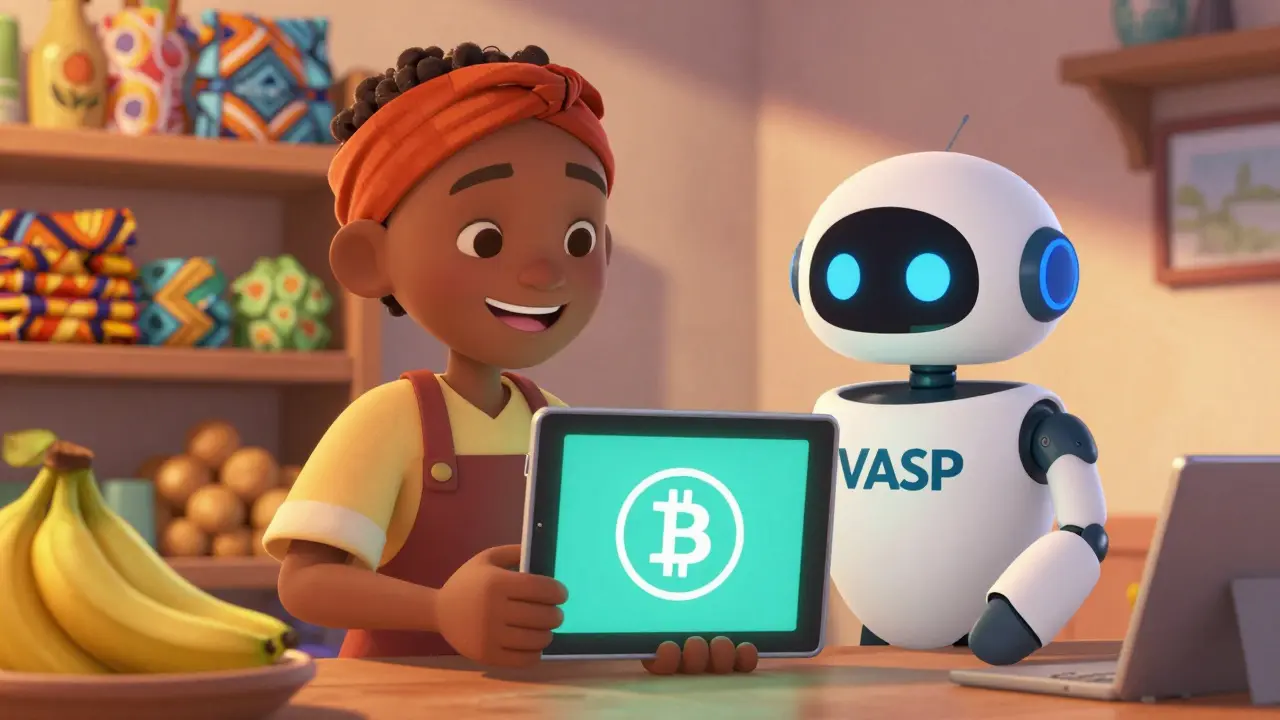
So how do Nigerian businesses handle crypto payments without breaking the law? The answer is through licensed Virtual Asset Service Providers (VASPs). These are companies approved by the SEC to handle crypto transactions, including buying, selling, storing, and converting digital assets to Naira.Here’s how it works in practice:
- A customer sends Bitcoin or USDT to your business.
- Your business uses a registered VASP like Quidax, Bybit Nigeria, or Binance Nigeria to receive the payment.
- The VASP instantly converts the crypto into Naira and deposits it into your bank account.
- You never hold the crypto yourself-you only get Naira.
This setup is legal because you’re not accepting crypto as payment-you’re accepting Naira, and the VASP handles the crypto side. The customer pays in crypto, but you’re paid in local currency. It’s a middleman solution that keeps you compliant.
Over 12,000 Nigerian businesses have signed up with licensed VASPs since April 2025, according to VASP reports. Most are small online sellers, freelancers, and service providers who want to serve international customers who prefer crypto. But there’s a catch: you pay for it.
The hidden costs of legal crypto acceptance
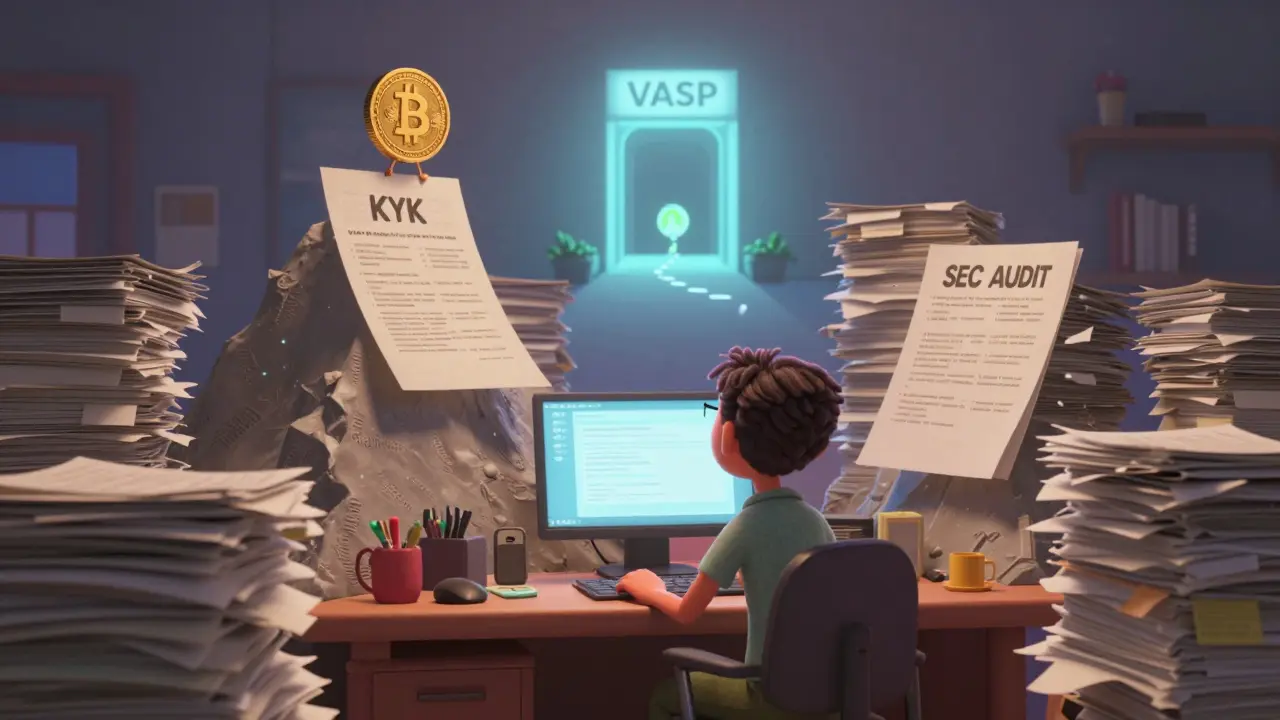
Using a VASP isn’t free. Most charge between 1.5% and 3.5% per transaction. That’s higher than traditional payment processors like Opay or Paystack, which charge around 1.4% for Naira transfers. But it’s not just about fees.There’s also compliance overhead. VASPs require you to submit KYC documents, verify your business registration, and sometimes even show proof of physical office space. For a one-person freelancer, this can feel like overkill. One freelance designer on Reddit said she spent three weeks gathering documents just to connect her Stripe account to Quidax.
And then there’s the banking issue. Even though the CBN lifted its 2021 ban on crypto-related bank accounts, not all banks play nice. FirstBank, GTBank, and Zenith Bank now service licensed VASPs-but if your bank sees a sudden influx of crypto-linked deposits, they might freeze your account anyway. That’s why many businesses use dedicated VASP wallets instead of personal bank accounts.

Why big companies still won’t take crypto
You might think big Nigerian brands like Jumia, MTN, or Dangote would jump on crypto payments. They don’t. Why? Because the risk doesn’t match the reward.MTN and Airtel use crypto only for international settlements-like paying offshore vendors. But they won’t let you pay your mobile data bill in Bitcoin. Why? Because their internal compliance teams say the legal exposure isn’t worth it. Even with VASPs, they’re still exposed to SEC audits, NFIU reporting, and potential fines if something goes wrong.
A Deloitte Nigeria survey from September 2025 found that 87% of Nigerian businesses say compliance complexity is their biggest barrier to accepting crypto. For small businesses, the cost of getting SEC-compliant can run from ₦85 million to ₦200 million ($60,000-$140,000 USD). That’s not a startup cost-that’s a corporate budget.
Who benefits from the current system?
The winners in Nigeria’s crypto regulatory setup aren’t the small merchants. They’re the big VASPs and institutional investors.As of September 2025, there are 47 SEC-licensed VASPs in Nigeria. Quidax, Bybit Nigeria, and Binance Nigeria control over 70% of the market. These companies have the capital, legal teams, and tech infrastructure to meet the SEC’s strict requirements: 24/7 monitoring, cold storage for 95% of assets, ISO 27001 cybersecurity, and real-time reporting to the Nigerian Financial Intelligence Unit.
Meanwhile, the SEC says crypto scams dropped 63% in Q2 2025 compared to Q4 2024. That’s a win for investor protection. But it’s also a win for the VASPs-because fewer scams means more trust, and more trust means more customers paying them fees.
For the average Nigerian, this system means crypto is great for investing and sending money home from abroad. Over 22 million Nigerians receive $25 billion in remittances each year, and crypto is now the fastest, cheapest way to do it. But for buying stuff locally? Still not practical.
What’s changing in 2026?
The SEC admits the system isn’t perfect. In September 2025, Director General Emomotimi Agama said they’re reviewing the merchant acceptance rules. A proposed amendment could create a new category called “Digital Payment Vehicle”-a lighter version of VASP for small businesses.If this happens, the capital requirement could drop from ₦500 million to ₦50 million ($35,000 to $3,500 USD). That would open the door for thousands of small shops, market vendors, and app developers to accept crypto without drowning in paperwork.
But even then, crypto won’t become legal tender. The CBN is pushing its own digital currency, the eNaira, which launched in October 2025 and already has over 1.2 million users. The government’s goal isn’t to let Bitcoin replace the Naira-it’s to replace cash with a state-controlled digital version.
So don’t expect to pay for akara with Ethereum anytime soon. But if you’re selling to global clients, or sending money to family overseas, crypto is still the most powerful tool in Nigeria’s financial toolbox.
What should you do if you want to accept crypto?
If you’re a business owner in Nigeria and you want to accept crypto payments legally, here’s your roadmap:- Don’t accept crypto directly. You’ll risk penalties or account freezes.
- Use an SEC-licensed VASP. Quidax, Bybit Nigeria, and Binance Nigeria are the most reliable.
- Only convert to Naira. Never hold crypto in your business wallet.
- Track every transaction. Keep records for SEC audits.
- Check your bank’s policy. Some banks still flag crypto-linked deposits.
For most small businesses, partnering with a VASP is the only realistic option. It’s not ideal-but it’s legal. And in Nigeria’s crypto landscape, legality is the only thing that keeps you in business.
Can I get fined for accepting Bitcoin as payment in Nigeria?
Yes. While the Central Bank no longer bans crypto transactions, the SEC considers direct acceptance of cryptocurrency as payment for goods or services a violation of the Investments and Securities Act 2025. Businesses caught doing this can face warnings, account freezes, or formal penalties. In 2025, at least 17 small businesses received official notices from the SEC for accepting crypto directly.
Is it legal to use Binance or Quidax to accept crypto payments in Nigeria?
Yes, but only if the platform is licensed by the SEC. Binance Nigeria and Quidax are both registered as Virtual Asset Service Providers (VASPs) as of 2025. You can use them to receive crypto payments, but you must convert the funds to Naira immediately. You cannot hold crypto in your business account-only the VASP can.
Can I pay my employees in cryptocurrency in Nigeria?
No. Nigerian labor law requires wages to be paid in legal tender-the Naira. Even if your employee agrees to be paid in Bitcoin, it’s still illegal. The SEC and the Federal Ministry of Labour both enforce this rule. Payroll must be processed in Naira through approved banking channels.
Do I need to pay taxes on crypto payments received through a VASP?
Yes. Any income you receive-even if converted from crypto to Naira-is taxable. The Federal Inland Revenue Service (FIRS) treats crypto-to-Naira conversions as income. You must report the Naira equivalent at the time of conversion. Keep records of all VASP transactions for tax filing.
Will Nigeria ever let businesses accept crypto as legal tender?
Unlikely in the near future. The Central Bank of Nigeria and the SEC are committed to keeping the Naira as the only legal tender. The focus is on promoting the eNaira, Nigeria’s own digital currency, rather than allowing Bitcoin or Ethereum to compete. The 2025 regulatory framework was designed to protect the financial system-not to enable crypto payments for everyday purchases.
What’s next for crypto in Nigerian business?
The future isn’t about replacing the Naira. It’s about using crypto to connect Nigerian businesses to the global economy. If you’re exporting goods, serving international clients, or receiving remittances, crypto still offers speed and lower fees than traditional banking.But for local sales? Stick to Naira. The system isn’t built for it-and the regulators aren’t trying to make it work. The real opportunity isn’t in accepting crypto as payment. It’s in using it to get paid by people outside Nigeria.



15 Comments
Nicole Parker
It's wild how Nigeria's trying to straddle this line-crypto's everywhere in daily life, but the law treats it like a shadow economy. I get why they don't want Bitcoin replacing the Naira, but the VASP middleman system feels like forcing everyone to use a translator when they already speak the same language. The fees are brutal for small sellers, and the compliance? It's a full-time job just to accept payments. I wonder if this is really protecting people or just protecting big players from competition.
And honestly, the fact that you can't pay employees in crypto even if they want to? That's a human rights issue wrapped in bureaucracy. People should be able to choose how they're paid, especially when crypto remittances are cheaper and faster than Western Union. The system feels like it's designed to keep the poor poor and the rich richer.
I'm not saying we should go full Bitcoin town, but maybe a tiered system? Like, micro-businesses get a lighter version, and big corporations get the full compliance drill. Right now it's all or nothing, and that's not innovation-it's inertia with a fancy name.
Tom Van bergen
Legal tender means naira period full stop crypto is digital art not money stop pretending otherwise
Sandra Lee Beagan
As someone who’s watched Nigeria’s fintech evolution from Canada, this is actually one of the more thoughtful regulatory approaches I’ve seen in emerging markets. The VASP model isn’t perfect, but it’s pragmatic-like letting someone use a foreign credit card without letting them open a bank account. The 1.5-3.5% fee? Yeah, it stings, but compare it to the 8-12% you’d pay through traditional remittance channels before crypto. It’s progress, not perfection.
And the fact that scams dropped 63%? That’s huge. People were getting wiped out by fake exchanges and rug pulls. Now there’s at least a layer of oversight. The real win is that Nigerian freelancers can now get paid in crypto from Europe or the US and convert it to naira in minutes-not weeks. That’s life-changing for someone in Enugu or Kano.
Is it clunky? Absolutely. But the fact that 12,000+ businesses signed up in 6 months tells you something. The market’s already ahead of the regulators. The real question is whether the SEC will adapt or just keep adding layers until it breaks.
Also, eNaira is a fascinating counterpoint-state-controlled digital currency vs decentralized crypto. It’s like watching two future paths collide. I’m rooting for both to coexist, honestly. One for stability, one for freedom.
Ben VanDyk
It’s interesting how the article frames this as a legal gray area when it’s not. The law is clear. Crypto isn’t legal tender. End of story. The fact that people are trying to twist VASPs into a backdoor payment system is just regulatory arbitrage. You’re not ‘accepting crypto legally’-you’re exploiting a loophole while pretending it’s compliance.
And the fees? Of course they’re high. That’s the point. If it were easy, everyone would do it. The SEC isn’t trying to make crypto accessible-they’re trying to make it expensive enough that only big players can afford to play. That’s not regulation. That’s rent-seeking dressed up as consumer protection.
Also, why are we still talking about this like it’s a novel idea? This has been the global pattern since 2017. Regulators fear decentralization, so they create middlemen who become the new gatekeepers. The only thing that’s changed is the color of the gate.
Frank Cronin
Oh wow, look at this. A whole 12,000 businesses are too dumb to just accept crypto and deal with the consequences. Let me guess-they also think traffic lights are optional and that ‘legal’ means ‘whatever I can get away with.’
And now we’re supposed to be impressed that the SEC is charging 3.5% to do the bare minimum? That’s not a service, that’s a tax on innovation. The real crime here isn’t businesses accepting crypto-it’s that the government is monetizing the fear of innovation. You’re not protecting the economy-you’re protecting your own power.
Also, ‘don’t hold crypto’? That’s like saying ‘you can’t own a car, but you can rent one from the DMV every time you want to drive.’ Absolute nonsense. If you’re not going to let people use it, stop pretending it’s a financial asset. Just ban it outright and be done with the hypocrisy.
Stanley Wong
I think a lot of people are missing the bigger picture here. Nigeria isn’t trying to ban crypto-it’s trying to control how it enters the financial system. The VASP model isn’t about stopping people from using crypto, it’s about making sure it doesn’t destabilize the banking system or fuel capital flight. The fact that remittances are cheaper now? That’s a win. The fact that scams dropped? That’s a win. The fees are annoying, sure, but they’re not the enemy.
Compare this to El Salvador-where they forced Bitcoin as legal tender and now have massive volatility issues. Nigeria’s approach is cautious, maybe too cautious, but at least it’s not reckless. The eNaira is the real play here. The government wants to digitize the Naira, not replace it. That’s a fundamentally different goal than what’s happening in other countries.
And honestly, if you’re a small business owner, you’re not losing much by using a VASP. You’re still getting paid in naira, you’re still getting paid fast, and you’re not getting your account frozen. That’s better than most African countries can say. Maybe the problem isn’t the system-it’s that we expect instant perfection from a system built in a country where electricity still goes out twice a week.
miriam gionfriddo
OK so I just spent 3 hours reading this and I’m emotionally drained. Like. WHY is every single Nigerian business article about crypto just a 5,000-word essay on how you can’t do anything? Where’s the hope? Where’s the future? Where’s the ‘but here’s how you thrive anyway’?
And then I saw the part about the 85 million naira compliance cost. 85 MILLION. That’s not a startup cost-that’s a corporate acquisition. Who the hell is supposed to do that? The guy selling plantain chips at the roadside? The guy coding apps from his mom’s living room?
And now the SEC is gonna give them a ‘lighter’ version at 50 million? Still impossible. This isn’t regulation. This is a tax on ambition. They’re not protecting the economy-they’re protecting their own jobs. The VASPs are the new banks, and they’re the ones who get to charge the fees. The people? They’re just the fuel.
And don’t even get me started on the banks freezing accounts. You’re telling me I can legally use a VASP, but my bank might still shut me down because they’re scared? That’s not a system. That’s a nightmare with a PowerPoint presentation.
Kenneth Ljungström
Really appreciate this breakdown. I’ve been helping a few Nigerian freelancers set up crypto payments and this is exactly the roadmap I’ve been giving them. The VASP thing is clunky but it works. One guy I know sends invoices in USDT, uses Quidax to convert to naira, and gets paid the same day. His clients in Germany love it because they avoid wire fees. He’s not holding crypto, he’s not breaking the law, and he’s making more than he did with Paystack.
And yeah, the paperwork is a pain. He had to submit his business registration, utility bill, and a notarized letter from his landlord just to link his account. Felt like applying for a visa. But he did it. Now he’s got clients in 12 countries.
Biggest tip? Use a dedicated VASP wallet, not your personal bank. And always keep records-even if you think you won’t get audited. One friend got flagged because he didn’t label his transactions. Took him 6 weeks to prove it wasn’t money laundering.
Also, eNaira is kinda boring but it’s growing. Maybe in 5 years we’ll see hybrid systems-like eNaira for local, crypto for global. That’s the future I’m betting on.
Richard T
Interesting how the article mentions the 63% drop in scams but doesn’t ask why. Was it because of regulation? Or because the scammers just moved to other countries? The VASPs are regulated, but what about the ones operating offshore? Are they still targeting Nigerians? And if so, why is the SEC only focusing on local businesses?
Also, if crypto is classified as a security, why can’t people use it as collateral for loans? That’s a huge missed opportunity. You can’t buy coffee with Bitcoin, but you should be able to use it to get a loan to buy a generator. That’s real utility.
And what about the tax side? FIRS says you pay tax on the Naira equivalent at conversion-but what if the price swings between when you receive the crypto and when you convert? Do you pay tax on the gain? Or just the amount you received? This needs clarity. Right now it’s a gray zone that could land people in trouble.
jonathan dunlow
Listen. I used to think crypto was just gambling with extra steps. Then I met a woman in Abuja who runs a boutique online store. She started accepting USDT through Binance Nigeria because her customers in the UK kept asking for it. She didn’t know the rules. She just knew her sales jumped 40%.
She got a warning letter. Panicked. Sold everything. But then she found a VASP. Did the paperwork. Paid the fees. Now she’s making more than ever. Her biggest complaint? The bank still flags her deposits. But she doesn’t care. She’s thriving.
This isn’t about legality. It’s about survival. Nigeria’s economy is broken. People are turning to crypto because the system failed them. The VASPs aren’t the villains-they’re the bridge. The real villain is the bureaucracy that makes it harder to survive than to fail.
If you’re a small business owner in Nigeria and you’re using crypto through a VASP? You’re not breaking the law. You’re outsmarting it. And you deserve a medal, not a fine.
rita linda
Let’s be real. This whole thing is just a front for Western financial control. The SEC claims they’re protecting Nigerians, but they’re just making sure crypto stays under the thumb of U.S.-backed exchanges like Binance and Bybit. Who owns those companies? Who audits them? Who’s really in charge?
And now they’re pushing eNaira like it’s the future? That’s a digital surveillance tool. Every transaction tracked. Every purchase monitored. The government will know what you buy, when you buy it, and how much you spend. That’s not innovation-that’s control.
Meanwhile, Bitcoin is decentralized, censorship-resistant, and owned by the people. But you can’t use it? Why? Because the state wants you to be dependent on their version of digital money. This isn’t regulation. It’s colonization with better PR.
Martin Hansen
So let me get this straight. You can’t pay your employee in Bitcoin, but you can pay a VASP 3.5% to convert it to Naira so you can pay them in Naira? That’s not a workaround. That’s a tax on common sense.
And you call this ‘legal’? It’s just a more expensive version of the same thing. The law says you must pay in Naira. So why not just pay in Naira? Why go through the crypto charade at all?
Answer: because you’re trying to appear ‘modern’ while avoiding the real work of building a functional financial system. This isn’t progress. It’s performance.
Also, 12,000 businesses? That’s less than 0.1% of Nigerian SMEs. So the other 99.9% are just stuck? And we’re supposed to be impressed that the system works for a tiny fraction? That’s not a success story. That’s a failure dressed in blockchain.
Lore Vanvliet
They’re calling this ‘legal crypto acceptance’ but it’s just a scam within a scam. The VASPs are the new middlemen who get rich while everyone else pays the price. And the SEC? They’re not protecting anyone-they’re protecting their own power. The moment someone tries to build a decentralized payment system without them? They shut it down.
And the eNaira? Please. It’s a digital leash. The government will track your every purchase, freeze your account if you buy the ‘wrong’ thing, and demand your data like it’s a public right.
Meanwhile, Bitcoin doesn’t need permission. It doesn’t need KYC. It doesn’t need your landlord’s utility bill. But you’re not allowed to use it? Because the state says so?
This isn’t regulation. This is tyranny with a blockchain logo.
Barb Pooley
Wait so if I use a VASP I'm not breaking the law but my bank might still freeze my account anyway? So the law says one thing but the banks say another? So what's the point of the law if the banks can just ignore it? I'm so confused now. Is this even a system or just a bunch of people pretending to have rules?
And why do I feel like I'm being gaslit? Like the whole article is saying 'we're helping you' but the reality is 'we're making it harder for you to survive'? I don't know what to believe anymore. This feels like emotional abuse from the government.
Nicole Parker
Actually, I think Stanley nailed it. The real innovation isn’t in the VASPs-it’s in the people who use them anyway. They’re not waiting for permission. They’re building solutions in the cracks. That’s the Nigerian spirit.
And Frank? You’re right about the hypocrisy. But the fact that someone in Port Harcourt can get paid by a client in Berlin without waiting 5 days for a wire transfer? That’s power. That’s dignity. That’s not just about money-it’s about connection.
Maybe the system is flawed. But the people? They’re not waiting for the perfect solution. They’re making do with what they’ve got. And honestly? That’s the most legal thing happening here.