You've probably seen a flashy post or a DM claiming that CDONK is a decentralized meme token on the Binance Smart Chain (BSC) is doing a massive airdrop in partnership with CoinMarketCap. It sounds like an easy way to get free tokens, but here is the cold truth: there is no official CDONK x CoinMarketCap airdrop. In fact, if you've encountered a site asking for your private keys to claim these tokens, you're looking at a phishing attempt.
Quick Summary: What You Need to Know
- Status: Fake. There is no verified partnership between Club Donkey and CoinMarketCap.
- The Risk: Phishing sites are impersonating this event to steal wallet funds.
- Red Flag: Any site asking for your seed phrase or private key is a scam.
- Reality Check: CDONK has zero trading volume and doesn't meet the requirements for a featured CMC airdrop.
The Truth About the CDONK Airdrop
When a project claims to be "100% community driven," it usually means they are leaning heavily on social media hype. Club Donkey (CDONK) is positioned as a substrate token of the Donkey (DONK) token. While both are listed on CoinMarketCap, a listing is not the same as a partnership. A listing simply means the token exists on the blockchain and has basic data available.
If you check the official CoinMarketCap airdrop calendar, you'll find a glaring absence of any CDONK event. Legitimate airdrops go through a rigorous review process. According to CoinMarketCap's internal standards, projects usually need a consistent 30-day trading history across multiple verified exchanges and liquidity exceeding $500,000. CDONK, however, reports zero trading volume and a price of $0.00. It simply doesn't meet the technical or financial bar to be featured in a legitimate event.
How to Spot the Phishing Trap
Scammers love using the names of trusted giants like CoinMarketCap to lower your guard. They create "mirrored" websites that look exactly like the real thing. The goal is simple: get you to connect your wallet or enter your recovery phrase. Once you do, they use a "drainer" script to empty every asset in your wallet in seconds.
Security expert ZachXBT highlighted that nearly 99% of notifications claiming to be "CoinMarketCap airdrops" are actually phishing attempts. In late 2025, forensic data showed over 12,000 reported incidents of this exact nature. If you see a link on X (formerly Twitter) or Telegram promising a CDONK windfall, ask yourself: why is a token with no trading volume suddenly giving away money through a top-tier data aggregator?
| Feature | Legitimate Airdrop (e.g., Arbitrum) | CDONK "Airdrop" Claims |
|---|---|---|
| Official Listing | Listed on CMC/CoinGecko Airdrop Pages | Absent from official calendars |
| Requirements | On-chain activity, snapshots, or tasks | Requests private keys or seed phrases |
| Trading Volume | High liquidity and active markets | Zero trading volume reported |
| Communication | Verified official channels & blogs | Random DMs and fake portals |

Analyzing the Tokenomics of Club Donkey
To understand why this airdrop is unrealistic, we have to look at the actual numbers. CDONK operates on the Binance Smart Chain (BSC). While the max supply is set at 20 million tokens, the circulating supply is effectively zero. This means there is no market value to support a massive distribution event.
The project claims to follow the path of other meme coins like SHIBA INU or AKITA INU. However, those coins built actual liquidity and user bases before attempting large-scale distributions. CDONK lacks the infrastructure, the social media following (with only a few hundred followers on its X handle), and the technical integration with wallet verification systems required for a real exchange-hosted event.
The Danger of "Preview Pages"
A common point of confusion is that users see CDONK on a "preview page" on CoinMarketCap and assume it's endorsed. There's a huge difference between a project being in the system and a project being partnered. Many low-cap tokens appear in the database, but that doesn't mean the platform supports their marketing efforts.
Blockchain security firms like CertiK have identified dozens of active phishing domains specifically targeting people searching for the "CoinMarketCap CDONK Airdrop." These domains are all linked to a few specific Ethereum addresses that have already stolen hundreds of thousands of dollars from unsuspecting users. The pattern is always the same: a sense of urgency ("Claim now before it's too late!") and a request for sensitive wallet information.
Safe Ways to Find Real Airdrops
If you're hunting for free tokens, stop clicking random links. Instead, use a verified system. Start with the official airdrop tabs on CoinMarketCap or CoinGecko. These platforms vet the projects and provide a direct path to the official project website.
Check out sites like Airdrops.io, where expert teams manually verify the legitimacy of the claims. A real airdrop will usually ask you to perform a task-like joining a Discord, following a social account, or using a beta version of a protocol-rather than asking for your private keys. If a project asks for your "secret recovery phrase" to "verify your wallet," close the tab immediately. No legitimate company in the history of crypto will ever ask for that information.
Is the CDONK airdrop real?
No. There is no evidence from CoinMarketCap or any other reputable source that an official airdrop for CDONK exists. All current claims are likely phishing scams designed to steal your assets.
Why do I see CDONK on CoinMarketCap if there is no airdrop?
CoinMarketCap tracks thousands of tokens. Being listed on a preview page means the token exists on the blockchain, but it does not mean CoinMarketCap is partnering with the project or hosting an event for them.
What should I do if I already entered my private key into a CDONK site?
Immediately move any remaining funds to a brand new wallet with a different seed phrase. Once a private key is exposed, that wallet is permanently compromised and cannot be "fixed." Do not send more funds to the old wallet.
How can I verify if a CoinMarketCap airdrop is legitimate?
Always go directly to the "Airdrops" section on the official coinmarketcap.com website. If the token is not listed there, the airdrop is not official. Never follow links from DMs, emails, or unofficial social media posts.
What are the red flags of a crypto airdrop scam?
Red flags include requests for your seed phrase/private key, requirements to pay a "gas fee" or "activation fee" in advance, high-pressure timers, and links from unverified social media accounts.
Next Steps for Your Security
If you're active in the meme coin space, your biggest asset isn't the tokens you hold, but the security of your keys. Consider moving your long-term holdings to a hardware wallet. This ensures that even if you accidentally interact with a malicious site, your primary funds remain offline and unreachable by scammers.
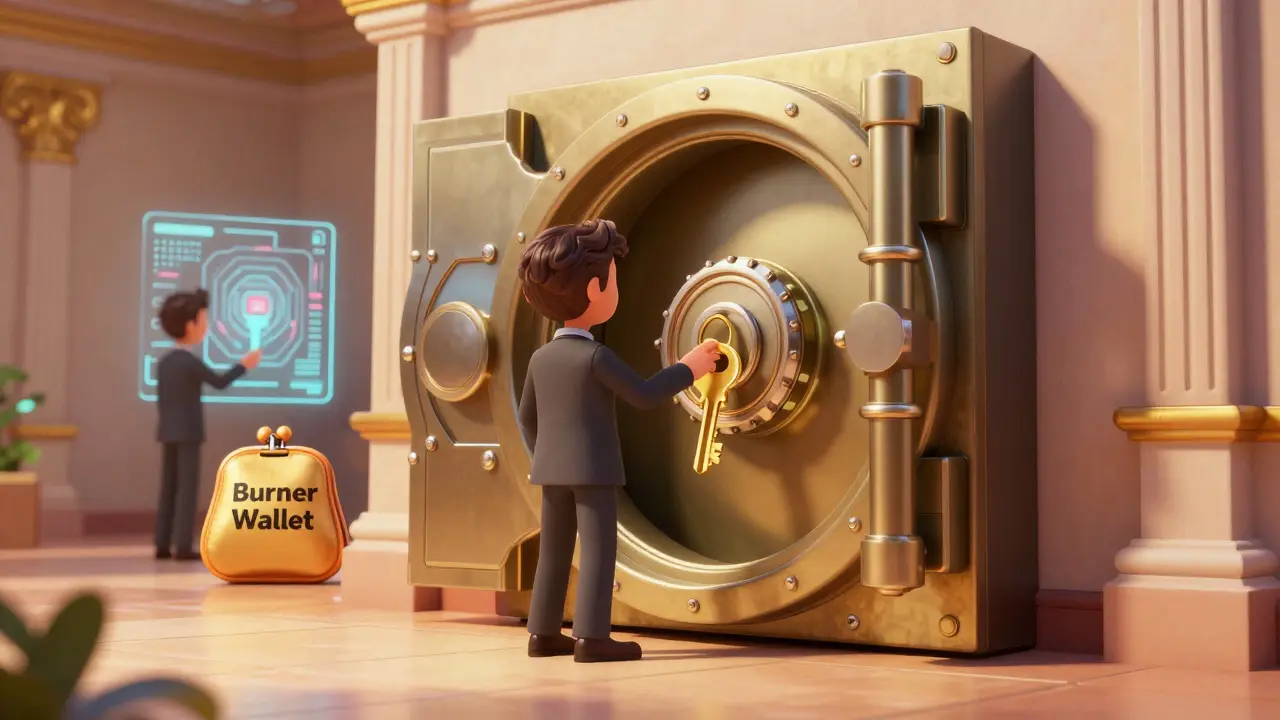
Keep your software updated and use a dedicated "burner wallet" for claiming new airdrops. A burner wallet is a secondary account with very small amounts of funds. If you connect it to a site that turns out to be a scam, you only lose a few dollars instead of your entire portfolio. Stay skeptical, verify everything through official channels, and remember that if it sounds too good to be true, it almost always is.

13 Comments
Suvoranjan Mukherjee
Spot on analysis! For anyone new to the DeFi space, please remember that your seed phrase is the keys to your kingdom. If a dApp or a site asks for it, it's a 100% rug pull or a phishing drainer. Always use a hardware wallet like Ledger or Trezor for your cold storage and only keep a tiny amount of gas in your hot wallets for interacting with these risky meme tokens. Stay safe and keep grinding!
david head
totally agree with this 🚀 keep your keys safe everyone!!
Arlen Medina
Only idiots fall for this stuff. It's literally common sense that if some random token with zero volume is giving away free money it's a scam. I don't get why people need a whole article to figure this out. Just use your brain for once and stop trying to get rich without doing any actual work.
Patty Levino
I've seen so many people lose their life savings to these types of drainers. It's really heartbreaking because the scammers target the most vulnerable who are just trying to make a better life for themselves. Please, if you're feeling pressured by a timer or a "limited offer," just take a deep breath and step away from the screen for a moment. Your mental health and your funds are more important than a fake airdrop.
Bruce Micciulla Agency
the sheer incompetence of the retail crowd is staggering when you consider that the liquidity metrics are public knowledge and any half decent analyst could see the zero trading volume immediately making the partnership claim logically impossible from a financial perspective but people still click links like they are getting a free lunch and then act surprised when their wallet is drained by a script they didnt even understand
Emily 2231
This is clearly a coordinated effort to manipulate the market and keep the common people away from the real gains while the elites keep the wealth for themselves. It is quite evident that the government is likely involved in these fake-outs to track who is actually moving money out of the traditional system and into decentralized assets. Do not trust any official "security" warnings because they are just tools of the deep state to frighten us into compliance.
Alexandra Lance
Oh honey, imagine actually thinking this is "news" 🙄 The fact that people can't tell the difference between a database listing and a partnership is just peak comedy. It's almost like basic literacy is a dead language now 💅✨ Also, we all know the real airdrops are reserved for the inner circle anyway so why even bother pretending you're helping the masses? 🤡
June Coleman
Wow, what a shocker! A random token promising free money is actually a scam! I'm absolutely floored by this revelation. Truly a groundbreaking discovery that will change the world of finance forever 🙄
Taylor Meadows
I can tell just by the way some of you are reacting that you have no real discipline in your financial lives. You're chasing ghosts and dopamine hits instead of building a real foundation. It's honestly pathetic to watch people scramble for a few fake tokens when they should be focusing on their internal growth and spiritual alignment with wealth.
vijendra pal
Exactly!! 💯 This is why u always check the official CMC page 📖 People just want quick money without doin research its sad 📉 Be careful guys dont get scammed!! 🚫💰
JERRY ORTEGA
just a chill reminder to use a burner wallet for everything new. seriously, just keep like ten bucks in a separate address and if it's a scam you only lose ten bucks instead of your whole portfolio. it's a simple habit that saves a lot of stress in the long run
gladys christine
oh my god this is so important!! please please everyone just stay safe out there 💖 it is just devastating to see people lose their money to these mean people who just want to steal! we have to look out for each other and be the light in this crazy crypto world!!
Robert Coskrey
I fully concur with the advice provided in this article. It is imperative that users maintain a high level of skepticism when interacting with unverified links, especially those promising immediate financial gain through airdrops. Thank you for providing such a detailed and structured warning to the community.