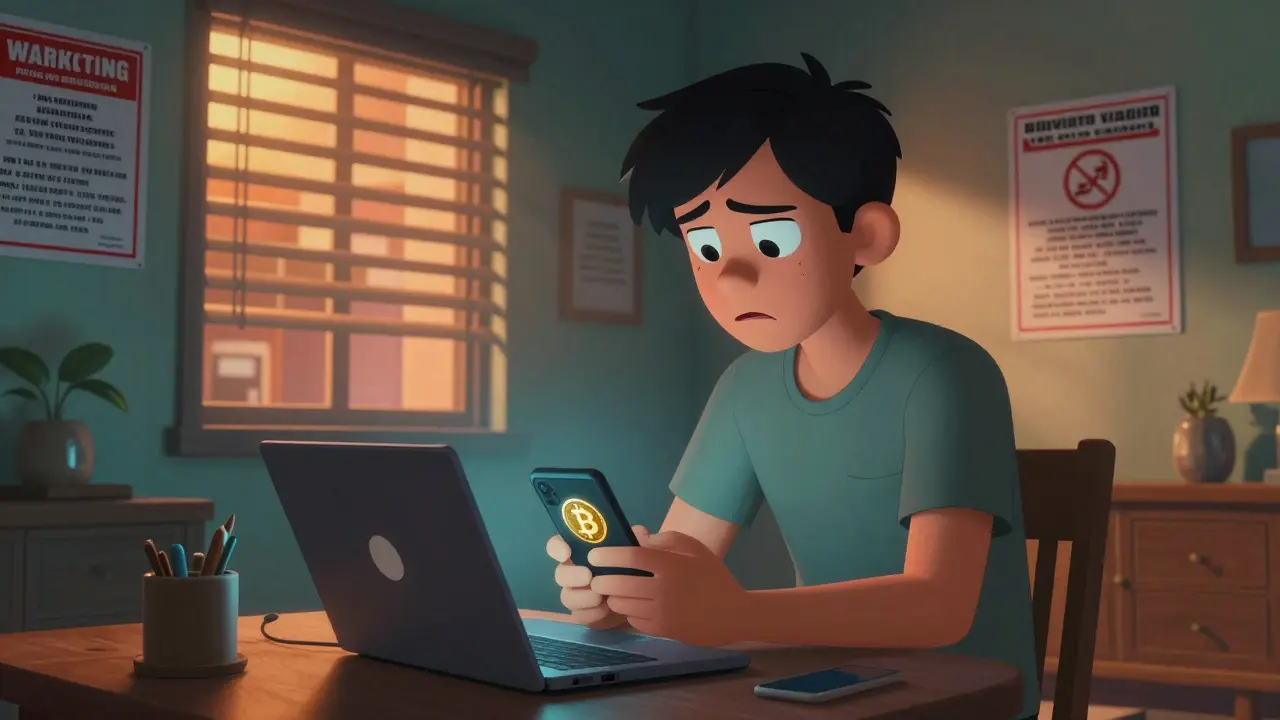
Imagine buying Bitcoin in Dhaka while the government warns you it could send you to prison. This is the daily reality for hundreds of thousands of people in Bangladesh. Despite a strict prohibition enforced by the central bank since 2017, reports suggest nearly 700,000 citizens are still active in the market. The gap between official warnings and street-level reality creates a dangerous situation for anyone holding digital assets here.
If you are looking to trade or hold crypto in this region, understanding the legal landscape isn't just academic-it's a matter of personal security. The authorities do not treat these transactions as mere financial choices; they view them as threats to national monetary policy. In this guide, we break down exactly how the ban works, which laws apply, and what actual penalties look like when enforcement happens.
The Regulatory Framework Behind the Ban
To understand why the risk is so high, you have to look at who makes the rules. The primary force behind the crackdown is the Bangladesh Bankthe central bank of Bangladesh responsible for monetary policy and financial regulation. They issued the first major warning against Bitcoin usage back in December 2014. By February 2016, this stance hardened significantly.
In their circular from February 1, 2016, the bank explicitly stated that using cryptocurrencies violates existing laws. Specifically, they pointed to two major statutes. The first is the Foreign Exchange Regulation Act of 1947a law governing the movement of currency and foreign funds in Bangladesh. Because Bitcoin isn't recognized as legal tender, moving value across borders using it falls under foreign exchange violations.
The second law involved is the Money Laundering Prevention Act of 2012legislation criminalizing financial activities used to hide illicit money origins. Even if your Bitcoin comes from legitimate sources, the anonymity often associated with blockchain ledgers makes it suspicious to regulators. In 2017, the Bangladesh Bank declared clearly that cryptocurrencies are "not legal tender" and strictly prohibited. This means they cannot be used to buy goods, services, or settle debts within the country.
While there has been no new criminal code written specifically for owning Bitcoin, the interpretation of these older laws covers enough ground to prosecute users. The central bank updates these positions regularly. Dr. Abdur Rouf Talukder, the current Governor, maintains the same tough position as his predecessor, Dr. Atiur Rahman, prioritizing financial stability over innovation in this sector.
Potential Penalties and Prison Terms
You might wonder what actually happens if the authorities catch you. The consequences range from heavy fines to significant jail time. Under the amended Money Laundering Prevention Act, specifically Section 6, engaging in transactions involving proceeds from illegal activities can lead to serious charges. Authorities interpret unauthorized cryptocurrency exchanges as falling under this category.
| Type of Penalty | Maximum Limit | Governing Law |
|---|---|---|
| Imprisonment | Up to 10 years | Money Laundering Act (Amended 2015) |
| Fines | 10,000 to 1,000,000 BDT | Money Laundering Act |
| Asset Seizure | All involved funds/cryptos | CID Enforcement Protocol |
Above numbers aren't theoretical. Look at the July 2022 case where police arrested 14 individuals in Dhaka. The Criminal Investigation Department (CID) took them down for running a local exchange that processed roughly $2.3 million in transactions. These weren't just small investors; the leaders faced severe scrutiny.
Another alarming case occurred in February 2023. A trader named Mohammad Ali had his entire stash seized. Police confiscated 127 Bitcoins from him, which was valued at approximately $12.1 million at the time. He lost everything instantly. In May 2024, seven university students were investigated by the Bangladesh Financial Intelligence Unit (BFIU) for facilitating peer-to-peer transfers totaling $85,000 monthly. Being a student didn't save them from the inquiry.
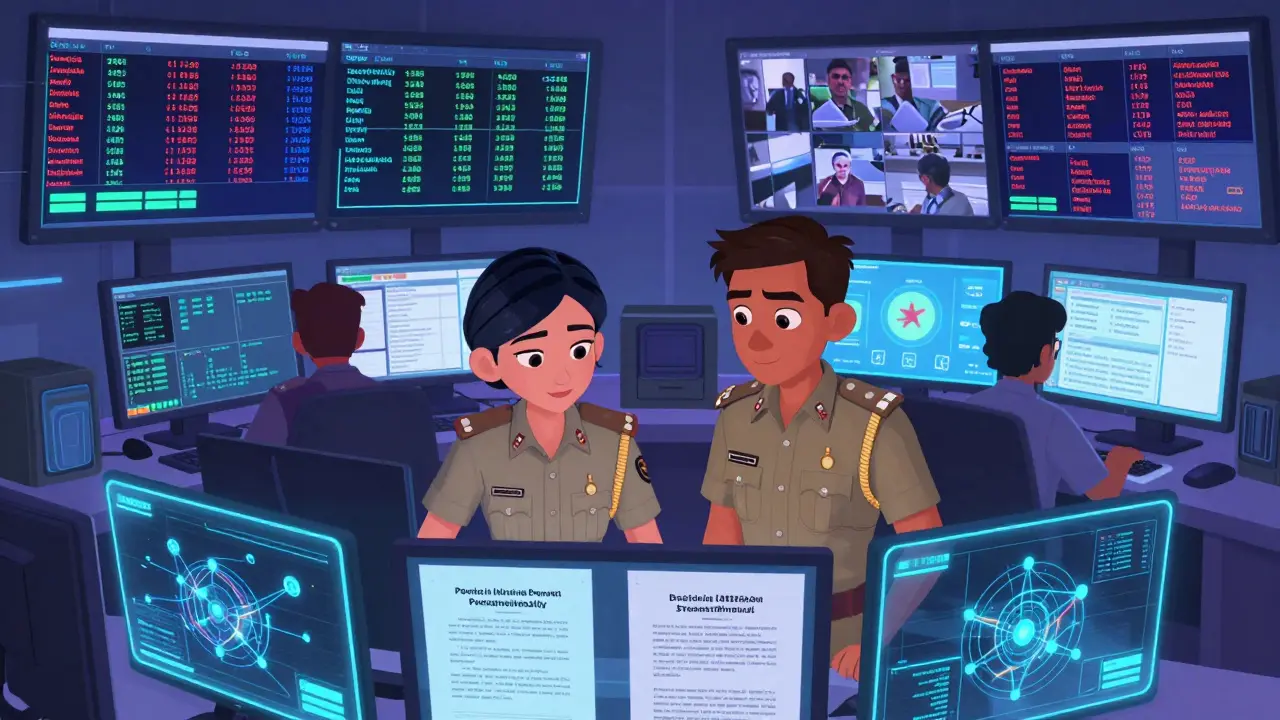
How Authorities Track Your Transactions
It is easy to think that using encryption makes you invisible. However, law enforcement agencies in Bangladesh have developed sophisticated tracking methods. They monitor international card transactions through the Bangladesh Automated Clearing House (BACH). In the fourth quarter of 2024 alone, they flagged 127 suspicious transactions linked to crypto exchanges globally.
Local payment systems are another weak point for privacy. Mobile Financial Services (MFS) providers like bKasha leading mobile financial service platform in Bangladesh and Nagada mobile financial service platform owned by bKash competitors report suspicious activity directly to the BFIU. If they see irregular patterns-like rapid deposits followed by immediate withdrawals-they freeze accounts. In 2024, these platforms blocked over 2,800 accounts suspected of crypto-related funding.
Social media is also a hunting ground. When you join Telegram groups or Facebook communities to find "agents" for buying USDT, you leave a digital footprint. The CID monitors online forums for organized networks. In June 2024, a scammer named Sohel Rana disappeared with $350,000 after taking payments from 23 traders. While this looks like fraud, it highlights how public channels expose participants to both criminals and police simultaneously.

The Underground Market and Gray Areas
Despite the dangers, the market thrives. An estimated 5% to 7% of internet users in Bangladesh engage in crypto activities. Most rely on P2P (Peer-to-Peer) markets. Platforms like Binance remain accessible via the Google Play Store, and many users access LocalBitcoins using VPNs to hide their IP addresses.
This reliance on underground channels introduces massive risk beyond just the law. There is no legal recourse if an agent steals your money. You pay the Taka (BDT), and sometimes never receive the Bitcoin. A survey conducted in May 2025 found that 68% of users reported having at least one bank account frozen due to these activities. This freezes your life savings alongside the crypto funds.
There is also a confusing contradiction in the law. In November 2021, the Bangladesh Bank communicated to the CID that "trading, owning cryptocurrency [is] not illegal" by itself. But they publicly say the opposite. Barrister Rokibul Hasan calls this a "dangerous legal limbo." For a regular person, this ambiguity is the most terrifying part. One day ownership is ignored, the next day it gets treated as money laundering.
Taxation and Future Policy
As of early 2026, taxation remains murky. The National Board of Revenue (NBR) applies general income tax rules. Profits could be taxed at 25% for corporations or 30% for individuals. However, no specific return form exists for crypto gains yet. Commissioner Md. Moniruzzaman confirmed in February 2025 that specific regulations are pending.
Some experts argue the ban hurts the economy. Professor B M Mainul Hossain from Dhaka University claims the prohibition costs Bangladesh $150 million annually in potential revenue. However, Finance Minister Abul Hassan Mahmood Ali stated in March 2025 that there are "no plans to reconsider the cryptocurrency ban." The focus seems to remain on banning tokens while allowing non-crypto blockchain applications to be tested in innovation sandboxes.
Is simply owning Bitcoin illegal in Bangladesh?
Technically, private possession isn't explicitly outlawed by name in the penal code, but any attempt to sell or buy it triggers violations under the Foreign Exchange Act. Therefore, holding it becomes risky if you transact.
Can I get my money back if my bank account is frozen?
Recovering frozen funds is extremely difficult. You typically need legal proof that the funds were clean, but admitting to crypto transactions usually validates the bank's suspicion immediately.
Do VPNs protect me from tracing?
VPNs hide your location, but they do not hide the transaction data on exchanges or the cash flow in your bank account, which is where the BFIU investigates most leads.
What happens if I use an app downloaded from the Play Store?
Using apps like Binance is not a crime itself, but once you link them to a Bangladeshi bank card or MFS account, those intermediaries report the transaction to the Central Bank.
Will the crypto ban be lifted soon?
Current government statements from 2025 suggest no change is imminent. The priority is preventing capital flight and maintaining the value of the Bangladeshi Taka.



24 Comments
Joshua Aldrich
The legasl risk here is real people. You could get jail time easy for trading. The low says foregin exchange rules appley to Bitcoin. It is not leagl tender anwhere in the region. Center bank warns constanltly about this danger. Dont think you are saft just because ot hers do it. Enfrocement happens regulary and banks share data. Peple lose savigs when accounts freeze unexpectedy.
alex rodea
It is hard to stay safe when the rules change. Trading coins feels risky in Bangladesh. People need to know before they buy anything. Safety comes first always for your money. Keep your funds in normal banks. The government protects the Taka currency strongly.
Susan Wright
Yeah Joshua is spot on about the penalties. I read that report last week. Ten years prison is serious business. You cant ignore those laws just because crypto is popular. The fines alone would bankrupt anyone involved.
gladys christine
everyone is scared yet still buying this stuff its crazy how desperate people get for quick money they forget about family safety and prison terms waiting in shadows for them
Manisha Sharma
Our govment knows best stop this filth entering our economy why shold we allow foreigners control our money market security is paramount and trade bans save jobs and culture from west influence bad actors try to break rules every day so stay loyal to naitonal policy dont listen to scammers
Suvoranjan Mukherjee
The regulatory sandbox concept is interesting for blockchain tech though not for token issuance. Fintech innovation faces hurdles due to FX controls. BFIU monitoring covers MFS channels effectively now. Compliance costs exceed potential revenue for small traders in Dhaka. We need clearer guidelines on non-crypto ledgers.
Robert Coskrey
Indeed, the legal precedents established in recent arrests are quite illustrative of the current judicial posture regarding digital assets. Furthermore, the banking sector collaboration remains robust and effective in tracking transactions. One must exercise extreme caution when considering exposure. The implications for personal wealth are severe. Therefore, prudence is advised.
Adriana Gurau
Honestly these people are just begging for trouble 😒 Why take such huge risks? It shows a complete lack of responsibility. Most families would rather live safely than gamble their freedom. 🤦♀️ Smart investors stay away from illegal zones.
Emily 2231
central banks hate losing control they want to track every cent moving through phones it is obvious the ban stops people from escaping inflation they monitor bKash nagad transactions constantly you cannot hide online footprints forever
Brooke Herold
Living here it gets complicated quickly with neighbors talking too. Privacy becomes difficult when agents operate openly. Trust is fragile in these communities. People rely on friends for exchanges sometimes. Risk assessment changes daily depending on local enforcement.
sekhar reddy
OMG the situation is absolutely terrifying to watch unfold!!! Students getting investigated?? How does he survive that kind of pressure!! Imagine losing your savings in one sweep!😱 Police raids happen without warning signs anywhere! Everyone should stop this madness immediately!
Bruce Micciulla Agency
The data presented indicates a severe discrepancy between regulatory policy and public compliance behavior. Individuals engaging in these activities expose themselves to significant criminal liabilities without understanding the scope. Money laundering statutes are being leveraged aggressively against what appears to be simple investment decisions. The central bank maintains a stance that prioritizes national monetary stability above individual financial freedom. Tracking mechanisms have evolved significantly beyond simple cash flow monitoring to include digital footprint analysis. Mobile financial services act as intermediaries that report suspicious activity directly to enforcement agencies. Many participants underestimate the reach of cross-border surveillance systems currently in operation. Peer-to-peer markets lack the necessary oversight to protect users from fraud or seizure. Confusion surrounding the legality creates a environment where ignorance provides little defense. Legal interpretations shift frequently leaving citizens in a state of perpetual uncertainty regarding their asset holdings. Historical case studies show consistent patterns of asset forfeiture upon investigation. University students were targeted recently demonstrating that youth are not exempt from prosecution. The financial loss incurred during seizures extends far beyond the digital currency itself. Banking freezes affect legitimate savings which compounds the personal economic damage inflicted on the individuals. Continued participation in these grey markets represents a calculated gamble with potentially catastrophic life-altering consequences.
June Coleman
Oh sure lets all just ignore the law like nothing matters then. Good luck explaining that to the judge later. Being optimistic about enforcement doesn't change the facts. Hope works for some people apparently.
JERRY ORTEGA
look i just see the risks honestly people keep trying it anyway though the price of admission might be too high for most folks to handle down here just saying
shubhu patel
While the prohibition is clear one must consider the cultural reasons behind the demand. Economic factors drive people toward alternative stores of value regardless of warnings. The lack of specific tax forms creates ambiguity that harms legitimate businesses. Understanding the intent helps reduce panic among affected families. We should discuss solutions that respect sovereignty and innovation.
Patty Levino
Its sad seeing young people lose everything so easily. They might not realize how deep the tracking goes. Financial education is missing in many areas. Fear spreads fast when neighbors get arrested. Silence is often the safest path for now.
Earnest Mudzengi
Fiat currency control requires banning alternatives it's basic economics really. Surveillance states track wallet addresses effortlessly now. Don't believe the hype about anonymity being perfect. Your IP leaks your location eventually. Stay off the grid completely if you want freedom.
Deepak Prusty
The laws cited are old but enforcement has modernized significantly. Foreign Exchange Act predates crypto but applies broadly now. Section 6 of MLPA is the hammer used most frequently. Technical literacy helps but legal knowledge saves lives. Study the circular from 2016 yourself.
Trish Swanson
This situation is extremely dangerous for everyone involved.
Suzanne Robitaille
My heart goes out to those already investigated. The stress alone ruins lives completely. We hope authorities find a middle ground soon. Community support helps those facing legal troubles. Let's stay informed without encouraging rule breaking.
Evan Borisoff
Sovereign monetary policy dictates the necessity of maintaining strict borders. Capital flight prevention is a key objective of the central authority. Digital tokens undermine fiscal discipline in emerging economies. Stability relies on centralized control of transaction volumes. Innovation sandboxes offer limited relief without changing core stances. Long term strategy focuses on blocking illicit flows primarily. Regulatory gaps exist but are actively closed through audits.
Arlen Medina
You guys are missing the bigger picture here. Laws exist for a reason mostly. Trying to bypass them is foolishness at best. Punishment is guaranteed if caught running exchanges. Stop acting like victims and follow the rules.
Nicholas Whooley
Perhaps regulatory frameworks will evolve with technology adoption. Governments often seek to integrate rather than suppress initially. Dialogue between stakeholders could yield positive outcomes. Patience is required while policies mature organically. Constructive engagement benefits the broader economy eventually.
Diana Martín Prieto
I understand the confusion felt by many traders. It feels overwhelming trying to navigate these waters alone. Please prioritize your personal safety above profits. We should support each other in sharing information safely. Staying within boundaries keeps families intact.