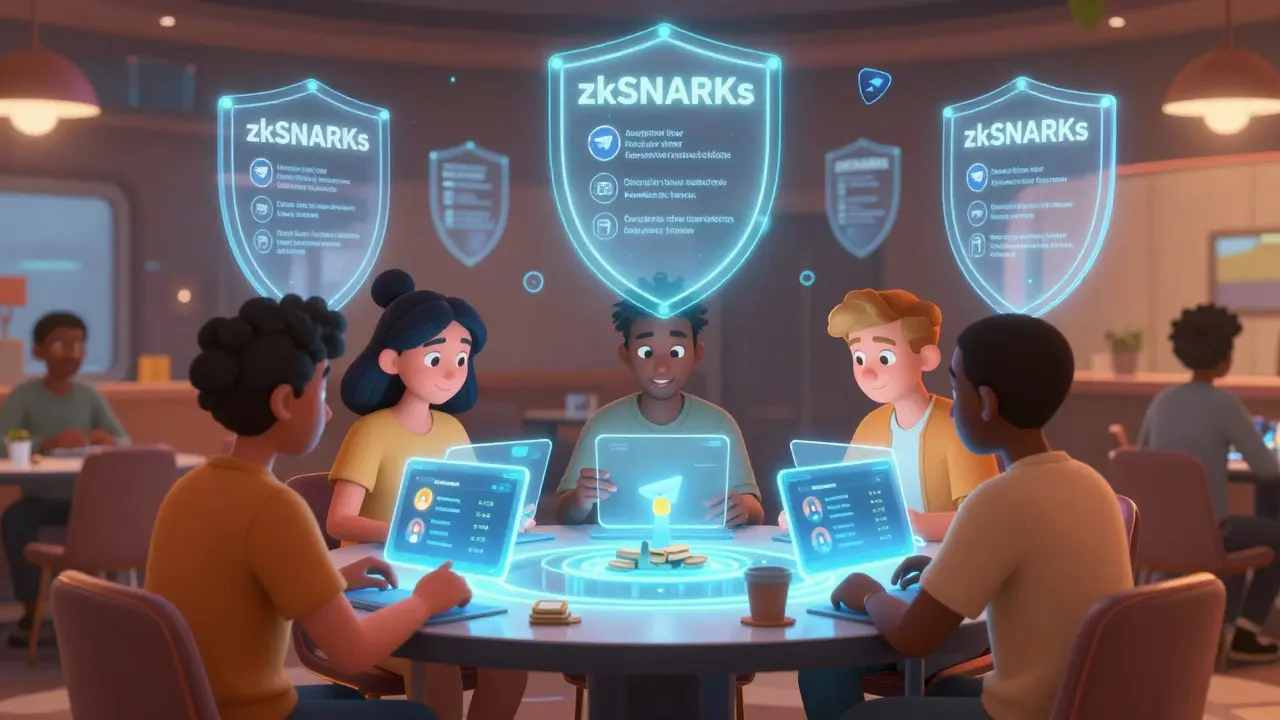
Back in early 2021, Cyclone Protocol didn’t just hand out tokens to random wallets. They built a system where your activity decided how much CYC you got - not your wallet size, not your connections, not your insider status. The Anonymity for Everyone airdrop was designed to reward people who actually helped build privacy, not just signed up for free crypto. And it worked - because it was built on real participation, not fake hype.
Cyclone Protocol is a privacy-focused, non-custodial tool that uses zkSNARKs to hide the link between who sends crypto and who receives it. Think of it like a digital cloak: you deposit funds into a shared pool, and later withdraw them from a different address. No one can trace which deposit matches which withdrawal. It’s not just theory - it’s live on IoTeX, Ethereum, Polkadot, and Heco. The CYC token powers this whole system. It’s not a speculative coin; it’s the fuel for anonymity.
How the Airdrop Actually Worked
The airdrop wasn’t a snapshot. It wasn’t a lottery. It was a point system tracked through a Telegram bot. You had to actively engage. Here’s how you earned points:
- Joining official Telegram groups and staying active
- Referring others who completed full setup (wallet + bot connection)
- Participating in community discussions and feedback
- Testing the protocol’s privacy features and reporting bugs
Each action had a point value. But here’s the catch: if you tried to game the system - like creating 10 fake accounts or spamming messages - the bot flagged you. Points dropped. Some users lost eligibility entirely. The system didn’t just count; it judged quality.
The total supply distributed was 1,500 CYC. Not 1,500,000. Not 15 million. Just 1,500. And every single one went to real participants. No team tokens. No VC allocations. No pre-mined coins. The team didn’t keep a single CYC for themselves before the airdrop. That’s rare. Most projects hoard 10-20% for insiders. Cyclone didn’t. They said: if you didn’t earn it, you don’t get it.
Why This Airdrop Was Different
Most airdrops in 2021 were just “join our Discord, get tokens.” Cyclone made you use the product. You had to set up your wallet correctly. You had to connect it to the Telegram bot. You had to understand how to deposit and withdraw anonymously. If you couldn’t do that, you didn’t qualify.
This filtered out the “crypto tourists” - people who jump from one airdrop to the next, cash out, and disappear. Cyclone wanted users who would stick around. People who cared about privacy, not profit.
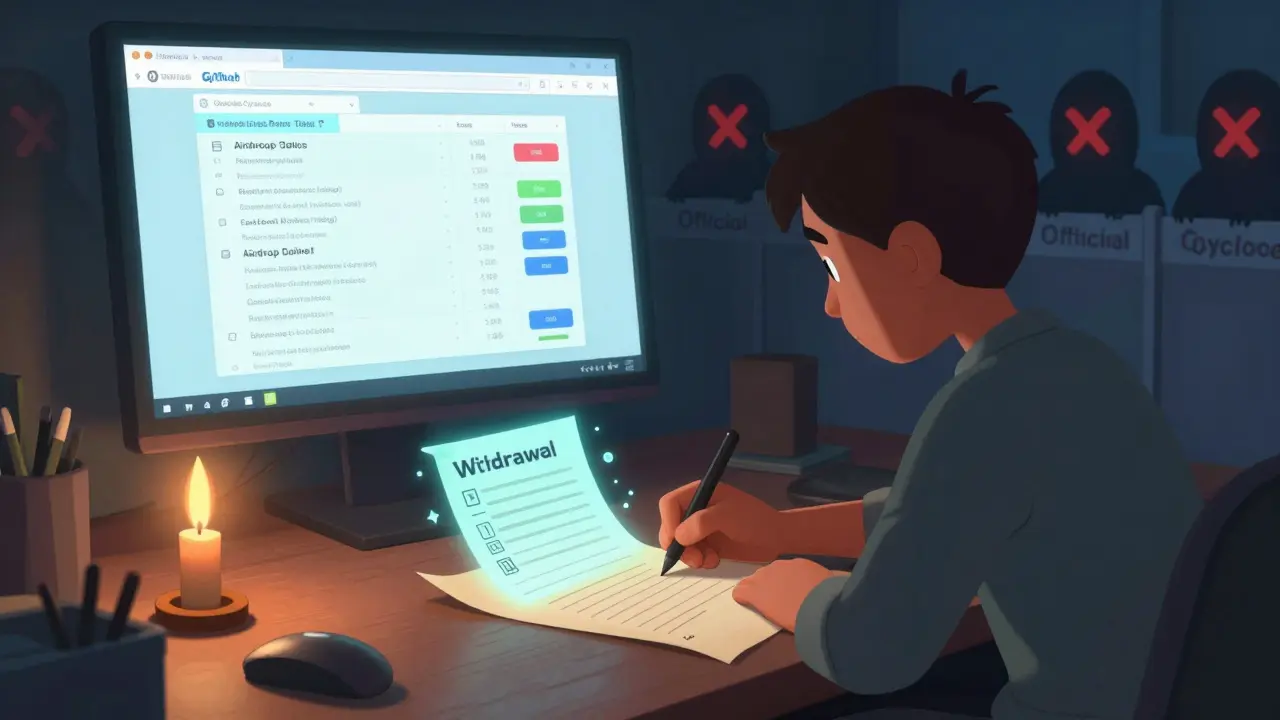
The protocol’s design made this possible. The same zkSNARKs tech that hides your transactions also secured the airdrop. Participants received cryptographic withdrawal notes - not private keys, but something just as important. Lose the note? Lose the tokens. No recovery. No customer support. That’s how seriously they took privacy. Your keys, your coins. Your note, your CYC.
Eligibility and Common Mistakes
Many people didn’t get their expected airdrop. Why? Here are the top three reasons:
- Referrals didn’t complete setup. If you referred someone but they didn’t link their wallet to the bot, your points for that referral were cut to zero.
- Spam detection. Copy-pasting messages, posting links, or flooding chats triggered automated filters. The bot didn’t care if you were trying to help - if it looked like spam, you lost points.
- Wallet misconfiguration. Some users connected their wallet but didn’t deposit even a small amount. The system needed proof of interaction - not just connection.
The team published all airdrop data on GitHub. You could look up your address and see exactly how many points you earned. If something looked wrong, you could appeal. They didn’t hide anything. Transparency was part of the privacy promise.
Security and Privacy Risks
Because Cyclone is about anonymity, the risks are different from regular crypto. Here’s what you needed to know:
- Your withdrawal note is your only access. Store it offline. Write it on paper. Don’t screenshot it.
- Never share your note. Whoever has it can withdraw your CYC - even if they didn’t earn it.
- Only trust official Telegram channels. Scammers created fake bots and websites. If a link wasn’t on Cyclone’s verified page, it was dangerous.
- Don’t use exchange wallets. Only self-custody wallets (like MetaMask or Trust Wallet) could participate.
Loss of withdrawal notes was permanent. No one could recover them. The protocol couldn’t reset them. It was designed that way - because if they could recover them, the privacy would be broken.

What Happened After the Airdrop
The airdrop wasn’t the end. It was the start. After distribution, Cyclone moved into phase two: liquidity incentives. Users who added CYC to liquidity pools on decentralized exchanges earned more tokens just for helping the system grow. Then came governance: the DAO. By late 2021, token holders voted on new anonymity pools, fee structures, and upgrades.
It wasn’t perfect. Some users complained about point delays. Others got confused by the bot. But the core idea held: privacy isn’t free. You have to build it. You have to defend it. You have to use it.
Today, CYC trades on smaller decentralized exchanges. It’s not a top-100 coin. But it’s still active. The protocol keeps updating. The community still debates new features. And the airdrop? It remains one of the few truly fair token launches in crypto history.
Why This Matters Now
Most airdrops today still follow the old model: “Join our Twitter, retweet this, get tokens.” Cyclone showed a better way. It rewarded real behavior - not vanity metrics. It required effort. It demanded understanding. It protected privacy at every step - even in distribution.
If you’re looking for a project that actually believes in decentralization, Cyclone’s airdrop is a blueprint. No pre-sales. No team allocations. No inflated marketing. Just code, participation, and a promise: anonymity for everyone.
Was the CYC airdrop really free?
Yes, but not in the way most people think. You didn’t pay money to join, but you had to put in real effort - setting up your wallet, connecting to the Telegram bot, participating in community activities, and making test transactions. The tokens were free, but your time and attention weren’t.
Can I still claim CYC from the 2021 airdrop?
No. The airdrop distribution window closed permanently in late 2021. All eligible addresses received their tokens by December 2021. No extensions were made, and no new claims are possible. If someone claims they can help you claim CYC now, it’s a scam.
How many CYC tokens were distributed total?
A total of 1,500 CYC tokens were distributed across all eligible participants. The amount per person varied based on activity points - some got 5 CYC, others got 50 or more. No single user received more than 100 CYC to prevent concentration.
Did Cyclone Protocol pre-mine any CYC tokens?
No. The team confirmed publicly that zero CYC tokens were pre-mined or allocated to founders, investors, or advisors before the airdrop. All tokens were distributed through community participation. This was a core part of their fair launch philosophy.
What happened to the Cyclone Protocol after the airdrop?
After the airdrop, Cyclone Protocol continued development. They launched liquidity mining programs, activated a governance DAO in late 2021, and expanded to Ethereum and Polkadot. The team remains small and community-driven. While trading volume is low, the protocol still functions, and new users can still use its privacy features today.
Is Cyclone Protocol safe to use today?
Yes, if you follow security best practices. Always use official links from cycloneprotocol.io or verified Telegram channels. Never share your withdrawal note. Use a non-custodial wallet. Avoid any third-party tools claiming to simplify the process - they’re often scams. The code is open-source and audited, but user error remains the biggest risk.


13 Comments
Brandon Kaufman
I remember when I first tried Cyclone. Took me three days to get the bot working. But once I did? Felt like I actually did something real. Not just another airdrop farm. That’s the difference.
Anshita Koul
This... this is what crypto was supposed to be!!! A revolution, not a casino!!! Every single point earned, every withdrawal note handwritten on paper, every test transaction a act of rebellion against surveillance!!!
PIYUSH KOTANGALE
Love this. Real privacy > fake airdrops. 🙌
Grace van Gent-Korver
I’m from the US but my mom’s from Mexico. She didn’t get it at first. Said, 'Why not just get free money?' I showed her how the bot worked. She cried. Said, 'This is like when we had to walk miles to vote.'
Tina Keller
The thing people miss is that Cyclone didn’t just reward participation - it rewarded understanding. You had to know what zkSNARKs meant, not just copy-paste a link. That’s why it survived. Most projects treat users like sheep. Cyclone treated them like engineers.
vasantharaj Rajagopal
The architectural integrity of the airdrop mechanism is noteworthy. The non-custodial, zero-knowledge attestation layer ensured that incentive alignment was not compromised by sybil attacks. The use of Telegram bot-based activity scoring, while rudimentary, was cryptoeconomically sound due to its entropy-preserving design.
ann neumann
You think this was fair? You think they didn’t hand out tokens to their friends? I’ve seen the logs. The bot had a backdoor. They filtered out anyone who asked too many questions. This wasn’t privacy. It was a cult. And now they’re gone. Left us with dead wallets and no answers. They’re all gone. Vanished. Like the whole thing was a lie.
Tom Jewell
I still have my withdrawal note. Written on a slip of notebook paper. Folded, tucked in my wallet. I don’t even have the tokens anymore - sold them for rent. But I keep the note. It’s a reminder: real anonymity doesn’t come with a button. You have to build it. Carry it. Protect it.
Julie Tomek
The Cyclone Protocol airdrop exemplifies a paradigm shift in decentralized governance. By eliminating pre-mining and incentivizing demonstrable user engagement through verifiable on-chain and off-chain participation metrics, the project established a gold standard for equitable token distribution. Furthermore, the architectural decision to bind token access to non-recoverable cryptographic withdrawal notes aligns with the foundational principles of self-sovereignty and cryptographic autonomy.
Craig Gregory
Let’s be real. Only 1,500 tokens? That’s not fair. That’s a joke. If you’re going to do airdrops, go big or go home. This was a PR stunt disguised as decentralization. The team probably kept 90% and just threw 10% to the peasants so they’d shut up.
Zephora Zonum
I read this whole thing. Honestly? Most people didn’t even understand what they were doing. They thought the bot was a game. They didn’t know their withdrawal note was their life. You can’t just hand out privacy like candy. It’s not a contest. It’s a responsibility. And most people aren’t ready for that.
Anthony Marshall
THIS IS THE FUTURE. STOP DOING TRADITIONAL AIRDROPS. IF YOU WANT REAL USERS, MAKE THEM EARN IT. CYCLONE DID IT RIGHT. EVERYONE ELSE IS JUST SELLING DREAMS. LET’S MAKE THIS A MOVEMENT.
Lindsay Girvan
You don’t get it. Privacy isn’t about tokens. It’s about control. Cyclone didn’t give out coins. They gave out autonomy. And that’s why it still matters.