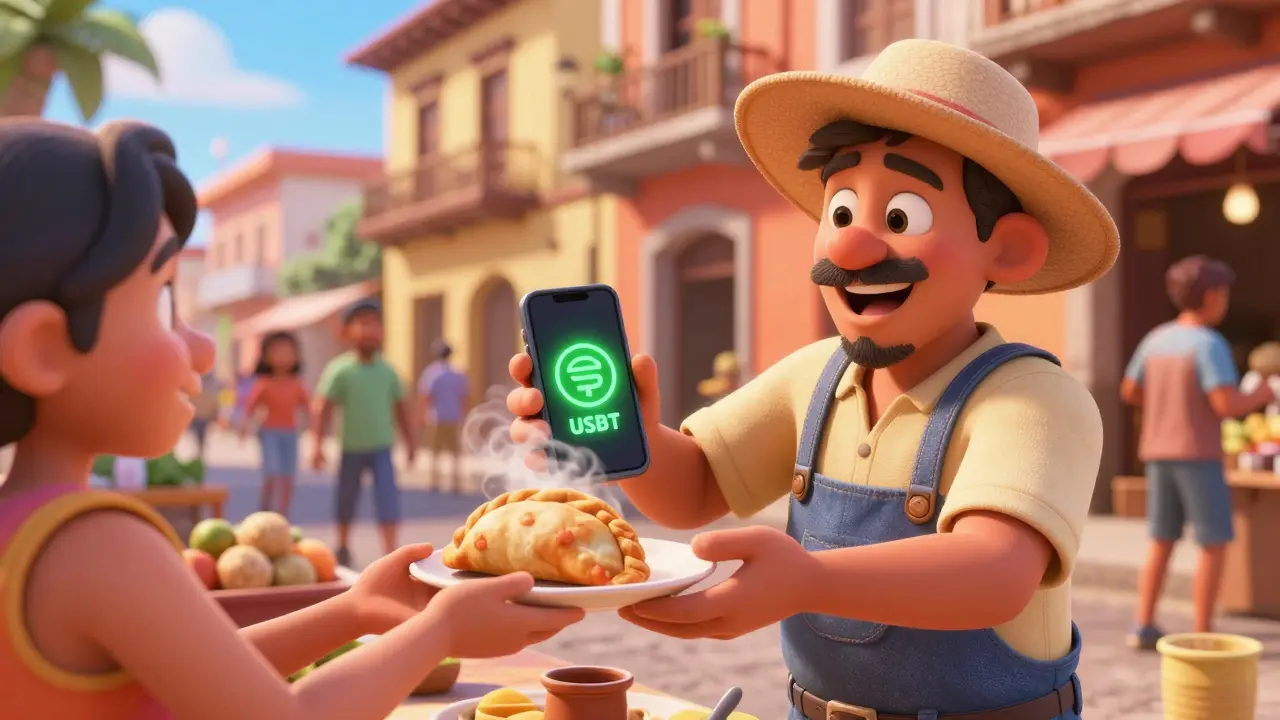
Imagine waking up one morning and finding that the cash in your pocket is worth half of what it was yesterday. For millions of Venezuelans, this isn't a hypothetical nightmare-it’s daily reality. With annual inflation hovering around 229% as of mid-2025 and the bolívar losing over 70% of its value in just six months, traditional money has ceased to function as a store of value. Instead, citizens have turned to cryptocurrency, specifically digital assets like Bitcoin and stablecoins used for transactions and savings, not to get rich quick, but simply to buy food and pay rent.
This shift represents one of the most significant grassroots adoptions of blockchain technology in modern history. Venezuela ranks 13th globally in cryptocurrency adoption, according to Chainalysis data. But unlike investors in the U.S. or Europe who trade for profit, Venezuelan users treat digital currency as essential infrastructure. It is a survival tool. This article breaks down exactly how ordinary people navigate this complex financial landscape, the specific tools they use, and why this trend shows no signs of stopping despite political instability and government crackdowns.
The Rise of "Binance Dollars" and Stablecoins
In Venezuela, you won’t hear much about volatile coins like Dogecoin or Ethereum for daily purchases. The market is dominated by USDT (Tether), a stablecoin pegged to the US dollar. Locals refer to these digital tokens as "Binance Dollars," a nickname that highlights the platform's overwhelming dominance in the region. Why USDT? Because it holds its value. When the bolívar crashes, the USDT remains steady against the greenback, protecting purchasing power.
The technical backbone for these transactions is often the TRC-20 network. Users prefer this blockchain because transaction fees are significantly lower than those on the Ethereum network. For a street vendor selling empanadas or a family buying medicine, saving a few dollars on gas fees matters immensely. Receipts in Caracas now frequently display totals in "Binance dollars" rather than bolivars. Merchants price goods in USDT equivalents to avoid the risk of holding depreciating local currency. This informal dollarization via blockchain has become the de facto standard for commerce.
P2P Trading: The New Banking System
Traditional banks in Venezuela are unreliable, slow, and often restricted by sanctions. To bypass these hurdles, Venezuelans rely heavily on Peer-to-Peer (P2P) trading platforms. Binance P2P, a marketplace allowing direct user-to-user cryptocurrency exchange, has become the primary interface for converting fiat to crypto and vice versa. Other platforms like LocalBitcoins also play a role, though Binance’s liquidity makes it the preferred choice.
Here is how a typical transaction works:
- A user wants to send money to a relative abroad. They go to the Binance P2P section.
- They find a seller offering USDT at a competitive rate.
- The buyer transfers bolivars via bank transfer or mobile payment app to the seller.
- Once the seller confirms receipt, the escrow system releases the USDT to the buyer’s wallet.
This process happens thousands of times every day. It allows remittances-totaling $5.4 billion in 2023-to flow freely into the country without touching traditional banking rails that might freeze funds. Approximately 9% of all remittances now move through crypto channels. For families relying on support from relatives in Spain or the United States, this speed and accessibility are life-saving.

Daily Life with Crypto: From Vendors to Universities
Cryptocurrency usage in Venezuela extends far beyond tech-savvy millennials. It has permeated every layer of society. Street vendors accept Bitcoin payments through simple mobile apps. Technology startups pay salaries in stablecoins to ensure employees can afford groceries. Even universities have begun accepting tuition fees in crypto.
Consider Carlos, a resident of Caracas. He explains, "I use USDT for everything - buying food, paying rent. It is much more reliable than the bolívar." His experience mirrors that of millions. The learning curve for basic usage is surprisingly short. Most users master the essentials within 2-3 weeks, guided by community knowledge sharing on WhatsApp groups and social media rather than formal education. They learn to manage private keys, verify addresses, and execute trades safely. However, security remains a constant concern. Phishing scams and lost passwords are real threats, leading to the loss of life savings for some.
Navigating Infrastructure Challenges
Using crypto requires internet access and electricity-two commodities that are notoriously unstable in Venezuela. Power grid failures can last for hours or days, interrupting transactions. Internet connectivity is often slow and expensive. Despite these hurdles, users have developed ingenious workarounds.
- Prepaid Cards: Many users load prepaid debit cards linked to their crypto wallets to make offline purchases where possible.
- Cash Meetups: In high-value trades, parties meet in person to exchange cash for crypto, reducing reliance on bank transfers.
- Gift Card Exchanges: Some users convert crypto into Amazon or Steam gift cards, which can be traded locally for goods or services.
These adaptations demonstrate remarkable resilience. The drive to preserve wealth outweighs the inconvenience of technical limitations. Smartphones serve as both bank and wallet, consolidating financial tools into a single device that fits in a pocket.

Government Stance and Regulatory Ambiguity
The Venezuelan government’s relationship with cryptocurrency is contradictory. On one hand, President Nicolás Maduro launched the state-backed Petro, a state-sponsored cryptocurrency backed by natural resources in 2018. It failed miserably due to lack of trust and utility, eventually being discontinued in 2024. On the other hand, the regime tolerates the use of dollar-backed stablecoins because they help stabilize the economy informally.
However, this tolerance is fragile. The government occasionally conducts crackdowns on mining operations, accusing miners of stealing electricity. There are periodic bans on certain exchanges or restrictions on capital outflows. This creates a climate of regulatory uncertainty. Businesses operate in a gray area, aware that rules could change overnight. Yet, the economic fundamentals driving adoption remain unchanged. As long as the bolívar continues to lose value, citizens will seek alternatives outside state control.
| Instrument | Value Stability | Accessibility | Risk Level |
|---|---|---|---|
| Bolívar (VEF) | Very Low | High | Extreme (Inflation) |
| US Cash | High | Medium (Scarcity) | Low (Theft/Loss) |
| USDT (Crypto) | High | High (Digital) | Medium (Tech/Sanctions) |
| Bitcoin (BTC) | Variable | Medium | High (Volatility) |
Future Outlook: Irreversible Trend?
Looking ahead to 2026 and beyond, the trend toward blockchain-based dollarization appears irreversible. Political upheaval following the contested 2024 presidential election has added pressure, but it hasn’t stopped adoption. Industry analysts predict that crypto usage will persist regardless of who holds power. The breakdown of confidence in traditional monetary systems is too deep to reverse quickly.
As infrastructure improves and user education increases, we may see even broader integration. Regional firms are already integrating digital assets for sanctions evasion and inflation hedging. Venezuela serves as a testing ground for crisis-responsive financial technologies. While crypto cannot solve structural economic problems like mismanagement or corruption, it provides immediate tactical stability for individuals. It empowers citizens to take control of their finances in an environment designed to strip them of agency.
Is it legal to use cryptocurrency in Venezuela?
Yes, using cryptocurrency is not explicitly illegal for individuals. However, the government maintains ambiguous regulations. While they tolerate stablecoin usage for daily transactions, they have cracked down on mining operations and banned the use of foreign currency in official contracts. Businesses operate in a gray area, so caution is advised.
What is the safest way to store crypto in Venezuela?
For small amounts, reputable exchanges like Binance are convenient. For larger sums, hardware wallets are recommended to protect against hacking and exchange insolvency. Users must also safeguard their recovery phrases physically, as digital storage can be compromised during power outages or cyberattacks.
Why do Venezuelans prefer USDT over Bitcoin?
USDT is a stablecoin pegged to the US dollar, meaning its value doesn’t fluctuate wildly. Bitcoin is volatile and better suited for long-term investment or speculation. For daily expenses like buying food or paying rent, price stability is crucial, making USDT the practical choice.
How do people without smartphones use crypto?
Access to smartphones is widespread but not universal. Those without devices often rely on trusted intermediaries-family members or local agents-who hold wallets on their behalf. Alternatively, they may use cash meetups to exchange physical bolivars for crypto held by others.
Can I send money to Venezuela via crypto?
Yes, sending USDT via P2P platforms is one of the fastest and cheapest ways to remit funds. Recipients can sell the USDT for bolivars instantly on platforms like Binance. This method bypasses traditional banking delays and high fees associated with Western Union or MoneyGram.

Write a comment