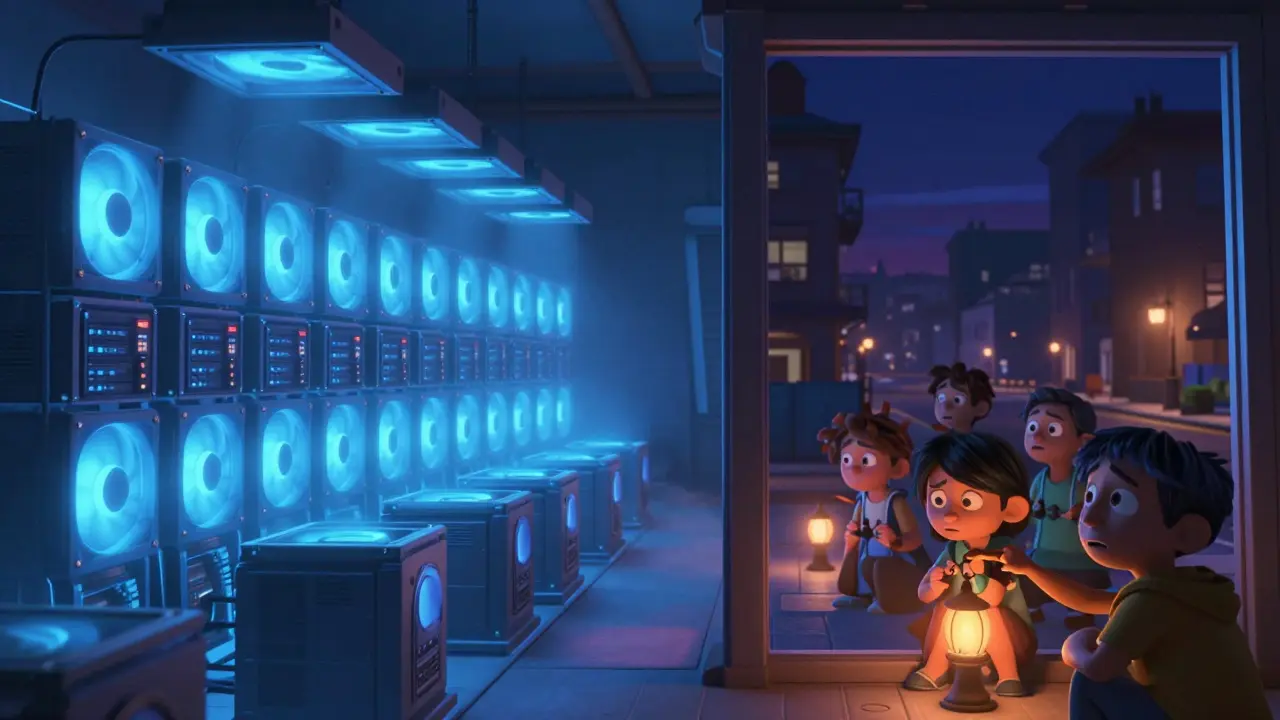
The Paradox of Cheap Power and Dark Streets
In the world of cryptocurrency, nothing attracts attention like profit margins, and nothing scares investors more than instability. Nowhere is this tension more visible than in Iran. For years, reports have surfaced about miners operating there while regular citizens endure hours-long blackouts. How does this happen? It starts with Iranian energy subsidies, a policy that has turned mining into one of the most profitable yet controversial sectors in the Middle East.
By early 2026, we know the situation hasn't changed much from the previous year. Miners pay pennies for electricity that locals can't afford. Yet, when the summer heat hits, the lights go out, even for those same miners. It seems contradictory, but it makes sense when you look at the complex web of economic sanctions, energy policy, and state control. To understand why this continues despite the public outcry, we need to look beyond the headlines and examine the actual mechanics of the subsidy system.
The Economics of Subsidized Electricity
The core driver here is simple: the cost of producing electricity in Iran is extremely low compared to industrial standards globally. According to reports from late 2025, licensed miners were accessing power rates between USD$0.04 and $0.07 per kilowatt-hour. In stark contrast, Italy faced rates costing roughly $306,000 to mine a single Bitcoin during that same period. That is a difference of hundreds of times over.
This creates a unique arbitrage opportunity. When Bitcoin trades anywhere near $30,000 or higher, the profit margin for an Iranian miner is massive. We saw estimates in January 2025 suggesting production costs as low as $1,300 per coin. If you compare that to the market price at the time, miners were effectively making 20 to 30 times their investment in a short period. Naturally, this attracted significant capital and equipment imports, particularly ASIC devices, which require high amounts of power.
| Location | Cost per Bitcoin | Electricity Rate (Est.) | Status |
|---|---|---|---|
| Iran | $1,300 - $2,500 | $0.01-$0.05/kWh | Regulated/Licensed |
| Italy | $306,000+ | ~$0.25+/kWh | Commercial Standard |
| Kazakhstan | $5,000 - $6,000 | Higher than Iran | Regional Competitor |
However, relying solely on these numbers misses the bigger picture. The electricity isn't free; it is heavily subsidized by the state. This subsidy comes directly from public funds meant for other infrastructure. While miners enjoy the lower rate, the rest of the population deals with the consequences of strained supply. This creates a political economy where the benefits flow to a specific group-often those with government connections-while the costs fall on everyone else.
Infrastructure Strain and Blackouts
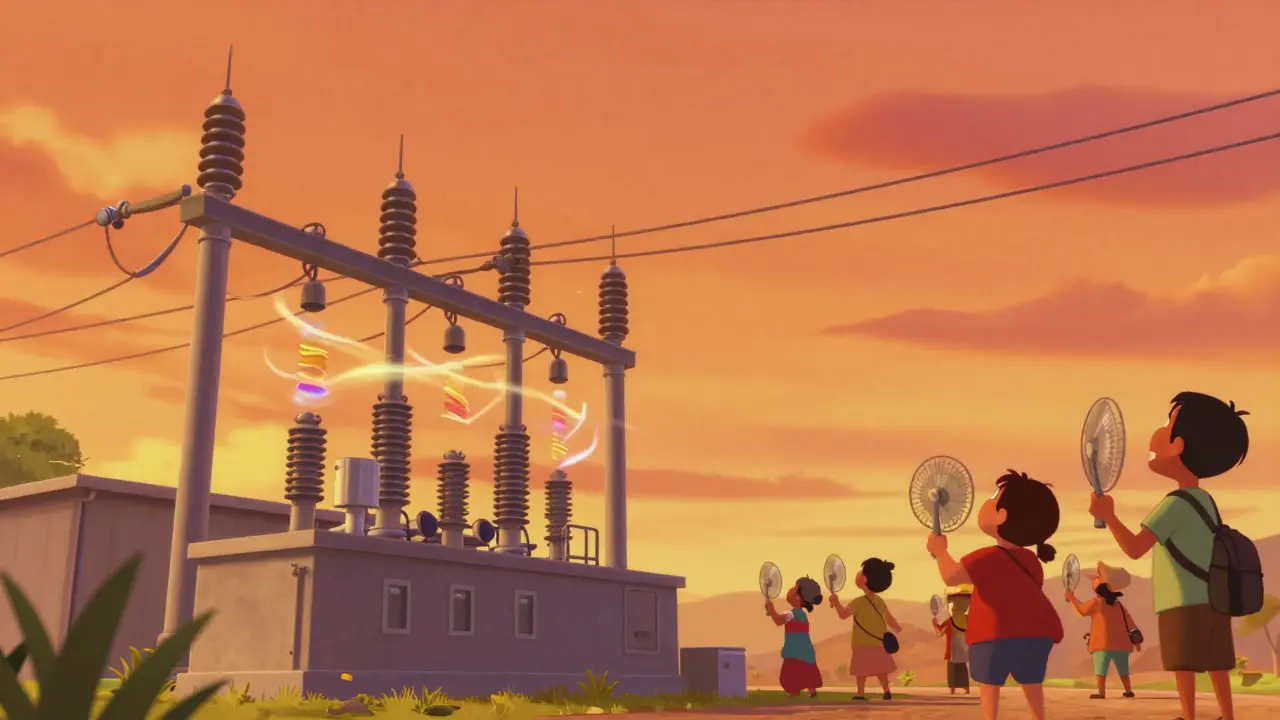
You can't ignore the physical limits of the grid. Even with massive production capacity, demand fluctuates wildly. During the peak summer months of 2025, electricity demand surged by over 40% due to air conditioning needs. This is exactly when mining becomes a problem. The Ministry of Energy has historically shut down mining farms during these peaks to prioritize residential cooling.
Yet, illegal mining operations often bypass these controls. Reports indicate that thousands of unauthorized rigs were found running during scheduled shutdowns. In mid-2025, a nationwide internet outage coincided with a massive drop in power consumption, suggesting that enforcement was effective only when the digital infrastructure itself was severed. But the damage was done. Regular citizens reported blackouts lasting 8 to 12 hours daily in some regions.
One specific incident highlighted the scale of the issue. In April 2025, authorities discovered large-scale mining equipment hidden inside the tunnels of Ahvaz Stadium. This was not a small home setup; it was an industrial operation consuming enough power to rival a small town. Such findings reinforce the argument made by critics that this is less about individual entrepreneurship and more about organized exploitation of national resources.
The Role of State Actors and Regulation
Who controls these mines? While many operate under license, a significant portion is linked to powerful organizations. The Islamic Revolutionary Guard Corps (IRGC) has been identified as a major player. Analysts estimate that up to 60% of illegal mining activity involves this group. They have the capability to bypass local utility regulations and secure power quotas that civilians cannot access.
This leads to a parallel economy. On paper, the Central Bank of Iran (CBI) regulates the sector strictly. Miners need licenses to import hardware, register with the Iran Power Generation Company (Tavanir), and get authorization to sell coins abroad for trade settlement. It sounds bureaucratic and controlled. In reality, the lines between legal compliance and smuggling are blurred.
The government permits selling mined cryptocurrencies to settle international trade debts, effectively allowing crypto to function as a tool to circumvent Western sanctions. In 2024 alone, hundreds of millions worth of cryptocurrency were used for sanctioned imports. This dual policy-banning domestic payment usage but encouraging cross-border export-keeps the industry alive but opaque. It serves a strategic purpose for the state while simultaneously draining the local grid.
Risks and Future Outlook for 2026
As we move further into 2026, the sustainability of this model is under scrutiny. The International Energy Agency predicts that without significant grid upgrades, power shortages could worsen significantly in the coming years. If mining continues to grow at its current projected rate of nearly 24% annually, the strain will become unmanageable.
For anyone considering involvement, the risks are substantial. Beyond the obvious moral questions regarding energy theft from a struggling population, there is financial volatility. A sudden regulatory crackdown can seize assets overnight. We saw this trend continue through mid-2025, where over 2,000 illegal sites were shut down in just six months. Furthermore, the reliance on state contracts means your business viability depends on political favor rather than operational efficiency.
Global competitors are also watching. Kazakhstan remains the main regional alternative, though their costs are higher. If the global Bitcoin network adjusts difficulty and the price drops, the thin margin advantage of Iranian subsidies might evaporate quickly. The 'free lunch' of cheap power relies entirely on a fragile infrastructure that is aging and under-invested.
Is cryptocurrency mining legal in Iran?
Yes, mining is legal if registered and licensed. However, strict regulations apply, and operating without a license constitutes a crime punishable by confiscation of equipment and fines.
How much does electricity cost for miners?
Licensed miners typically pay between $0.04 and $0.07 per kWh, while household rates are even lower ($0.01-$0.02). Illegal operators often illegally tap into these household rates.
Does the government control the mines?
A significant portion is linked to the IRGC and state-backed entities, giving them preferential access to subsidized power compared to private operators.
Can I sell my mined Bitcoin domestically?
Domestic payments in crypto are prohibited. Licensed miners are generally required to sell their coins to the Central Bank or authorized exchangers for foreign currency settlement.
Are there seasonal restrictions on mining?
Yes, during summer months when AC demand spikes, mining operations are frequently shut down by the government to prevent total grid collapse.

20 Comments
Ashley Stump
This whole situation is absolutely ridiculous and needs to stop immediately.
Matt Bridger
The economic implications here are profound. We see state interference driving costs down artificially. Citizens suffer while elites profit greatly. Subsidy structures remain flawed fundamentally. Infrastructure decay accelerates without oversight. Political motives override public welfare needs constantly. The energy grid faces unsustainable strain daily. Regulatory bodies fail to protect citizens effectively. International sanctions complicate local trade dynamics further. Corruption thrives in such opaque environments easily. Technology adoption ignores social consequences completely. Wealth transfer happens systematically through policy tools. Global markets exploit these regional weaknesses rapidly. Stability relies on fragile administrative decisions only. The long term viability looks extremely poor statistically.
Justin Smith
Actually you missed the point regarding sanctioned imports. The Central Bank handles currency conversion directly. Your analysis ignores the trade settlement aspect completely. Licensed miners operate under strict supervision rules.
Elizabeth Akers
I get it though honestly power issues are real. Everyone just wants cheap electricity sometimes. It gets messy when people tap into that supply unethically.
Cara Boyer
You ar right but it goes deeper than just taps. They are selling our resources to foreign enemies for crypto profits :angry:. The deep state loves this chaos too much. Its obvious the grid was planned this way intentially. People who question it get silenced fast i think. There is more going on behind closed doors. We should all stay woke to this scam. The truth hurts bu twe must know. Dont let them lie to you anymore! :fire:
Disha Patil
This makes me feel so sad for the regular families. Blackouts last forever during summer months every year. Kids cant study properly without light sources. It is heartbreaking really.
Ronald Siggy
We need to focus on solutions rather than sadness alone. Advocacy groups can push for regulatory reform soon. Community pressure forces government accountability changes. Stand up for what is right in your region today.
Lisa Miller
I hope things get better for the residents eventually. Innovation often brings tough transitions initially. We might see improved grid stability in 2027 hopefully. Positivity helps us cope with global news.
Joy Crawford
I hope too but it feels like nobody cares :( . I wish we could help them directly somehow. It makes me cry seeing these reports online. People suffer so much in these situations. My heart hurts thinking about it.
Tiffany Selchow
They deserve it if they run a corrupt system openly. America never subsidizes its own industries like this mess. Look at our free market compared to their control. Stop feeling sorry for their incompetence.
Chris R
Cultures handle resource management differently around the globe. Sanctions play a huge role in their economic choices today. Blame only increases tension between communities worldwide. Understanding context matters more than judgment here.
Michael Nadeau
The nature of utility access defines national sovereignty boundaries clearly. When state actors monetize infrastructure the public loses control. Efficiency metrics rarely capture human suffering accurately. Economics becomes ethics when survival is at stake. History repeats these cycles of exploitation frequently enough. We observe patterns of elite capture repeatedly. Power distribution reflects political hierarchy structures directly. Subsidy policies hide true opportunity costs effectively. The moral cost outweighs immediate financial gains significantly. Long term damage persists even after reforms begin. Society pays for shortsighted industrial strategy heavily.
Leah Lara
I guess you have a point but I am tired of analyzing this. Just read the article next time please.
Zackary Hogeboom
It is wild how much hardware moves into these tunnels secretly. You can imagine the security teams missing it entirely. Enforcement seems sporadic at best realistically.
Markus Church
Security protocols appear deficient regarding underground installations. Detection technology lags behind smuggling methods consistently. Oversight mechanisms require modernization urgently.
Samson Abraham
We must respect laws even when enforcement varies widely. Stealing electricity affects innocent neighbors negatively. Legal frameworks exist for public protection reasons.
Beverly Menezes
I agree everyone should follow the rules together. Harsh conditions make people try harder to survive though. Kindness helps more than anger ever does.
Jamie Riddell
Feeling for those stuck in dark homes during heat waves. Human need trumps digital coin mining interests. Compassion guides better global policy decisions.
Jay Starr
It is truly tragic when basic services vanish completely. Silence grows louder in those empty streets at night. We watch from afar helpless most days.
Ashley Stump
Yea well stop complaining and fix it yourself guys.