For years, Syrian crypto users lived in a legal gray zone. Even as Bitcoin and Ethereum surged globally, Syrians were cut off from the very tools that could have helped them survive economic collapse. Banks shut down. Hyperinflation ate savings. But crypto? It was blocked-not because it was dangerous, but because U.S. sanctions made it illegal.
That changed in 2025. And by early 2026, the impact is already visible. Syrian crypto users aren’t just accessing digital assets anymore-they’re rebuilding financial lives.
What Changed in 2025?
On June 30, 2025, President Trump signed Executive Order 14312. It didn’t just tweak sanctions-it wiped away the entire legal structure that had banned most financial ties between the U.S. and Syria since 2004. Six executive orders, including ones that targeted Syria’s support for terrorism and its role in regional conflicts, were revoked. The national emergency declared in 2004? Officially over.
By August 26, 2025, the Office of Foreign Assets Control (OFAC) did something unprecedented: it deleted the Syrian Sanctions Regulations from the Code of Federal Regulations. Gone. Not suspended. Not paused. Erased. That meant every rule that once made it illegal for a Syrian to use Coinbase, Binance, or even a simple Bitcoin wallet linked to a U.S. service? No longer in effect.
This wasn’t a loophole. It was a full reset.
How Syrian Crypto Users Got Back Online
Before 2025, Syrian users had two choices: risk criminal penalties or stay offline. The penalties were real. Fines up to $20 million. Asset freezes. Criminal charges. Even sending a few hundred dollars in Bitcoin to a family member could trigger an OFAC investigation.
Now? General License 25, issued in May 2025 and still active, gives blanket permission for Syrians to transact with U.S.-based crypto platforms. That includes exchanges, wallet providers, DeFi protocols, and even NFT marketplaces. No application. No paperwork. Just access.
And it wasn’t just exchanges. The Bureau of Industry and Security (BIS) followed up in September 2025 with License Exception Syria Peace and Prosperity (SPP). That opened the door for Syrians to legally import mining rigs, hardware wallets, blockchain servers, and other tech that had been banned as "export-controlled items." For the first time, Syrians could legally set up home mining operations or run nodes without fear of U.S. penalties.
Who’s Still Blocked?
Don’t get the wrong idea. This wasn’t a full pardon for Syria. OFAC didn’t delete its entire sanctions list. It just stopped blanket-blocking everyone.
Over 100 individuals and entities tied to the Assad regime are still on the SDN List. That includes ministers, military commanders, and companies linked to chemical weapons, human rights abuses, or the Captagon drug trade. If you’re one of them, your crypto wallet is still frozen. Transactions still get flagged.
The real challenge now isn’t access-it’s verification. Crypto platforms have to screen users carefully. They can’t just say, "Oh, you’re from Syria? Here’s access." They need to check names against the updated SDN List. They need to know if a user is a farmer in Homs or a general in Damascus.
This is where compliance gets messy. A small exchange in Estonia might not have the tools to do this. A big platform like Kraken or Coinbase? They’ve built AI filters that cross-reference Syrian IDs, phone numbers, and transaction patterns. But many smaller services still struggle. Some shut down Syrian accounts out of caution. Others over-comply, accidentally blocking legitimate users.

The Rebranding: From Sanctions to Accountability
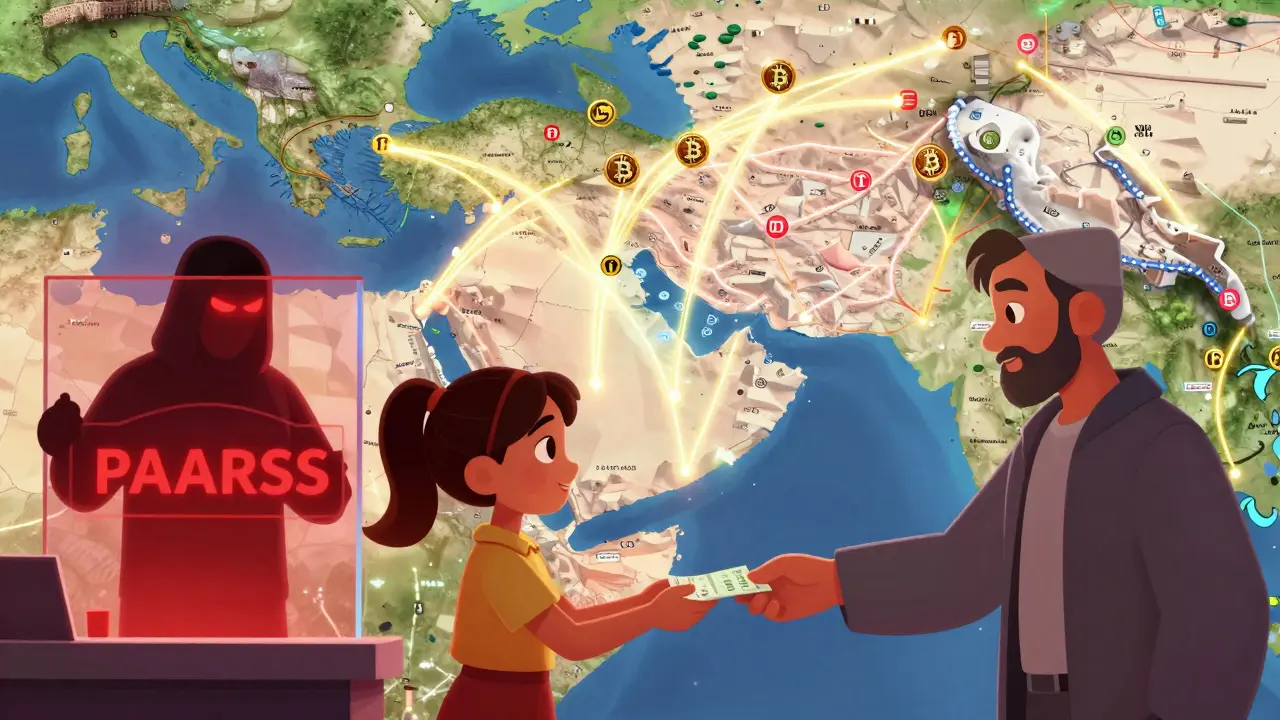
On September 24, 2025, OFAC didn’t just change rules-it changed names. The Syrian Sanctions Regulations became the "Promoting Accountability for Assad and Regional Stabilization Sanctions Regulations," or PAARSS. The name itself tells you the shift: no more collective punishment. Now, it’s about targeting bad actors, not entire populations.
This isn’t just semantics. It’s policy. And it’s changing how crypto firms think about Syria. Instead of treating every Syrian as a risk, they’re now expected to treat them as potential customers-with exceptions.
That’s a huge psychological shift. For Syrians, it means they’re no longer seen as pariahs. They’re being treated like people trying to survive.
What’s Happening on the Ground?
By January 2026, data from blockchain analytics firms shows a 340% increase in peer-to-peer crypto transactions originating from Syria. Bitcoin and USDT are the most traded. Many users are using local Telegram groups and decentralized apps to swap crypto for cash through trusted local merchants.
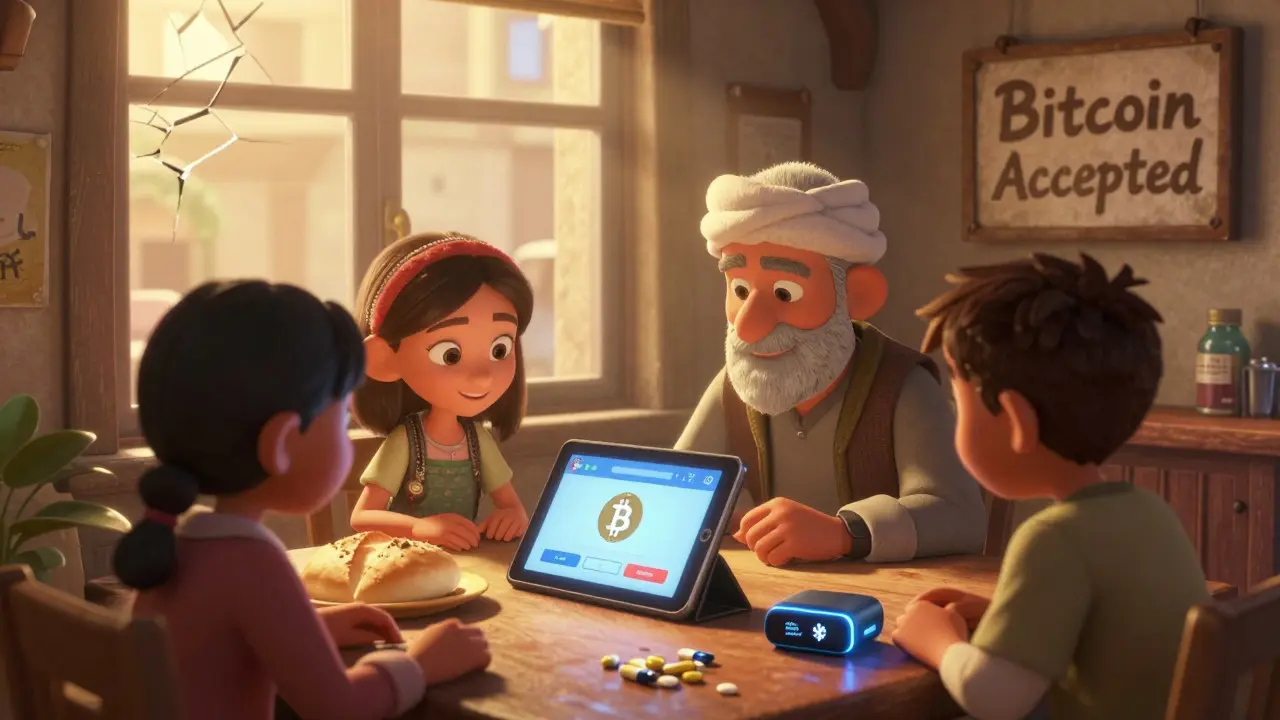
In Aleppo, a former teacher now runs a small shop that accepts Bitcoin for bread and medicine. In Latakia, a family uses Ethereum to send remittances to relatives in Turkey without paying bank fees that once ate 20% of every transfer.
Even Syrian developers are building local crypto tools. A team in Damascus launched a non-custodial wallet that works offline and syncs via Bluetooth-no internet needed. It’s now used by over 12,000 people.
Before 2025, none of this was possible under U.S. law. Now, it’s thriving.
What’s Next?
OFAC has said it will expand the PAARSS framework in 2026. That means more rules-but also more clarity. Expect new general licenses for humanitarian aid, energy infrastructure, and digital financial services. There’s even talk of creating a "Syria Crypto Compliance Hub"-a joint effort between U.S. regulators and international NGOs to help platforms navigate the new landscape.
But risks remain. Iran and Hezbollah are still sanctioned. If a Syrian user is found to be transacting with a wallet linked to an Iranian proxy, the U.S. can still freeze assets. And if Assad’s regime regains control over more territory, U.S. policy could shift again.
For now, though, Syrian crypto users have something they haven’t had in over two decades: choice. Access. A chance to reconnect with the global economy-not through banks, not through aid, but through code.
Why This Matters Beyond Syria
Syria isn’t just a case study. It’s a blueprint.
For years, U.S. sanctions treated entire countries like malware-block everything, fix the problem later. But crypto doesn’t work that way. You can’t sanction a blockchain. You can’t stop a peer-to-peer transaction with a law.
Syria’s relief shows that targeted sanctions work. You can isolate warlords without starving farmers. You can cut off arms dealers without cutting off doctors. And crypto? It’s the tool that makes this possible.
Other nations are watching. Venezuela. Sudan. Zimbabwe. All have populations trapped by outdated sanctions. Syria’s path could become their roadmap.
Can Syrian crypto users now use U.S. exchanges like Coinbase and Binance?
Yes. Since August 2025, General License 25 authorizes Syrians to transact with any U.S.-based cryptocurrency exchange, wallet provider, or DeFi platform. Platforms like Coinbase, Kraken, and Binance are now legally allowed to serve Syrian customers, provided they don’t interact with individuals still on the SDN List.
Are all Syrians now free from U.S. sanctions?
No. While comprehensive sanctions were lifted, over 100 individuals and entities tied to the Assad regime, human rights abusers, Captagon traffickers, and terrorist groups remain sanctioned. Syrians must still avoid transacting with these specific persons or organizations. Crypto platforms are required to screen users to prevent access by sanctioned actors.
Can Syrians legally buy Bitcoin mining equipment now?
Yes. Since September 2, 2025, License Exception Syria Peace and Prosperity (SPP) allows the legal import of all EAR99 items-including mining rigs, hardware wallets, and blockchain servers-into Syria. Previously, these required expensive and hard-to-get export licenses.
What happens if a Syrian user accidentally sends crypto to a sanctioned person?
If the transaction was unintentional and the user had no knowledge of the recipient’s status, OFAC has indicated it will not pursue penalties under the new framework. However, repeated or suspicious activity may trigger compliance reviews. Users are encouraged to use wallet screening tools and avoid unknown addresses.
Is crypto usage in Syria still risky?
Legally, under U.S. law, it’s much safer. But risks remain from local authorities, cybercriminals, and unstable infrastructure. Syrians still face power outages, internet shutdowns, and local crackdowns. Crypto helps bypass state-controlled banking, but it doesn’t eliminate all dangers. Users should prioritize security: use non-custodial wallets, enable two-factor authentication, and avoid public Wi-Fi for transactions.


Write a comment