
Trying to sign up for OKX only to see a "service unavailable" message is frustrating. You might be wondering if your location is the problem. OKX is a major cryptocurrency exchange that serves millions of users globally but restricts access based on local laws. The short answer is yes, where you live dictates what you can do on the platform. As of May 2026, OKX operates in roughly 160 countries, but it completely bans users from several key jurisdictions and limits features in others. Understanding these rules isn't just about avoiding account suspension; it's about staying compliant with financial regulations that affect your assets.
Why Does OKX Restrict Access?
You might think crypto should be borderless, but exchanges operate under strict legal frameworks. OKX, originally founded as OKEx in 2017, has shifted toward a compliance-first model to survive regulatory pressure. They must adhere to international sanctions administered by bodies like the Office of Foreign Assets Control (OFAC) and follow anti-money laundering directives such as the EU's 5th AML Directive. If they don't block restricted regions, they risk massive fines or losing their licenses entirely. This means their restrictions aren't arbitrary; they are direct responses to government demands in specific countries.
The exchange uses a combination of IP geolocation, device fingerprinting, and mandatory Know Your Customer (KYC) verification to enforce these rules. Their system claims 99.2% accuracy in identifying user locations. If you try to bypass these checks using a VPN, you violate their terms of service. In September 2025 alone, OKX closed over 14,000 accounts for "geolocation fraud." So, trying to trick the system usually ends with your funds frozen or your account terminated.
Countries Where OKX Is Completely Banned
Some countries have total service bans. If you reside in these places, you cannot create an account or use any features. These restrictions fall into two main categories: countries under international sanctions and countries with specific domestic bans on crypto trading.
- United States: US residents are fully blocked due to complex SEC regulations and the Bank Secrecy Act. Even though there are rumors of a future US-compliant entity, as of early 2026, no services are available to US citizens.
- Canada: Similar to the US, Canadian residents face a complete ban due to provincial and federal regulatory hurdles.
- Singapore: This one is tricky. The global OKX platform blocks Singaporean IPs. However, OKX Singapore, a separate entity regulated by the Monetary Authority of Singapore (MAS), exists for eligible residents. You must apply specifically through their local portal, not the main site.
- Malaysia: Fully restricted due to National Bank of Malaysia guidelines prohibiting centralized exchanges.
- Sanctioned Regions: Cuba, Iran, North Korea, Syria, Crimea, Donetsk, and Luhansk are banned under international law.
- Other Restricted Jurisdictions: Bangladesh, Bolivia, Malta, and the Bahamas also face complete bans.
If you are in one of these areas, your options are limited. Using a proxy will likely result in immediate detection because OKX cross-references your IP address with your ID documents during KYC. Mismatched data triggers automatic security flags.
Feature-Limited Countries: What You Can and Cannot Do
In some regions, you can trade spot cryptocurrencies but cannot access derivatives like futures or perpetual contracts. This tiered approach allows OKX to stay partially active while complying with local financial authorities who view leveraged trading as too risky.
| Region/Country | Spot Trading | Derivatives/Futures | Reason for Restriction |
|---|---|---|---|
| Australia | Available | Banned | ASIC regulations on leverage |
| Brazil | Available | Limited/Banned | Local tax and reporting rules |
| South Korea | Available | Banned | Virtual Asset Service Provider rules |
| United Kingdom | Available (via OKX Europe) | Banned | FCA consumer protection stance |
| European Union | Available | Banned | MiCA regulation implementation |
For example, if you are in Australia, you can buy Bitcoin and Ethereum, but you cannot open a leveraged position on BTC/USDT perpetuals. This distinction matters if your strategy relies on hedging or high-leverage trades. Users in these regions often report confusion when they first sign up, expecting full access only to find certain buttons grayed out.
The KYC Requirement: No More Anonymous Trading
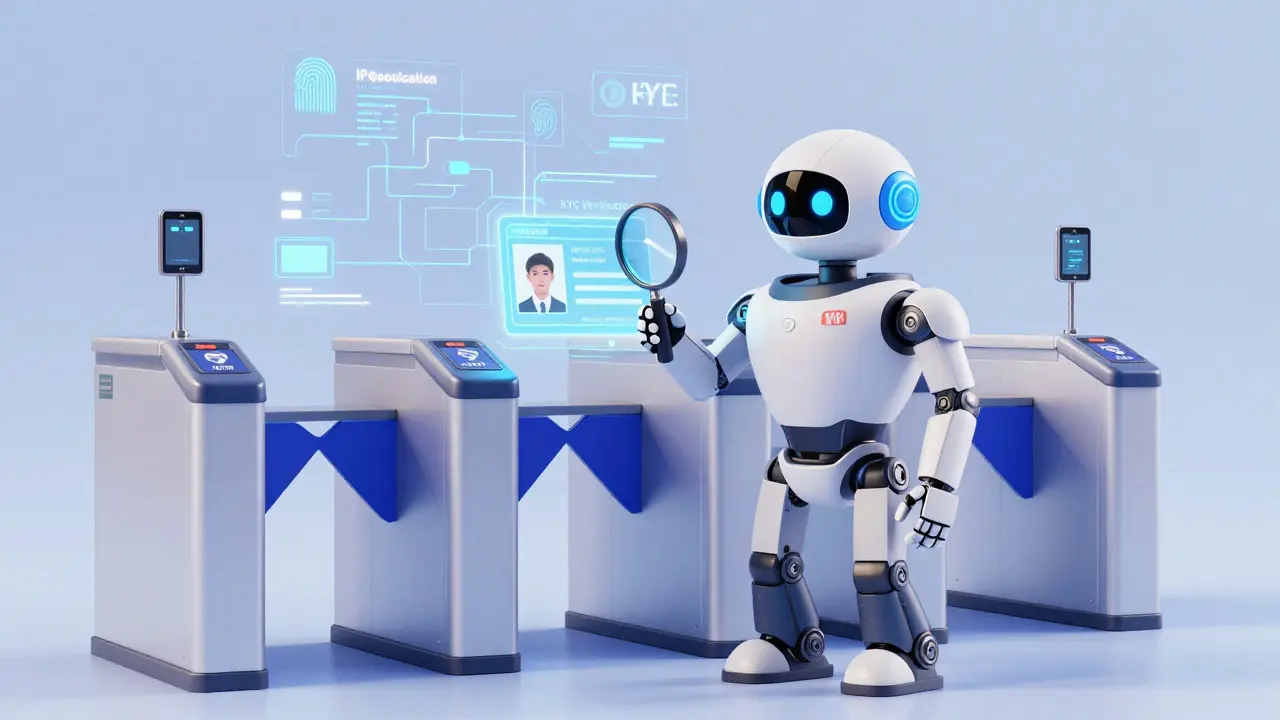
Gone are the days when you could trade large amounts without proving who you are. Since January 2023, OKX has required mandatory KYC for all core features, including deposits and withdrawals. This applies to every permitted country.
The verification process involves submitting a government-issued ID and sometimes a selfie for liveness detection. Once verified, you get assigned a level that determines your transaction limits:
- Level 1: Basic ID verification. Daily withdrawal limit around $10,000.
- Level 2: Additional documentation (proof of address). Higher limits.
- Level 3: Enhanced due diligence for institutional or high-net-worth users. Limits can reach $1,000,000 daily.
This step is non-negotiable. Without KYC, you can browse prices but cannot execute trades. For users in developing markets, this process can take 2-4 hours depending on document clarity and server load. Support response times also vary; European users typically wait 8.2 hours for help, while users in other regions may face delays exceeding 24 hours.
How OKX Compares to Other Exchanges
If OKX is banned in your country, you might wonder if competitors offer better access. Each exchange handles restrictions differently based on their corporate structure and risk appetite.
Binance restricts access in 49 countries, including the US and Canada, similar to OKX. However, Binance has faced heavier scrutiny and fines, leading to more aggressive blocking measures. Coinbase operates exclusively within the US and 41 other compliant countries, offering a narrower but highly regulated experience. Kraken restricts services in 47 countries but maintains limited operations in Canada, which OKX does not.
OKX’s strategy of creating separate entities (like OKX Europe and OKX Japan) allows them to navigate regulations more flexibly than single-entity competitors. However, this creates fragmentation. A user in Germany interacts with OKX Europe, while a user in Thailand uses the global platform. This can lead to inconsistent user experiences and support quality.
Common User Issues and Workarounds That Fail
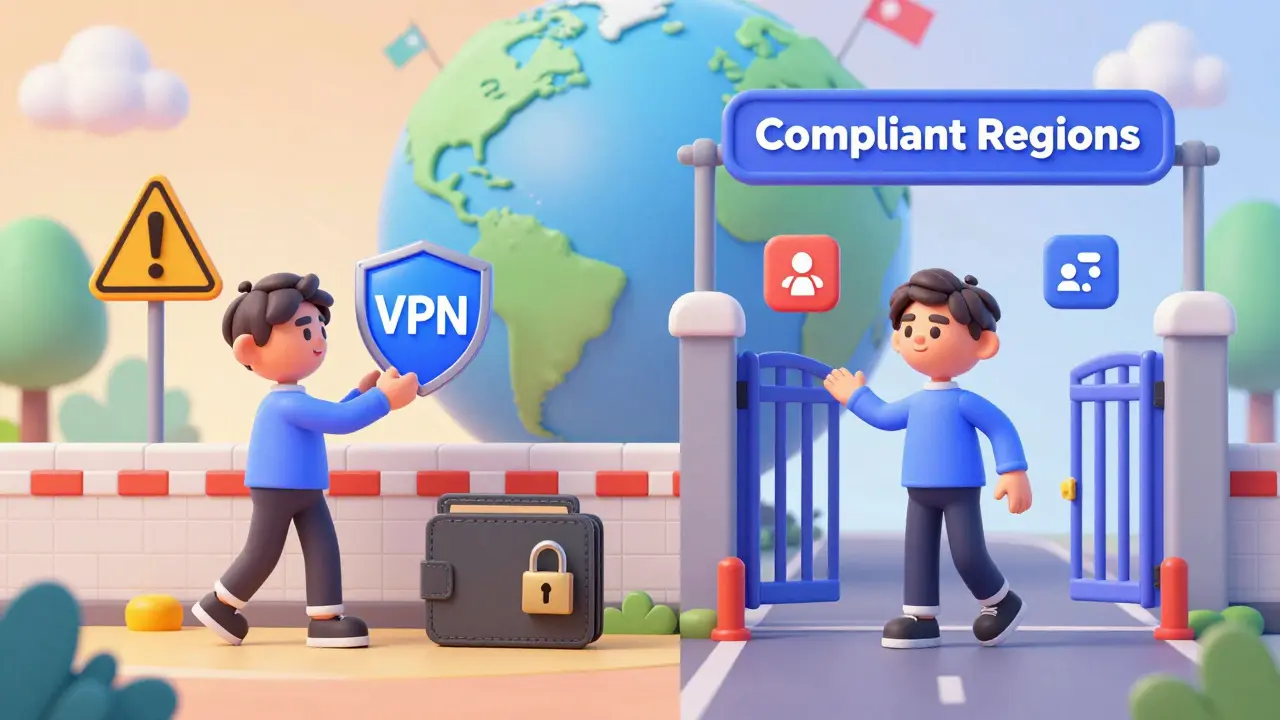
Frustration peaks when users try to circumvent restrictions. On forums like Reddit, many ask if they can use a VPN to appear as if they are in a permitted country. The short answer is no. OKX’s terms explicitly prohibit this. Their systems detect mismatches between your IP location, device language settings, and the country listed on your ID. Attempting this usually results in account termination and loss of funds.
Another common issue is "false positives." Some users in permitted countries get blocked because their IP addresses route through servers in restricted zones. This happens frequently with mobile data providers or public Wi-Fi networks. If this occurs, you must contact support with proof of residence. Be prepared for a lengthy review process, as automated systems often flag these cases initially.
Users also complain about inconsistent enforcement across devices. Some report being able to log in via desktop but getting blocked on mobile apps. This inconsistency stems from different geolocation databases used by web versus app infrastructure. Always ensure your device location services are accurate and match your physical location.
What’s Next for OKX Regulations in 2026?
The regulatory landscape is shifting rapidly. In late 2025, OKX announced plans to explore a US-compliant entity, though no timeline was set. They have invested heavily in compliance infrastructure, launching entities in Switzerland and the UAE to serve previously restricted markets. Meanwhile, they expanded derivatives access to 18 new countries, including Thailand and Vietnam, showing a willingness to adapt where regulations permit.
However, challenges remain. The EU’s MiCA regulations, fully effective since December 2024, forced OKX to restrict derivatives for all EU residents. Similarly, France’s AMF added OKX to its restricted list in September 2025, limiting services there. Analysts predict that by mid-2026, OKX will establish compliant operations in 35 previously restricted countries through local partnerships, but the US market will likely remain off-limits due to ongoing SEC litigation against other exchanges.
If you are in a gray-area country, keep an eye on official announcements. Regulatory changes happen quickly, and what is banned today might become available tomorrow-or vice versa. Always rely on OKX’s official Risk & Compliance Disclosure page for the most current list, as third-party sources often lag behind real-time updates.
Can I use OKX if I live in the United States?
No. As of May 2026, OKX completely bans users residing in the United States due to regulatory compliance with US laws. There is currently no US-specific entity available for retail traders.
Is OKX available in Singapore?
Yes, but with caveats. The global OKX platform blocks Singaporean IPs. However, residents can use OKX Singapore, a separate entity regulated by MAS. You must register specifically through their local channel and meet eligibility criteria.
Why am I blocked if my country is not on the banned list?
This is often due to false positives from IP routing. If your internet service provider routes traffic through a restricted country, OKX’s system may flag you. Contact support with proof of residence to resolve this. Avoid using VPNs, as this violates terms of service.
Do I need KYC to trade on OKX?
Yes. Mandatory KYC verification is required for all core features, including trading, deposits, and withdrawals. Unverified accounts cannot execute transactions.
Can I trade futures in Australia?
No. Australian users can trade spot cryptocurrencies but are prohibited from accessing derivatives, including futures and perpetual contracts, due to local regulations.

Write a comment