
Imagine you are trying to buy a limited-edition sneaker online. Thousands of people want it. You refresh the page, click 'buy,' and get an error. Meanwhile, someone using a bot with a residential proxy is a networking tool that routes internet traffic through IP addresses assigned to real household devices snags the shoe instantly. Now, swap the sneakers for Bitcoin or Ethereum. The stakes are higher, the speed is measured in milliseconds, and the rules are much stricter.
In the world of cryptocurrency trading, residential proxies have become a double-edged sword. On one side, they offer legitimate traders a way to automate strategies, monitor arbitrage opportunities across different regions, and protect their privacy. On the other, they are the primary tool used by bad actors to manipulate markets, launder money, and bypass security checks. If you are considering using these proxies for your trading operations, you need to understand not just how they work, but why they might get your account banned-or worse, put you on a legal radar.
How Residential Proxies Actually Work in Crypto
To understand the risk, you first need to understand the mechanism. A standard datacenter proxy comes from a server farm. It’s fast, cheap, and easy to spot. Exchange platforms like Binance or Coinbase have sophisticated systems that flag traffic coming from known server IP ranges. They know it’s a bot. They often block it immediately.
A residential proxy, however, is different. It uses the IP address of a real person’s home internet connection-perhaps a laptop in Auckland or a smartphone in London. When your trading bot sends a request through this network, the exchange sees a regular user browsing from a living room. This makes the traffic look organic. For a trader running automated scripts, this disguise is powerful. It allows you to:
- Access geo-restricted trading pairs or liquidity pools.
- Run multiple trading accounts simultaneously without triggering duplicate IP bans.
- Monitor price discrepancies (arbitrage) across different regional exchanges without being throttled.
The technology typically offers two modes: sticky sessions, where your bot keeps the same IP for a set time (usually up to 30 minutes), and rotating sessions, where the IP changes with every single request. For high-frequency trading, rotation is key. But here is the catch: while the technology enables efficiency, it also creates a massive blind spot for regulators and security teams.
The Effectiveness: Why Traders Use Them
Let’s be honest about why people use them. Speed and anonymity. In crypto, information travels faster than light. If you see a price drop on one exchange, you want to buy on another before the market corrects. This is arbitrage. To do this effectively, you need low latency (ping) and reliable connections. Residential proxies provide stable connections that mimic human behavior, reducing the chance of being rate-limited by exchange APIs.
For professional algorithmic traders, these proxies act as a shield. They hide your physical location and your true digital footprint. This is crucial if you are operating in a jurisdiction with strict crypto regulations or if you simply value your privacy against data brokers. Legitimate firms use them to ensure their trading infrastructure remains uninterrupted during market volatility. If your bot gets blocked because the exchange thinks you’re a DDoS attack, you miss profits. Residential proxies prevent that false positive.
However, effectiveness varies wildly based on the provider. Not all residential proxies are created equal. Some networks are slow because they rely on peer-to-peer (P2P) connections where users share bandwidth. Others are premium services with dedicated nodes. The difference can mean the difference between catching a trade and missing it entirely.
The Dark Side: Fraud, Manipulation, and Bans
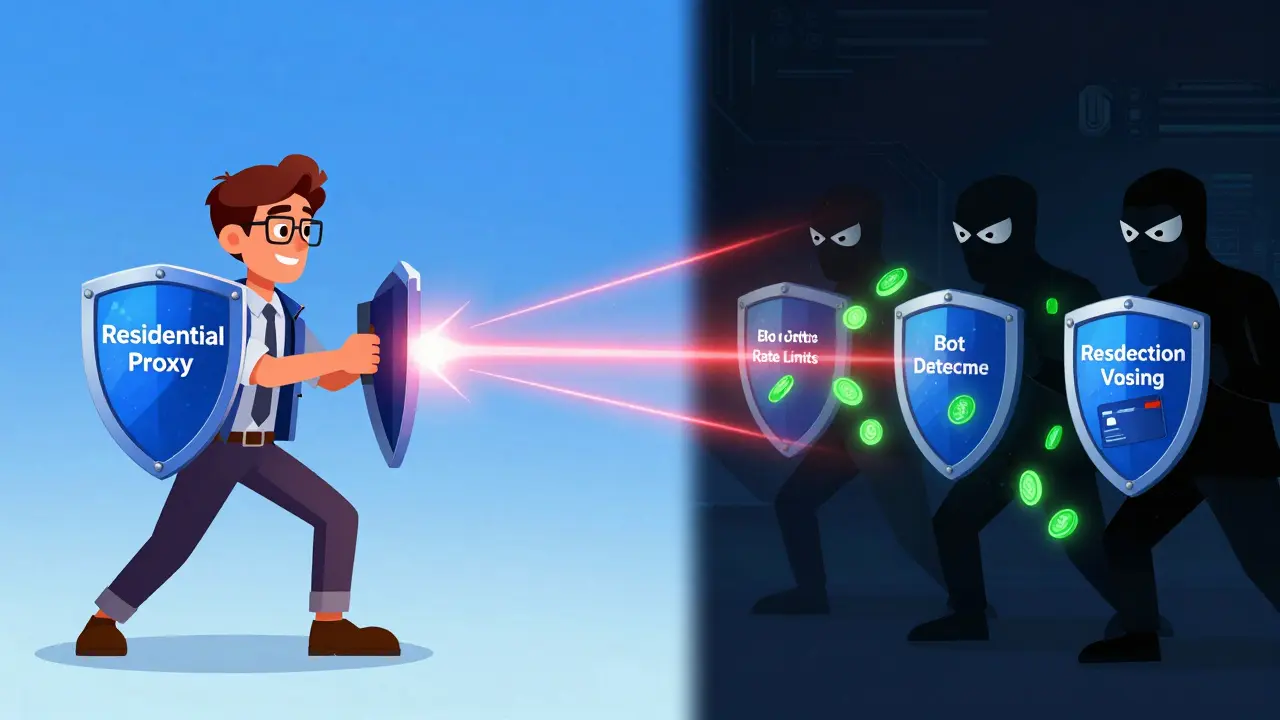
This is where the story gets complicated. The same features that help you avoid bans also help criminals commit fraud. Security researchers at Trend Micro and others have documented extensive use of residential proxies for illicit activities. Here is what is happening behind the scenes:
- Wash Trading: Bad actors use multiple accounts, each masked by a different residential IP, to trade against themselves. This creates fake volume, making a low-value coin look popular. This manipulates the market and tricks other investors.
- Credit Card Stuffing: Cybercriminals use stolen credit card details to buy crypto. Residential proxies allow them to appear as legitimate customers from different countries, bypassing bank fraud detection systems.
- Regulatory Arbitrage: Traders use proxies to access exchanges banned in their country, violating local laws.
A 2022 analysis published in Forbes found that over 50% of daily Bitcoin trading volume on some exchanges was likely fraudulent. Residential proxies were a key enabler. Because of this, exchanges are becoming paranoid. They don’t just block IPs; they analyze behavior patterns. If your trading bot acts too perfectly, even with a residential IP, you will still get flagged.
The risk for you? If you associate your account with an IP address previously used for fraud, your account could be frozen. Exchanges maintain blacklists of malicious IPs. Even if you bought your proxy service legitimately, you might be sharing an IP pool with a scammer. This is called "IP reputation poisoning."
Legal and Compliance Risks in 2026
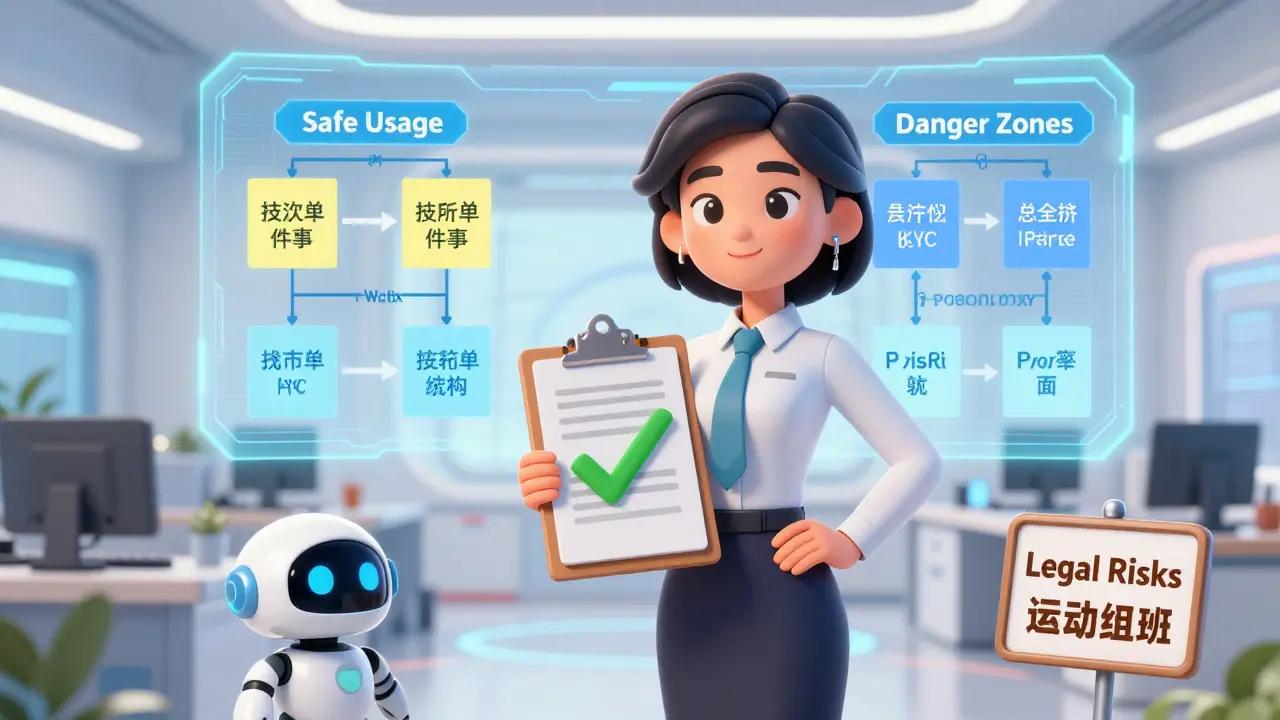
By 2026, the regulatory landscape has tightened significantly. Financial Action Task Force (FATF) guidelines now require stricter Know Your Customer (KYC) protocols. Using a proxy to obscure your identity during KYC verification is a major red flag. If you try to verify your identity while hiding behind a rotating residential IP, most compliant exchanges will reject your application outright.
Furthermore, many jurisdictions now classify the use of anonymizing tools for financial transactions as suspicious activity. While owning a proxy isn’t illegal, using it to evade sanctions, hide proceeds of crime, or bypass geo-blocks imposed by law can lead to severe penalties. In New Zealand and other OECD countries, financial institutions are required to report any unusual transaction patterns. Automated trading via proxies often triggers these alerts.
You must ask yourself: Are you using the proxy to enhance your trading strategy, or to hide something? If it’s the latter, you are walking into a legal minefield. Regulators are investing heavily in AI-driven surveillance that can detect proxy usage despite the masking. They look for inconsistencies in timezone, language settings, and device fingerprints alongside the IP address.
Datacenter vs. Residential: Which Should You Choose?
Not every trading task needs a residential proxy. In fact, for many tasks, they are overkill and unnecessarily risky. Here is a breakdown to help you decide.
| Feature | Residential Proxies | Datacenter Proxies |
|---|---|---|
| Anonymity Level | High (Looks like a real user) | Low (Easy to detect as a server) |
| Speed/Latency | Variable (Depends on host) | Very High (Dedicated servers) |
| Cost | Expensive ($300-$1,500+/mo) | Cheap ($10-$50/mo) |
| Detection Risk | Low (But high if IP is shared with fraudsters) | High (Often blocked by exchanges) |
| Best Use Case | Arbitrage, Multi-account management, Geo-unblocking | General API monitoring, Non-sensitive data scraping |
If you are just pulling public price data from an API, a datacenter proxy is usually fine and cheaper. But if you are executing trades, creating accounts, or interacting with front-end interfaces that have anti-bot protection, residential is the only option that works reliably. However, always check the terms of service of your exchange. Many explicitly forbid the use of proxies for account creation or trading execution.
How to Stay Safe and Compliant
If you decide to proceed, you need a strategy that minimizes risk. First, choose a reputable provider. Avoid cheap, underground proxy lists. These are almost certainly populated with IPs used for malware and fraud. Stick to established companies like Bright Data or Oxylabs, which have compliance teams and vet their networks. Yes, it costs more, but the cost of a banned account is higher.
Second, implement proper session management. Do not rotate your IP address every second. This looks robotic. Mimic human behavior. Use sticky sessions for login processes and keep the IP consistent during a trading session. Change it only when necessary. Third, never use proxies for KYC verification. Always complete identity checks from your real, static IP address. Once verified, you can switch to a proxy for trading, but mixing the two is a surefire way to trigger a security review.
Finally, monitor your IP reputation. Use tools to check if the residential IPs you are assigned have been flagged for spam or fraud. If you notice your trades are failing or your account is under review, stop immediately. Switch providers or revert to direct connections. Don’t push your luck.
Is it illegal to use residential proxies for crypto trading?
Using residential proxies themselves is not inherently illegal. However, using them to bypass geo-restrictions imposed by law, evade sanctions, or facilitate fraud is illegal in many jurisdictions. Additionally, violating the Terms of Service of a cryptocurrency exchange can lead to account termination and forfeiture of funds.
Can exchanges detect if I am using a residential proxy?
Yes. While residential IPs look like regular users, exchanges use advanced behavioral analysis. They look for patterns such as impossible travel times, inconsistent device fingerprints, and non-human trading speeds. If your behavior looks automated, even with a residential IP, you will likely be detected.
Why are residential proxies more expensive than datacenter proxies?
Residential proxies require a network of real devices, often compensated users, to provide bandwidth. Maintaining this infrastructure, ensuring uptime, and managing IP reputation is costly. Datacenter proxies run on owned servers, which is a much cheaper, scalable model.
What is wash trading and how do proxies enable it?
Wash trading is when a trader buys and sells the same asset to create artificial volume. Proxies allow a single entity to control multiple accounts from different apparent locations, making the fake trades look like genuine market interest from diverse users.
Should I use a proxy for KYC verification?
No. Never use a proxy for Know Your Customer (KYC) verification. Exchanges cross-reference your IP with your ID documents. Mismatches trigger immediate flags. Always verify your identity from your actual home or office IP address.



Write a comment