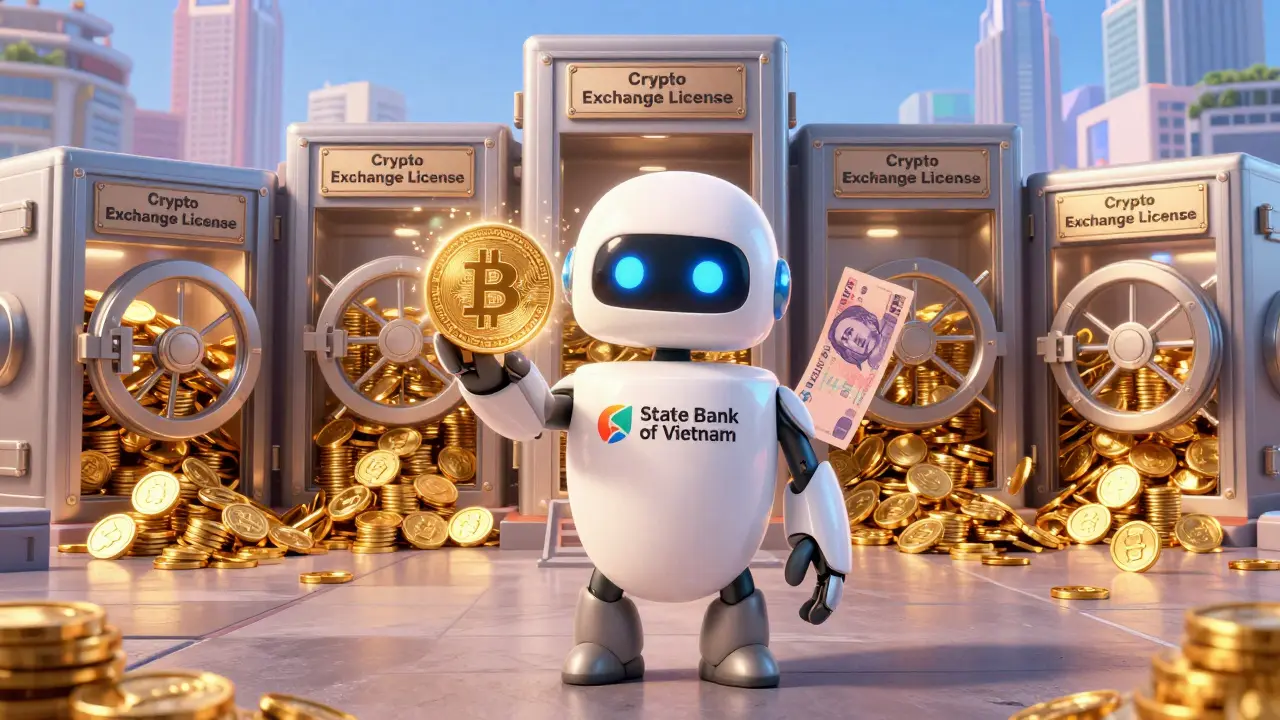
For years, Vietnam’s central bank banned cryptocurrency use outright. No banks could process crypto payments. No exchanges could operate legally. But in 2025, everything changed. The State Bank of Vietnam didn’t just loosen its grip-it rebuilt the entire system from the ground up. By June 2025, Bitcoin and Ethereum became legal virtual assets under Vietnam’s new Law on Digital Technology Industry. This wasn’t a green light for free trading. It was a controlled experiment-one with strict rules, massive capital barriers, and no room for error.
What’s Actually Allowed Now?
You can own Bitcoin. You can trade it. You can inherit it. But you can’t use it to buy coffee, pay rent, or settle bills. The State Bank of Vietnam still bans cryptocurrencies as payment methods. That hasn’t changed. What’s new is that digital assets are now recognized as legal property. That means you can hold them, transfer them, and protect them under civil law. It’s a big step forward-but only if you play by the bank’s rules.The real shift happened in September 2025 with Resolution No. 05/2025/NQ-CP. This document created Vietnam’s first-ever licensing system for crypto exchanges. Only five companies will ever get a license. And the cost to even apply is staggering: 10 trillion Vietnamese dong-roughly $379 million. That’s more than most regional banks have in reserves. Only Vietnamese-owned firms qualify. Foreign exchanges like Binance or Kraken can’t apply. They’re locked out unless they partner with a local entity that meets every single requirement.
Who Can Run a Crypto Exchange in Vietnam?
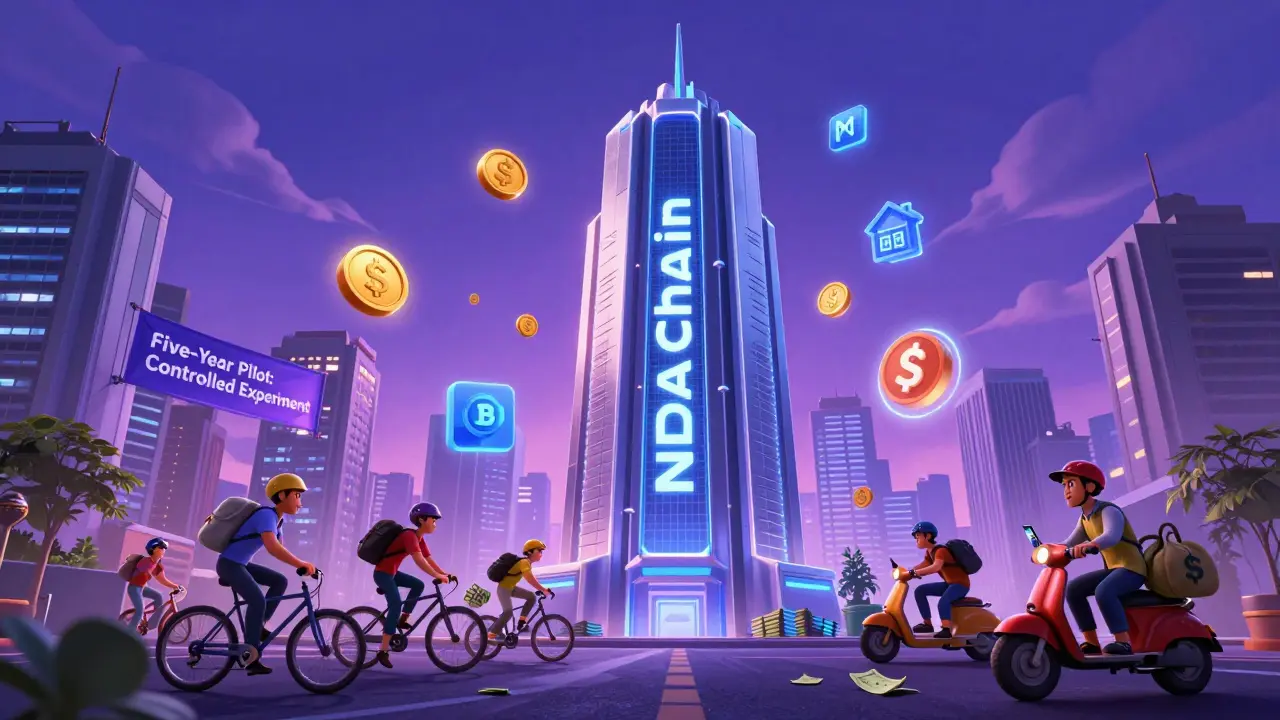
To even start the application process, a company needs two key things: deep pockets and clean history. The owners must have been profitable for two straight years. Their capital must come from approved sectors-commercial banks, securities firms, insurance companies, fund managers, or tech enterprises. No individual investors. No startups. No crypto-native firms without banking ties. The goal isn’t to encourage innovation. It’s to tie crypto to Vietnam’s existing financial infrastructure.And here’s the kicker: every trade must be in Vietnamese dong. No USDT, no BTC/USD pairs, no stablecoin trading. If you want to buy Bitcoin, you deposit VND. If you sell, you get VND. That’s intentional. The State Bank wants to control the flow of money. It doesn’t want foreign currencies or private digital dollars flooding the system. Even the blockchain they built-NDAChain-is permissioned. Only government-approved entities can use it. It’s not public. It’s not decentralized. It’s a national tool for tokenizing bonds, carbon credits, and other assets under strict oversight.

Why Are No Exchanges Licensed Yet?
As of October 2025, not a single company had submitted a license application. That’s not a glitch. It’s a signal. The capital requirement is too high. The compliance burden is too heavy. The ownership rules are too narrow. Even major Vietnamese financial institutions are hesitating. Why risk billions on a five-year pilot with no guarantee of return? The penalties for violations are severe-fines, revocation, criminal charges. Most firms are waiting to see who blinks first.Meanwhile, retail traders are doing just fine. Vietnam ranks fourth in the world for crypto adoption, according to Chainalysis. Over 20% of tech-savvy Vietnamese own digital assets. They’re not using licensed exchanges. They’re using Binance P2P, local Telegram groups, and peer-to-peer networks. Stablecoins like USDT are traded freely in cash deals. The government knows this. But they’re not shutting it down. They’re letting it exist-outside the system-while they build their own controlled version.
How Does This Compare to Neighbors?
Singapore lets stablecoins operate under clear rules. The Philippines lets licensed firms offer crypto savings accounts. Thailand allows crypto ETFs. Vietnam? No stablecoins. No foreign platforms. No retail access to international markets. It’s the most restrictive approach in Southeast Asia. But here’s the twist: Vietnam’s population is younger, more tech-savvy, and more eager for financial alternatives than any of its neighbors. The central bank is trying to harness that energy without losing control.Their goal isn’t to make Vietnam the next crypto hub. It’s to make crypto a tool for economic growth-on their terms. Deputy Governor Pham Thanh Ha has said they expect 20% credit growth in 2025 tied to digital asset adoption. They want pension funds and insurance companies to start holding Bitcoin. They want tax revenue from crypto trades. They want to reduce reliance on foreign capital by keeping transactions in VND. It’s not about freedom. It’s about integration.
What’s Next for Vietnam’s Crypto Market?
The five-year pilot program ends in 2030. That’s when the real test begins. Will the licensed exchanges survive? Will they attract enough users to justify the cost? Will the government lower the capital requirement? Will they allow foreign participation? Right now, the answer to all those questions is: we don’t know.What we do know is that Vietnam’s approach is unique. It’s not a ban. It’s not a free-for-all. It’s a tightly controlled sandbox. The central bank is treating crypto like a nuclear reactor-useful if contained, dangerous if unregulated. They’re building the walls first, then deciding whether to turn on the power.
For investors, this means one thing: patience. If you’re waiting for a licensed exchange to launch, you might be waiting for years. If you’re looking for legal clarity on ownership, you’ve got it. If you’re hoping to trade Bitcoin without restrictions-you won’t find it here. The State Bank of Vietnam isn’t here to serve traders. It’s here to serve the economy. And right now, that means control over chaos.
What This Means for You
If you’re a Vietnamese citizen: You can legally own crypto. You can trade it on P2P platforms. You can’t use it to pay bills. You can’t access licensed exchanges yet-because none exist. Keep your records. Know your tax obligations. And don’t assume the rules won’t change. The pilot is still in its early days.If you’re a foreign investor: Forget direct access. You can’t open an account on a Vietnamese exchange. Your only legal route is through Ministry of Finance-approved Crypto Asset Service Providers (CASPs). Those don’t exist yet either. So unless you’re a bank or a fund with $379 million to spare, you’re not getting in.
If you’re a developer or entrepreneur: NDAChain is your only real opportunity. It’s a government-run blockchain. It’s not open. But if you can build something that helps tokenize real estate, bonds, or carbon credits under its rules, you might get a seat at the table.
Vietnam didn’t become a crypto leader by accident. It happened because millions of people chose to use it-even when the government said no. Now that the government says yes-but only on its terms-the real battle begins. Will the system work? Will people adapt? Or will the underground market outgrow the official one?
One thing’s certain: Vietnam isn’t trying to catch up to the West. It’s trying to build its own version of crypto-slower, safer, and strictly controlled. Whether that’s smart or stifling depends on who you ask. But if you’re watching the future of crypto in Asia, you can’t look away from Hanoi.



25 Comments
Surendra Chopde
This is the most bizarre crypto policy I've ever seen. They're treating Bitcoin like a nuclear reactor? That's not regulation, that's paranoia. The fact that they're forcing everything into VND and banning foreign exchanges is just economic isolationism dressed up as innovation.
Tre Smith
The $379 million licensing fee is a joke. That's more than the entire market cap of most crypto startups. This isn't about financial stability-it's about protecting state-owned banks from competition. The fact that no one has applied yet proves the policy is fundamentally broken.
Allen Dometita
Vietnam's retail crypto adoption is insane. 20% of tech-savvy people using P2P? That's not a glitch, that's the future. Governments can't stop people from using tech-they can only try to control it. And they're losing.
Sherry Giles
This is all part of the globalist agenda. The State Bank is using crypto to push a digital yuan-style system. They're not building a national blockchain-they're building a surveillance tool. And they're forcing Vietnamese people to use it under the guise of 'economic growth'. Wake up.
Calen Adams
NDAChain is the real story here. A permissioned blockchain for tokenizing bonds and carbon credits? That's not crypto-it's blockchain-as-a-service for the state. They're not trying to democratize finance. They're trying to centralize it under one roof with government-approved actors.
Valencia Adell
I told you this would happen. Central banks always kill innovation with bureaucracy. They don't want you to profit. They want you to obey. And now they've got a legal framework to criminalize your Bitcoin holdings if you step out of line.
Danyelle Ostrye
I get why they're doing this. Vietnam's population is young, hungry for financial freedom, and tech-savvy. But they're trying to cage lightning. The underground market will grow faster than the official one. The question isn't whether they'll win-it's whether they'll realize they've already lost.
Katrina Recto
The fact that you can inherit crypto but not use it to pay rent says everything. It's not about control-it's about denial. They're pretending crypto is just a thing you own, not a thing you use. That's not progress. That's hypocrisy.
Jessie X
I'm just glad they recognized crypto as legal property. That's huge. Even if the exchange system is broken, at least you can defend your holdings in court now. That's a win for individual rights
Kip Metcalf
Look, the people are already using crypto. The government knows it. They're not trying to stop it-they're trying to tax it. And if they can get pension funds to hold Bitcoin? That's a quiet revolution. They're not the enemy. They're just slow.
sathish kumar
The regulatory framework, while stringent, reflects a prudent approach to financial innovation. Vietnam's historical aversion to unregulated capital flows necessitates such safeguards. The capital requirements, though formidable, ensure institutional integrity and mitigate systemic risk.
Don Grissett
they think theyre smart but theyre just scared. 379 million? bro thats more than the gdp of some countries. and they think people are gonna wait 5 years for a license? nah. theyre gonna keep using p2p and the gov will be left holding a useless blockchain.
Krista Hoefle
This isn't policy. It's performance art. They want to look like they're modernizing while actually killing innovation. The only people who win are the lawyers who draft the compliance forms.
Frank Heili
The VND-only trading rule is genius, actually. It prevents capital flight and keeps the currency stable. Most countries don't have the discipline to do that. The high barrier isn't about control-it's about filtering out speculative noise. Only serious players with real balance sheets can enter.
Mujibur Rahman
NDAChain isn't a blockchain-it's a financial firewall. They're not building for decentralization. They're building for sovereignty. Tokenizing bonds and carbon credits under state control? That's how you future-proof a developing economy. The West calls it authoritarian. I call it strategic.
Jennah Grant
The real story is the 20% adoption rate. No amount of regulation can unsee that. The government isn't fighting the market-they're trying to catch up. The licensed exchanges might fail, but the demand is real. That's the only thing that matters.
Dennis Mbuthia
This is the most insane thing I've ever seen. They're banning foreign exchanges but letting P2P thrive? That's like banning cars but letting people ride horses on the highway. The system is designed to fail. And when it does, they'll blame the people for not following the rules.
Dave Lite
I’ve worked with central banks in 12 countries. This is the most disciplined crypto policy I’ve ever seen. The capital requirements are brutal, yes-but they prevent pump-and-dump schemes. The VND-only rule? Genius. It stops dollarization. This isn’t control-it’s responsibility.
Becky Chenier
I just hope they don't end up like China-where crypto is illegal but everyone still uses it. At least here, people can own it. That’s a step. Maybe in 2030 they’ll realize they need to let people trade freely.
Staci Armezzani
This is actually really smart if you think about it. They’re not trying to be the next crypto hub. They’re trying to use crypto to stabilize their economy. Tokenizing assets under state control means more liquidity for infrastructure projects. It’s not sexy, but it’s sustainable.
Tracey Grammer-Porter
I think this is the most balanced approach in Asia. They’re not banning crypto. They’re not letting it run wild. They’re creating a slow, safe path for adoption. The people will adapt. The system will evolve. And maybe, just maybe, they’ll get it right.
jim carry
They think they’re building a financial system. They’re building a prison. NDAChain isn’t a blockchain-it’s a digital leash. And the $379 million fee? That’s not a barrier to entry. That’s a bribe to the elite. The real crypto revolution happens in Telegram groups, not government-approved ledgers.
Mollie Williams
There’s something deeply poetic about this. A nation that once banned crypto now tries to tame it with bureaucracy. They want to make it safe, but in doing so, they strip it of its soul. Crypto was never about control. It was about autonomy. And now, the most tech-savvy country in Southeast Asia is turning it into a state-sponsored bond.
Veronica Mead
The State Bank of Vietnam has demonstrated an admirable commitment to financial prudence. The prohibition of foreign exchanges and the mandatory use of Vietnamese dong ensure monetary sovereignty. The capital requirements, while substantial, are not excessive when weighed against the systemic risks inherent in unregulated digital asset markets. This is not repression-it is stewardship.
Jordan Leon
It's fascinating how they're treating crypto like a public utility. Not a currency. Not a commodity. A tool. A national asset to be managed like water or electricity. That's not control for control's sake. That's a recognition that digital assets have become infrastructure. The question isn't whether this will work-it's whether the rest of the world will understand why it had to be this way.