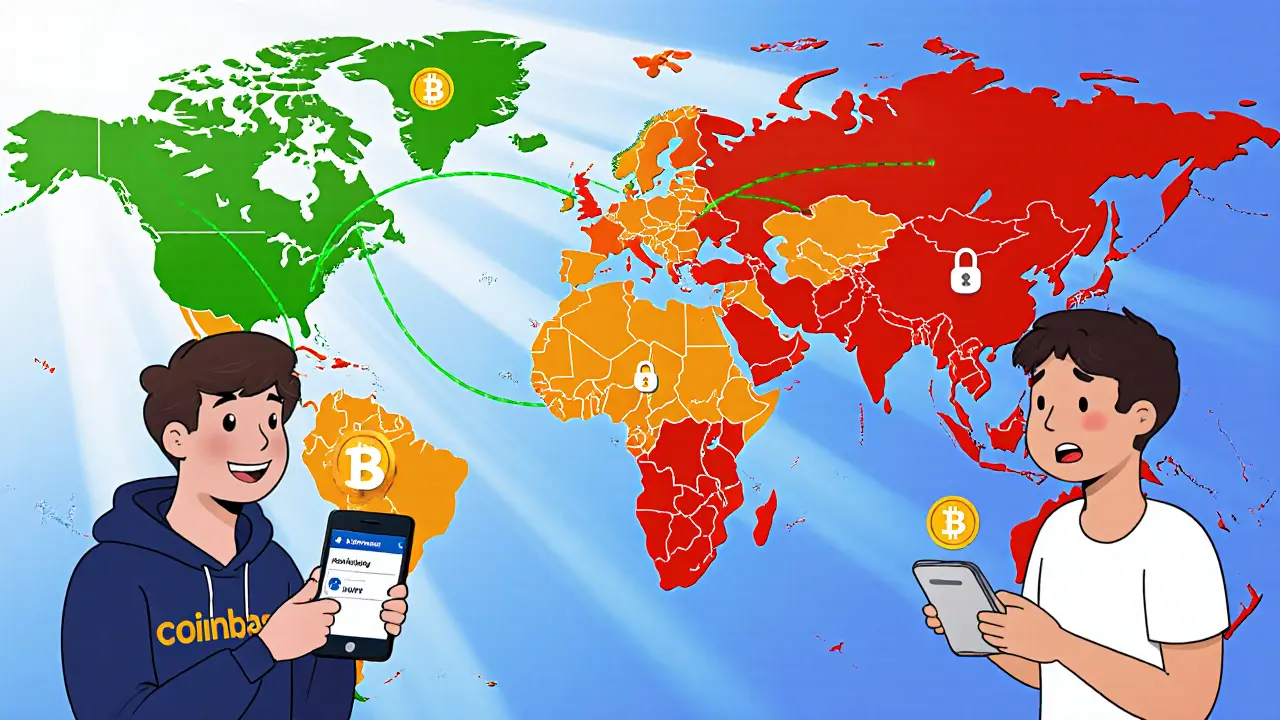
Crypto Exchange Geo-Blocks: Why Location Controls Your Trading Access
When you try to log into a crypto exchange and get blocked, it’s not a glitch—it’s a geo-block, a restriction placed on users based on their physical location due to local laws. Also known as geographic restrictions, these blocks turn global markets into patchwork quilts of access—some countries have full freedom, others have total bans, and most sit somewhere in between. This isn’t about technology. It’s about legal risk. Exchanges like Binance, Coinbase, and Kraken don’t arbitrarily block users. They’re forced to by regulators who demand they know exactly who’s trading, where they live, and how they’re funding their accounts. If an exchange fails to comply, it faces fines, shutdowns, or criminal charges. That’s why you can trade freely in the U.S. on some platforms but get locked out in China, India, or Nigeria.
These geo-blocks, location-based access controls imposed by crypto exchanges due to regulatory pressure. Also known as regional access restrictions, they directly influence whether you can use a centralized exchange, a crypto platform that holds your funds and requires identity verification. Also known as CEX, it or if you’re pushed toward a decentralized exchange, a peer-to-peer trading platform that doesn’t require KYC or hold your assets. Also known as DEX, it. The difference matters. A CEX might block you if you’re in China, but a DEX? You can still swap tokens—if you already own crypto. That’s why people in restricted regions often rely on peer-to-peer trades or VPNs, even though both carry legal and security risks. And it’s not just about access—it’s about price. In places like South Africa, local exchanges like OVEX exist because global ones don’t offer fair ZAR rates. Geo-blocks create price gaps, liquidity gaps, and opportunity gaps.
Regulators like AUSTRAC in Australia, FATCA for U.S. citizens abroad, and the PBOC in China don’t just want to tax crypto—they want to control it. That’s why you’ll find posts here detailing crypto exchange geo-blocks in India, China, and beyond. You’ll see why some exchanges got shut down, why others still operate in legal gray zones, and how people are adapting. Some use decentralized tools. Others turn to local platforms with official licenses. A few risk it all with unregulated services. This collection doesn’t just list restrictions—it shows you the real trade-offs behind every blocked login screen. What you’ll find below aren’t just articles. They’re survival guides for trading crypto when the world won’t let you in.