MOWA Moniwar Super Rare Pets Airdrop: What We Know So Far
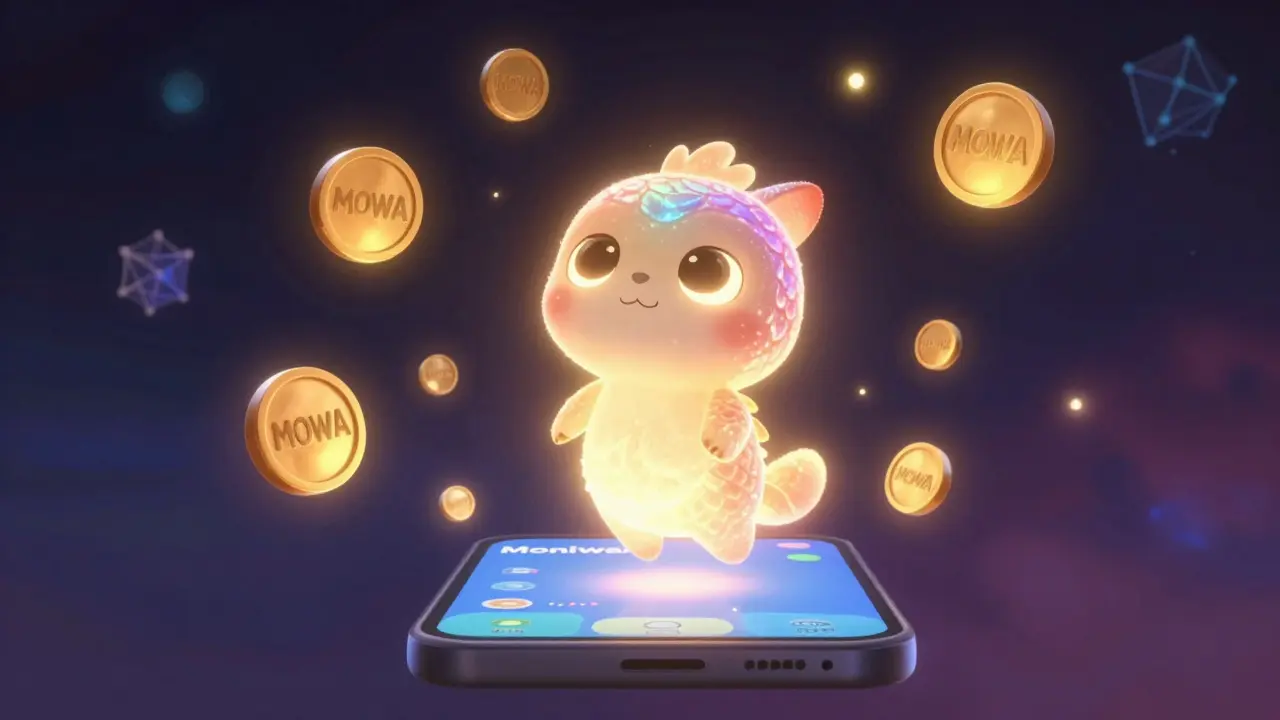
The MOWA Moniwar Super Rare Pets airdrop rewards early community members with tokens, but eligibility ended in late 2024. Learn who qualified, how to claim, and what comes next.
When you hear about MOWA token, a cryptocurrency token with minimal public documentation and no verified development team. Also known as MOWA coin, it appears in a handful of decentralized exchanges but lacks listings on major platforms like CoinMarketCap or CoinGecko. Unlike stablecoins backed by real assets or tokens tied to active protocols, MOWA token doesn’t clearly link to a dApp, a game, or a service. That’s not always a red flag—but in this case, the silence speaks louder than any whitepaper.
What makes MOWA token tricky is how it overlaps with other low-visibility tokens like DCOIN or XROCK—projects that pop up suddenly, gain brief attention on Telegram or Twitter, then vanish. These tokens often rely on hype, not utility. They don’t need a team to launch, just a contract deployer and a marketing post. You’ll find MOWA token mentioned alongside tokenomics, the economic structure behind a crypto asset, including supply, distribution, and burn mechanisms, but no one has published actual numbers. Is the supply capped? Are tokens locked? Is there a vesting schedule? No answers. That’s not transparency—it’s opacity.
Some users report finding MOWA token on obscure DEXs like FlatQube or WOOFi, but those platforms support dozens of niche tokens. Just because it’s listed doesn’t mean it’s safe. The same exchanges that host MOWA also carry tokens with 75% price drops in weeks. If you’re looking at MOWA token, you’re not chasing a project—you’re chasing a gamble. And unlike Ethereum or Polygon, MOWA doesn’t even have a blockchain of its own. It runs on existing chains like BSC or Polygon, meaning it’s just another smart contract with no unique tech behind it.
There’s no community forum, no GitHub repo, no roadmap. No one’s building anything with MOWA token. It doesn’t enable DeFi, NFTs, or AI agents. It doesn’t pay stakers or reward users. It’s just a symbol on a screen. That’s not innovation. That’s noise.
So why does it exist? Because someone could make a quick profit by creating it, pushing it, then dumping it. And someone else will buy it, hoping it’s the next big thing. History shows most of these tokens never recover. We’ve seen it with Dogcoin, with RACA airdrops gone cold, with UNB airdrops that never materialized. The pattern is clear: no transparency, no team, no use case = high risk.
Below, you’ll find every post we’ve published that touches on tokens like MOWA—what they are, how they behave, and how to avoid getting burned. These aren’t guides to buying MOWA. They’re guides to understanding why you shouldn’t.
 2 Dec 2025
The MOWA Moniwar Super Rare Pets airdrop rewards early community members with tokens, but eligibility ended in late 2024. Learn who qualified, how to claim, and what comes next.