Soft Fork: What It Is and How It Changes Blockchain Without Breaking It
When a blockchain updates, it doesn’t always mean everyone has to upgrade at once. A soft fork, a backward-compatible protocol upgrade that tightens rules without splitting the network. Also known as a compatible fork, it lets old nodes keep running while new ones enforce stricter rules—no chaos, no chain split. This is how Bitcoin has rolled out major changes like SegWit and Taproot without forcing every user to update their software.
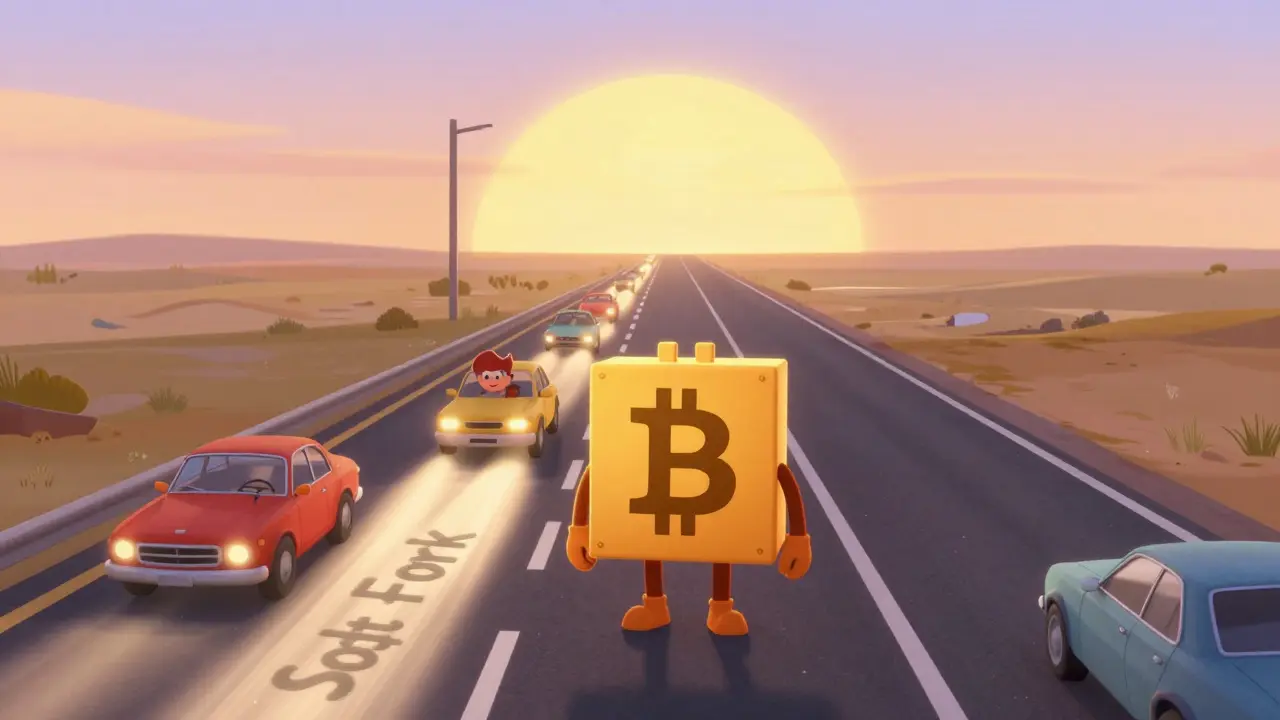
Unlike a hard fork, a non-backward-compatible change that splits the blockchain into two separate chains, a soft fork doesn’t create two versions of the ledger. If a miner or node doesn’t upgrade, they still see valid blocks—they just can’t create new ones that follow the updated rules. Think of it like a new traffic law that only applies to cars with updated GPS systems. Old cars still drive, but they can’t turn left at the new signal unless they upgrade.
Soft forks are popular because they’re low-risk. They don’t require mass coordination. Bitcoin’s community prefers them because they avoid the drama of chain splits—like what happened with Bitcoin Cash. When Ethereum moved to Proof of Stake, it used a hard fork. Bitcoin? It’s stuck with soft forks because its users value stability over radical change. That’s why you’ll see soft forks in Bitcoin’s history but rarely in newer chains that prioritize speed over consensus.
What makes a soft fork work? It needs majority mining power. If less than 51% of miners adopt the new rules, the fork fails. That’s why Bitcoin’s soft forks are often announced months in advance—miners get time to prepare. It’s not about forcing users; it’s about guiding the network gently forward.
You won’t notice a soft fork unless you’re a miner or developer. As a regular user, your wallet keeps working. Your Bitcoin balance stays the same. You don’t need to do anything. That’s the whole point. Soft forks are the quiet upgrades that keep Bitcoin running for millions without a single hiccup.
Behind every soft fork is a technical tweak: better signature validation, smaller transaction sizes, or new scripting capabilities. But you don’t need to understand the code to benefit. The result? Faster, cheaper, and more secure transactions—all without breaking what already works.
Below, you’ll find real-world examples of how soft forks have shaped Bitcoin’s evolution, from how they enabled scaling solutions to how they quietly improved security. These aren’t theoretical debates—they’re the quiet changes that made Bitcoin what it is today.