
Imagine logging into your favorite crypto trading platform only to find it completely gone. No warning emails. No maintenance notice. Just a blank screen where your portfolio used to be. This wasn't just a glitch; it was the end of an era for TradeOgre, a privacy-focused cryptocurrency exchange that vanished in July 2025.
Then came the bigger shock. On September 18, 2025, the Royal Canadian Mounted Police (RCMP) announced they had seized CAD$56 million (roughly US$40 million) in digital assets linked to the platform. This wasn't just another regulatory fine. It was Canada’s largest-ever cryptocurrency seizure and the first time law enforcement completely dismantled a crypto exchange infrastructure. For anyone who traded on TradeOgre or relied on its anonymous features, this event changed everything.
The Rise of a Ghost Exchange
To understand why this shutdown matters, you have to look at what made TradeOgre different. Launched in 2018 by an unknown founder, the platform registered in the United States but carved out a unique niche. While major exchanges like Coinbase or Binance were busy asking for your passport and utility bills, TradeOgre asked for nothing. No Know Your Customer (KYC) checks. No identity verification. Just pure, unfiltered trading.
This approach attracted two types of users. First, legitimate traders who valued their privacy and didn't want their financial lives tied to their government IDs. Second, individuals looking to move money without leaving a paper trail. The exchange specialized in niche altcoins and, crucially, Monero. Unlike Bitcoin, which has a public ledger anyone can audit, Monero uses advanced cryptography to hide transaction details. It is the gold standard for private transactions.
TradeOgre operated as a Tor-based hidden service. If you don’t know what that means, think of it as browsing the internet through a series of encrypted tunnels. It makes tracing your location nearly impossible. By combining Tor with non-KYC trading, TradeOgre created a fortress of anonymity. But in the world of finance, anonymity is often viewed as a red flag for illegal activity.
How the Investigation Unfolded
The road to the shutdown started long before the website went dark. In June 2024, the RCMP’s Money Laundering Investigative Team (MLIT) received a critical tip from Europol, the European Union’s law enforcement agency. This international cooperation highlights how borderless crypto crimes are becoming. Criminals operate globally, so police must too.
The investigation lasted a full year. A key player in this hunt was Arkham Intelligence, a blockchain analytics firm. These companies act as detectives for the digital age. They use sophisticated software to trace funds across thousands of wallets, identifying patterns that human investigators might miss. Arkham helped the RCMP map out the flow of illicit transactions through TradeOgre’s infrastructure.
The evidence pointed to one clear violation: TradeOgre had bypassed mandatory registration with the Financial Transactions and Reports Analysis Centre of Canada (FINTRAC). In Canada, any business dealing in virtual currencies must register as a money services business. They must report suspicious transactions and verify customer identities. TradeOgre did none of this. By operating outside these rules, they became a target.
The Disappearance and the Seizure
The signs of trouble appeared in July 2025. One day, TradeOgre’s website and social media channels simply stopped working. There was no explanation. Users tried to log in, trade, or withdraw funds, but nothing happened. Silence reigned. Then, blockchain analysts noticed something strange. Large amounts of cryptocurrency began moving from wallets linked to TradeOgre to new addresses.
These weren't random transfers. The transactions contained embedded messages declaring that the assets were under RCMP control. This is a modern twist on seizing cash. Instead of putting a boot on a bank account, police leave a digital breadcrumb trail that says, "This money belongs to us now."
On September 18, 2025, the RCMP made it official. They announced the seizure of CAD$56 million in digital assets. This amount represents funds investigators believe originated from criminal activities. While specific crimes haven't been detailed publicly, the scale suggests significant involvement in money laundering or other illicit trades. The seizure effectively killed TradeOgre. Without access to its liquidity and infrastructure, the exchange could not continue operations.
| Detail | Information |
|---|---|
| Shutdown Date | July 2025 (Website went dark) |
| Seizure Announcement | September 18, 2025 |
| Amount Seized | CAD$56 million (~US$40 million) |
| Lead Agency | Royal Canadian Mounted Police (RCMP) |
| Key Partner | Europol & Arkham Intelligence |
| Main Violation | Failure to register with FINTRAC / No KYC |

Why This Changes Everything for Crypto
You might think, "I just wanted to trade Monero privately. Why does this affect me?" The answer lies in the precedent set by this case. Before TradeOgre, many assumed that if an exchange was registered offshore or operated via Tor, it was untouchable. The RCMP proved otherwise. They showed that Canadian authorities have the technical capability and legal authority to pursue non-compliant platforms, regardless of where they claim to be based.
This marks a shift from targeting individual criminals to dismantling entire infrastructures. It sends a loud message to all privacy-focused exchanges: if you don't play by the rules, you will be shut down. The collaboration between the RCMP and private firms like Arkham Intelligence shows that the cat-and-mouse game between regulators and crypto operators is evolving. Regulators now have better tools to track funds than ever before.
For the broader industry, this reinforces the importance of compliance. Exchanges that implement robust Anti-Money Laundering (AML) and KYC protocols are safer. They may lose some users who demand total anonymity, but they gain legitimacy and protection from sudden shutdowns. The TradeOgre case proves that operating in the shadows is no longer a viable business strategy in the eyes of global law enforcement.
What Happens to the Users?
If you were a user of TradeOgre, your situation is difficult. Since the exchange operated without proper safeguards and insurance, there is likely no fund recovery program. The seized assets are being held by the RCMP because they are suspected to be proceeds of crime. Legitimate users who deposited clean money may find themselves caught in the crossfire. Proving ownership of funds in a non-KYC environment is incredibly hard. Without identity verification records, distinguishing between a victim and a criminal is nearly impossible for investigators.
This highlights a major risk of using unregulated platforms. When things go wrong, there is no customer support, no ombudsman, and no legal recourse. Your trust was placed in code and anonymity, not in institutional guarantees. Now that the code is frozen by police action, that trust has evaporated.
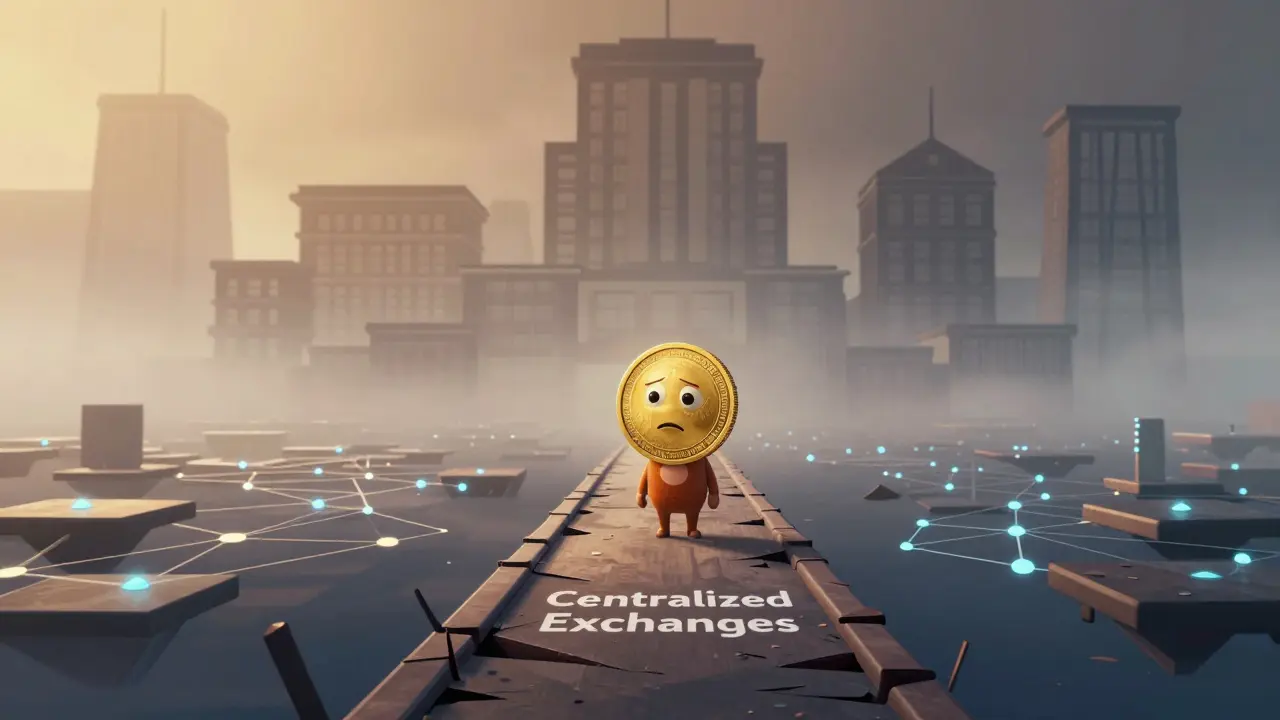
The Future of Privacy Coins and Anonymous Trading
Does this mean the end of privacy coins like Monero? Not necessarily. Monero itself is not illegal. It is a technology that offers privacy. However, the venues where you can easily buy and sell it are shrinking. Major centralized exchanges are increasingly delisting privacy coins due to regulatory pressure. The TradeOgre shutdown removes one of the last bastions for easy, anonymous fiat-to-crypto conversion.
Users seeking privacy will likely turn to decentralized exchanges (DEXs) or peer-to-peer (P2P) networks. These methods are harder to regulate because there is no central entity to seize. However, they also come with higher risks of scams, slippage, and complexity. The convenience of TradeOgre is gone, replaced by a more fragmented and risky landscape for those who prioritize anonymity.
Lessons for Traders and Investors
The TradeOgre saga offers several hard lessons. First, anonymity comes with a cost. That cost is security and recoverability. If you value privacy above all else, you must accept that you have zero protection if the platform fails or is seized. Second, regulation is not going away. It is getting smarter and more aggressive. Platforms that ignore laws like FINTRAC registration are ticking time bombs.
Third, international cooperation is real. Thinking you are safe because your exchange is registered in another country is a dangerous illusion. Agencies like Europol and the RCMP share data constantly. Blockchain analytics firms bridge the gap between jurisdictions. The walls are coming down.
Finally, diversify your exposure. Don't keep all your eggs in one basket, especially if that basket is an unregulated, anonymous exchange. Use reputable, compliant platforms for significant holdings, even if it means undergoing KYC checks. The peace of mind is worth the loss of some privacy.
Was TradeOgre illegal?
Operating a cryptocurrency exchange without registering with FINTRAC in Canada is illegal. TradeOgre failed to comply with money services business regulations, including Know Your Customer (KYC) requirements. While trading cryptocurrencies is not inherently illegal, providing exchange services without proper licensing violates Canadian financial laws.
Can I get my money back from TradeOgre?
It is highly unlikely. The RCMP seized the assets because they are suspected to be proceeds of crime. Since TradeOgre did not require identity verification, proving that your funds were legitimate and distinct from illicit money is extremely difficult. There is currently no public fund recovery process for users.
Is Monero still legal in Canada?
Yes, owning and trading Monero is legal in Canada. The issue with TradeOgre was not the coin itself, but the lack of regulatory compliance by the exchange. However, fewer centralized exchanges will list Monero due to the difficulty in meeting anti-money laundering standards associated with privacy coins.
How did the RCMP find TradeOgre's funds?
The RCMP collaborated with Europol and used blockchain analytics firm Arkham Intelligence. These tools allow investigators to trace transaction patterns, identify clusters of wallets controlled by the same entity, and follow the flow of funds even when privacy-enhancing technologies like Tor are used.
Will other anonymous exchanges be shut down?
The TradeOgre case sets a strong precedent. It demonstrates that law enforcement has the capability and willingness to dismantle non-compliant exchanges. Other platforms operating without KYC or proper registration face increased risk of similar enforcement actions, especially if they serve users in regulated jurisdictions like Canada.



18 Comments
Nick Wengel
It is interesting to see how different countries handle these digital assets. In the US, we have similar issues with unregulated platforms. The global nature of crypto means borders don't really stop enforcement anymore.
Alicia Hull
This article lacks critical detail on the specific legal precedents set by this seizure. How exactly does FINTRAC registration apply to a platform that was not physically located in Canada? This needs clarification.
Johan Otto
Boring story. Another exchange gets shut down. People always complain but they keep using shady sites. Typical.
Anuj Kashyap
The irony is palpable here 🙃 We built a system for freedom and now we are policing it like old banks. But hey, at least the money is safe with the government right? 😂
Tracy Marshall
this is what happens when you try to hide from the truth :/ the government knows everything anyway so why bother trying to be private its all part of the plan to control us
Steven Briggs
i guess privacy is dead then
Hamza k
Absolutely devastating for anyone who believed in the promise of anonymous finance! It feels like a dark day for personal liberty and trust in decentralized systems.
Kim Kay
so sad for the users who lost their savings. i hope they find some way to get help even if it is hard. we should support each other through these tough times
Brad Semp
The inevitable collapse of an unregulated entity. Those who refused to adhere to basic compliance standards were merely delaying the obvious outcome. Sophisticated actors understand that regulatory capture is not a threat but a reality.
Korn Arrieta
Stop crying about your lost coins. You knew the risks. If you wanted safety you should have used a regulated exchange. This is just market correction for idiots who think anonymity equals security.
Jackie D
i feel like we are losing something special here tho. is there really no middle ground between total anon and full kyc? seems like a false dichotomy being pushed by big corp
Ruth Williams
One must consider the broader implications for financial integrity. The lack of oversight in such platforms inevitably leads to illicit activities. This enforcement action is a necessary step toward a more transparent and accountable economic landscape.
Sophie Nakasako
I wonder if we can learn from this to build better systems? Maybe community-led governance could offer a safer alternative without sacrificing too much privacy. What do you all think?
Kristy Morrow
privacy is just a cover for crime thats it. people who want privacy are guilty until proven otherwise. end of story.
John Harman
Yeah look it up yourself. Arkham Intelligence has been tracking these wallets for months. The tech is solid. Police just needed time to map the clusters. Not rocket science.
Eric Braddock
They are using blockchain analytics to track everyone. It is all connected to the central bank digital currency rollout. They want to eliminate cash completely. Wake up sheeple.
Nick G
While I understand the need for regulation, it is important to recognize the cultural shift towards digital sovereignty. However, we must also acknowledge that complete anonymity often facilitates harmful activities. Perhaps a balanced approach involving zero-knowledge proofs could satisfy both privacy advocates and regulatory bodies in the future.
Guy Davis
they deserved it. criminals use these sites. if you are innocent you have nothing to hide. simple as that.