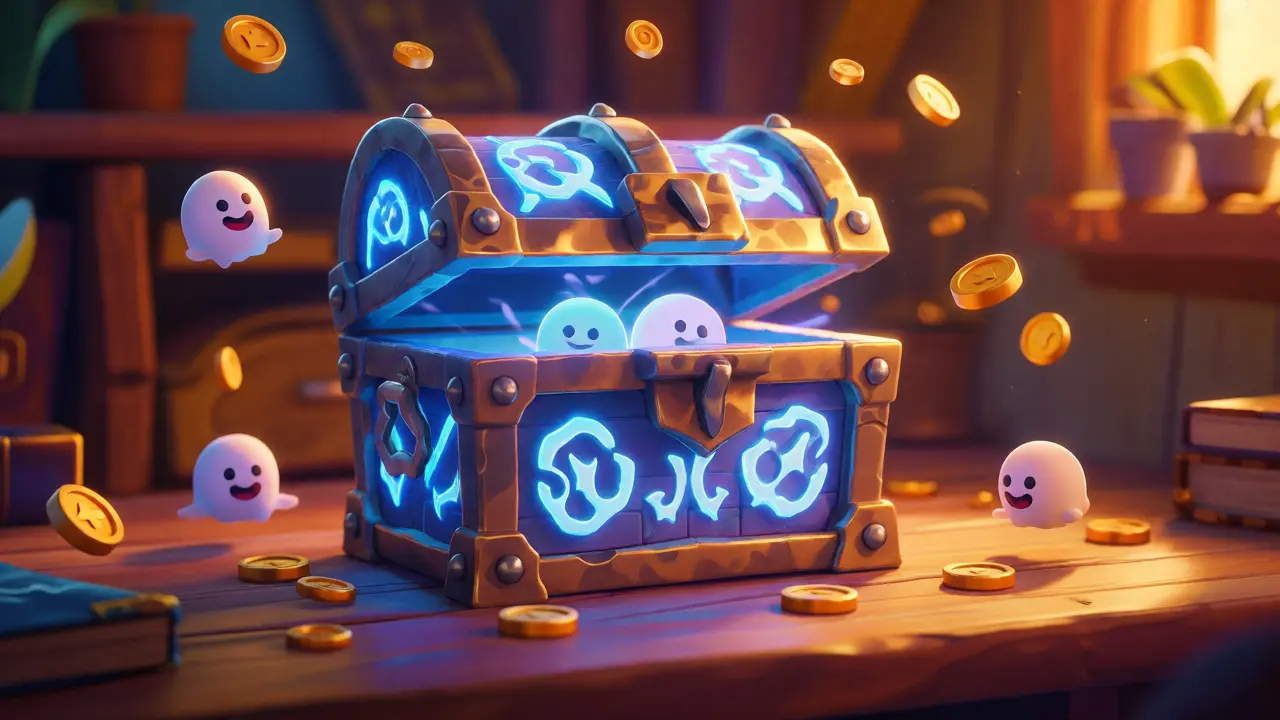
Remember the wild west of early 2022? The Battle Hero II Chest NFTs airdrop popped up right in the middle of that chaos. It promised over $50,000 worth of prizes. Sounds great, right? But if you were hunting for free crypto back then, you probably saw a lot of warnings about it. Researchers flagged it for "extreme caution." Why? Because while the prize pool looked juicy, the details on how it actually worked remained frustratingly vague.
You might be digging through old news or looking at your wallet history and wondering what happened. Did those chests ever arrive? Was this project legit or just another ghost town? This article breaks down exactly what we know about the Battle Hero II airdrop, why it mattered at the time, and what its current status tells us about the lifecycle of play-to-earn games.
The Promise of Free Loot
Let’s look at the basics. The event was promoted as a standard cryptocurrency airdrop. These are marketing tactics where projects give away tokens or NFTs to build a community. For Battle Hero II, the hook was specific: Chest NFTs. In many blockchain games, chests act like loot boxes. You open them, and hopefully, you get something useful inside-maybe a weapon, a character skin, or more tokens.
The total value touted was over $50,000. In the grand scheme of crypto, that’s not massive. Big projects like Axie Infinity dropped millions. But for a smaller game trying to get traction, $50k is enough to get people talking. The campaign ran through platforms like CoinMarketCap, which usually adds a layer of perceived legitimacy. If it’s on CMC, it must be real, right? Not always. That’s where the skepticism kicked in.
| Feature | Detail |
|---|---|
| Total Prize Pool | $50,000+ |
| Reward Type | Chest NFTs |
| Promotion Channel | CoinMarketCap & Social Media |
| Risk Level | High (Caution Advised) |
| Status (2026) | Unverified / Dormant |
Why Experts Said "Proceed with Caution"
If you read the fine print from researchers at the time, they didn’t mince words. They urged extreme caution. Why would experts warn against a free giveaway? Usually, it’s because the mechanics are unclear. With Battle Hero II, the exact criteria for winning weren’t fully transparent. Did you need to hold a certain amount of their native token? Did you need to connect your wallet to a specific smart contract? Were there hidden gas fees?
In crypto, ambiguity is often a red flag. Legitimate projects usually have clear whitepapers explaining tokenomics. When a project promises rewards but keeps the "how" fuzzy, it raises questions about sustainability. The broader market in 2022 was flooded with these types of schemes. Many were pump-and-dumps designed to inflate transaction volume rather than build a lasting game economy.
The Play-to-Earn Context
To understand Battle Hero II, you have to look at the sector it lived in: Play-to-Earn (P2E). Early 2022 was the peak of P2E hype. Everyone wanted to make money while gaming. Games like StepN and Axie Infinity had shown that players could earn real income. New projects sprang up weekly, each promising to be the next big thing.
Battle Hero II positioned itself in this niche. The Chest NFTs were likely meant to drive engagement. If you own a chest, you want to open it. To open it, you might need to play the game or buy keys. This creates a loop that keeps users active and spending. However, many of these loops failed once the initial hype died down. Without a solid gameplay core, the financial incentives alone couldn’t keep players around.
What Happened After the Drop?
Here is the tricky part: verifying the outcome. Today, in September 2026, finding concrete data on Battle Hero II is tough. Standard crypto tracking sites don’t list robust activity for it anymore. There are no recent updates on social media channels that suggest an active development team pushing out new features.
This silence is common for many small-cap NFT gaming projects from that era. Once the airdrop is distributed, the incentive for the developers to maintain communication drops significantly. If the game didn’t gain a critical mass of users quickly, it often faded into obscurity. Did the chests have any resale value later? Probably minimal. Most secondary markets for these niche NFTs dried up quickly.
Lessons for Crypto Gamers
So, what does the Battle Hero II story teach us? First, always check the source. Just because an airdrop appears on a major platform doesn’t mean it’s risk-free. Second, look for transparency. If a project can’t clearly explain how its token economy works, stay wary. Third, consider the long-term vision. An airdrop is a snapshot; a game is a marathon. If the developer isn’t showing consistent progress post-airdrop, the project might lack staying power.
For anyone holding onto forgotten NFTs from 2022, it’s worth checking if the underlying protocol still supports them. Sometimes, even if a game dies, the NFTs remain on-chain. They might not be worth much, but they’re still there. For Battle Hero II, the utility seems largely lost, serving mostly as a historical artifact of the NFT boom.
Frequently Asked Questions
Was the Battle Hero II airdrop legitimate?
It appeared to be a real promotional event listed on major platforms like CoinMarketCap, but experts advised extreme caution due to unclear mechanics. While it wasn't necessarily a scam, the lack of transparency and subsequent disappearance suggests it may not have delivered sustainable value to participants.
Do Battle Hero II Chest NFTs have any value today?
Currently, there is little to no active trading volume or verified utility for these NFTs. Most secondary markets for niche 2022 gaming NFTs have seen significant price depreciation, and without an active game ecosystem, their speculative value is minimal.
How do I claim NFTs from old airdrops?
Typically, you would need to connect your wallet to the project's official website during the claim window. If the site is down, the NFTs might already be in your wallet if the distribution was automatic. Check your wallet's NFT tab or use a block explorer to search for transactions associated with the project's contract address.
Why did so many NFT gaming airdrops fail after 2022?
Many failed because they prioritized token speculation over actual gameplay quality. When the market cooled off, players left because the fun factor wasn't there to retain them. Additionally, unsustainable tokenomics led to hyperinflation of in-game currencies, destroying the earning potential.
Is Battle Hero II still active?
As of late 2026, there is no evidence of active development, regular updates, or a vibrant community for Battle Hero II. The project appears to be dormant or defunct, which is typical for many small-scale play-to-earn experiments from the 2021-2022 cycle.
Write a comment