
Buying Bitcoin in Brazil feels different than it did three years ago. It’s no longer a wild west scenario where you could send money to any exchange without looking back. Today, the Brazilian Central Bank is watching closely, and for good reason. If you are holding digital assets or thinking about starting a business in this space, you need to know that Brazil has built one of the strictest regulatory frameworks in Latin America. This isn’t just about taxes; it’s about who gets to operate, how they protect your data, and what happens when things go wrong.
The core of this system rests on Law No 14.478/2022, also known as the Brazilian Virtual Assets Law (BVAL). Enacted in late 2022 and fully effective by June 2023, this law changed everything. It moved crypto from a legal gray area into a tightly controlled financial sector. For consumers, this means more safety but also less anonymity. For businesses, it means heavy compliance costs. Let’s break down exactly how these rules work right now in 2026, what they mean for your wallet, and where the biggest risks lie.
The Regulatory Trio: Who Is Watching Your Crypto?
In many countries, crypto regulation is messy because multiple agencies fight over jurisdiction. Brazil tried to solve this by creating a clear division of labor among three main bodies. Understanding which agency does what is crucial for navigating the landscape.
- The Central Bank of Brazil (BCB): They are the boss for most crypto activities. Under Decree No 11,563/2023, the BCB became the primary regulator for virtual asset service providers. If you use an exchange to buy, sell, or store crypto, the BCB is the entity ensuring that platform is licensed and following anti-money laundering rules.
- The Securities and Exchange Commission (CVM): Not all tokens are created equal. If a token acts like a stock-offering profit shares or voting rights-the CVM steps in. They treat these as securities, meaning stricter disclosure rules apply to the issuers.
- The Financial Activities Control Council (COAF): Think of COAF as the detective agency. They don’t license exchanges, but they receive reports of suspicious transactions. If your activity looks like money laundering or terrorist financing, COAF investigates.
This multi-layered approach ensures that whether you are trading stablecoins or buying equity-like tokens, someone is keeping tabs. The BCB even listed cryptoassets as a strategic priority in its 2025-2026 Regulatory Agenda, signaling that this oversight is here to stay and will likely tighten further.
VASP Compliance: The Gatekeepers of Access
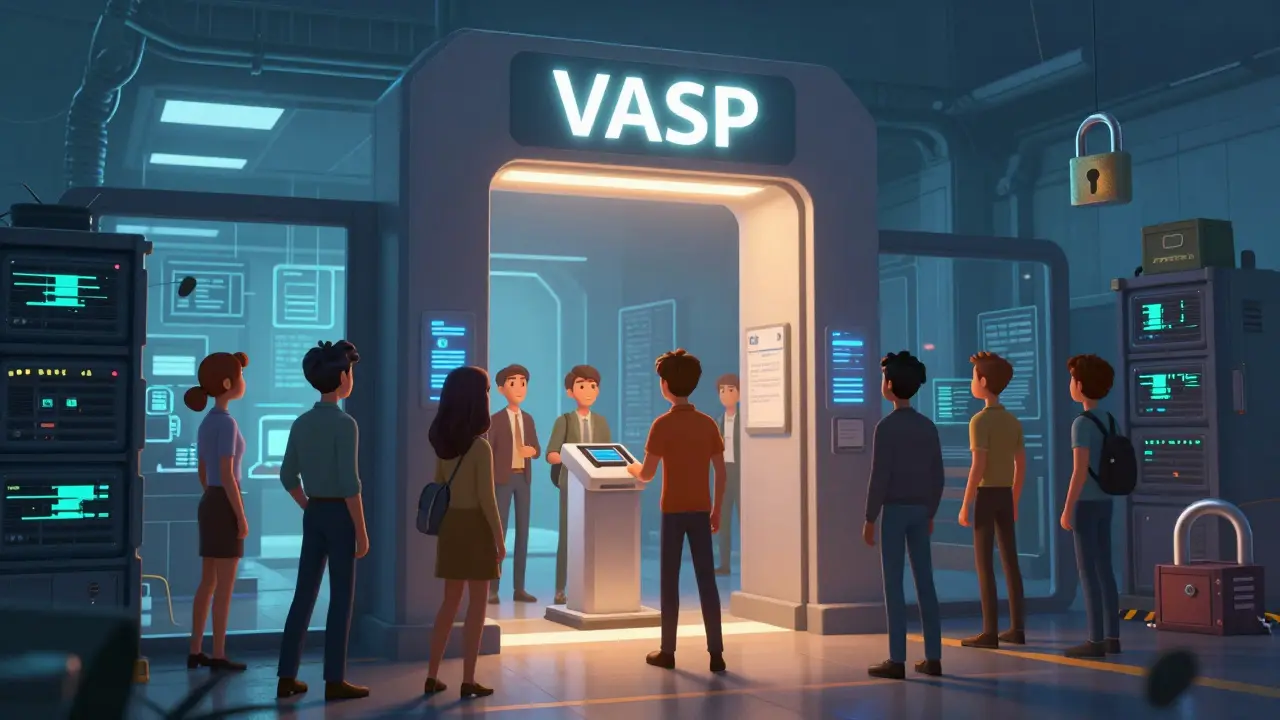
You cannot legally operate a crypto exchange in Brazil without permission. The term you’ll see everywhere is Virtual Asset Service Provider (VASP). These are the companies that facilitate the transfer, storage, or management of cryptocurrencies.
To become a VASP, a company must get authorization from the Central Bank. This isn’t a simple form fill-out. It involves rigorous checks. The BCB uses a phased approach, announced in May 2024, which includes a Regulatory Sandbox. This sandbox allows innovative startups to test their services under controlled supervision before going public. It’s a smart move-it protects consumers from buggy platforms while still allowing innovation.
For existing players, the requirements are steep:
- Mandatory Registration: All VASPs must be registered with the BCB. Unregistered platforms operating in Brazil are technically illegal and offer zero consumer protection.
- KYC Procedures: Know Your Customer rules are strict. You won’t find anonymous accounts anymore. Exchanges must verify your identity thoroughly.
- AML Monitoring: Anti-Money Laundering protocols require constant transaction monitoring. Any unusual pattern triggers a report to COAF.
If you are a user, always check if your exchange is a registered VASP. If they aren’t, you have no recourse if they freeze your funds or disappear. The registration requirement is the single biggest shield protecting Brazilian consumers today.
Stablecoins and the Drex Platform
Here is a surprising fact: stablecoins make up about 90% of crypto transaction volume in Brazil. People love them because they offer the speed of blockchain with the stability of the real or dollar. But regulators are worried. Unregulated stablecoins pose systemic risks-if a major issuer fails, it could ripple through the banking system.
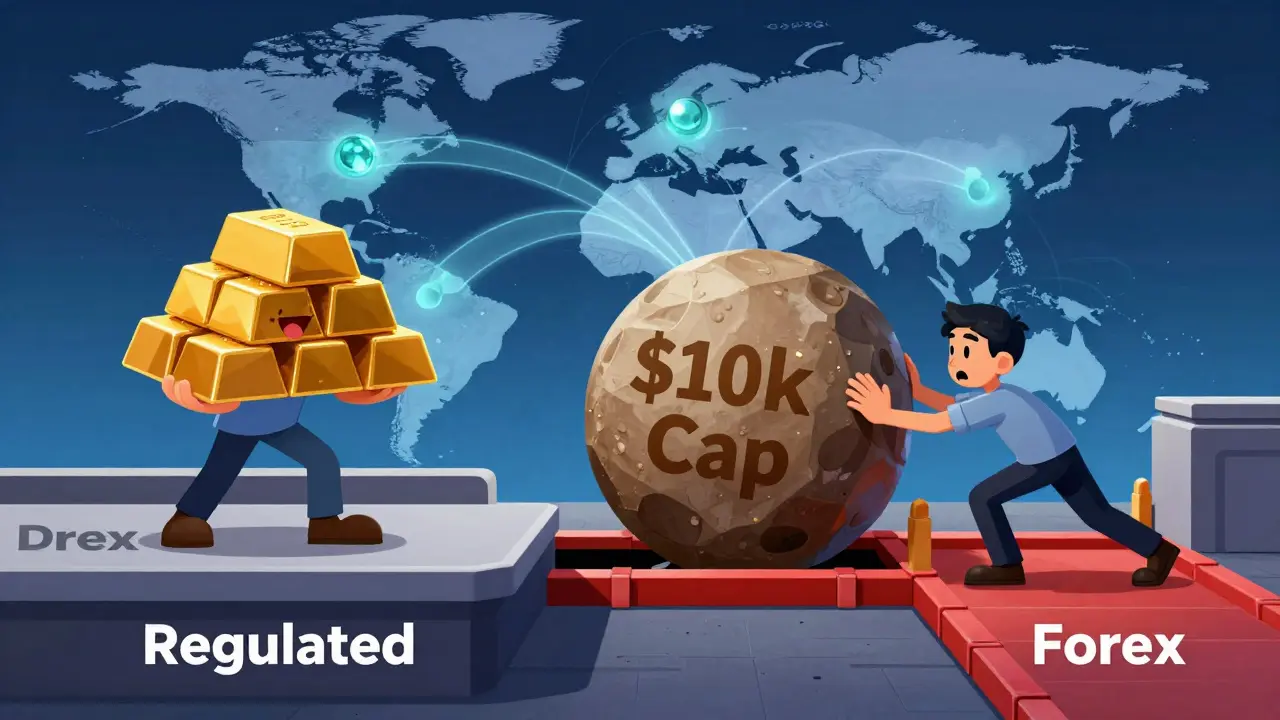
To address this, the Central Bank is prioritizing stablecoin oversight. New specific rules for stablecoins were planned for introduction in 2025. At the same time, the BCB launched Drex, a distributed-ledger-based infrastructure. Don’t confuse Drex with a Central Bank Digital Currency (CBDC). It’s not digital cash issued by the government. Instead, it’s a platform for tokenized bank deposits, loans, and government securities. It’s currently domestic-only, meaning it doesn’t cross borders easily yet, but it sets the stage for how traditional finance and crypto will merge in Brazil.
The Securities and Exchange Commission (CVM) is also getting involved. By late September 2025, they expected to launch a public consultation on tokenization frameworks. This means more clarity on how real-world assets like real estate or bonds can be turned into tokens, opening new investment avenues for retail users.
New Forex Rules: The Hidden Trap for Traders
In September 2025, the Central Bank introduced new foreign exchange regulations that caught many traders off guard. While the rules didn’t explicitly mention "crypto," they hit hard at the mechanisms used to move money in and out of the country.
The new rules require forex providers to get licenses and submit detailed customer transaction data. More importantly, they cap single transaction values at $10,000 USD. Transactions must go through designated entry and exit points. Why does this matter for crypto? Because many Brazilians use offshore exchanges or peer-to-peer (P2P) networks to buy Bitcoin using dollars or euros. These new forex restrictions make those routes much harder and riskier.
If you are trying to buy large amounts of crypto using non-Brazilian fiat currencies, you might find yourself blocked or flagged. The consultation period for these rules ran until November 2, 2025, and the implications are already being felt. Platforms facilitating international transfers are under intense scrutiny. If you rely on overseas exchanges, double-check their compliance status. Operating outside the regulated forex channels is becoming a fast track to having your accounts frozen.
Consumer Protection: Real Safeguards vs. Empty Promises
Let’s talk honestly about consumer protection. Brazil doesn’t have a specific "Crypto Consumer Protection Act." Instead, protection comes indirectly through the licensing and compliance framework described above. Here is what that actually means for you:
| Protection Mechanism | What It Does | Limitations |
|---|---|---|
| VASP Licensing | Ensures only vetted companies operate. | Does not guarantee against market crashes or bad investments. |
| KYC/AML Rules | Creates a paper trail for fraud investigations. | Reduces privacy; makes anonymous trading impossible. |
| Regulatory Sandbox | Tests new services safely before public release. | Only applies to approved innovators, not established scams. |
| Forex Caps | Limits large unmonitored capital flows. | Can hinder legitimate high-value trades for investors. |
The biggest takeaway? You are protected from *criminal* operators, not from *market* risk. If a licensed exchange goes bankrupt due to poor management, your recovery options depend on general bankruptcy laws, not special crypto insurance. Always diversify. Never keep all your eggs in one basket, especially if that basket is a single centralized exchange.
Comparing Brazil to the Rest of the World
Brazil’s approach is starkly different from places like the United States. While the US has been moving toward lighter touch, fragmented regulation, Brazil is building a comprehensive, unified system. This creates unique challenges for global firms.
For a Brazilian user, this means higher security standards but potentially fewer options. Many international exchanges may choose not to serve Brazilian clients due to the high cost of compliance. This drives users toward local, BCB-licensed platforms. For businesses, it means you can’t cut corners. The regulatory risk is high, but so is the reward: access to a massive, growing market with clear rules.
The contrast also highlights financial crime risks. Brazil’s emphasis on linking crypto to criminal organizations means their AML tools are sophisticated. If you engage in cross-border trade, ensure your counterparties are clean. The BCB shares data internationally, so hiding behind offshore structures is increasingly ineffective.
What Comes Next in 2026 and Beyond?
We are in a transitional phase. The final regulations following the February 2025 public consultations are expected to be published soon. These will provide definitive operational guidelines for VASPs. Meanwhile, the CVM’s tokenization framework will open doors for institutional investors.
Keep an eye on two key developments:
- Stablecoin Rules: Expect strict reserve requirements and regular audits for any stablecoin issuer operating in Brazil.
- Cross-Border Integration: As BRICS-aligned trade strategies grow, expect more focus on secure, transparent cross-border crypto operations.
The message from Brasília is clear: Crypto is legal, it’s valuable, and it’s part of the national financial infrastructure. But it won’t be tolerated as a tool for evasion or fraud. Stay compliant, stay informed, and prioritize platforms that embrace transparency.
Is cryptocurrency legal in Brazil?
Yes, cryptocurrency is fully legal in Brazil. It is recognized as a digital asset, not legal tender. However, it operates within a strict regulatory framework governed by the Central Bank of Brazil (BCB) and other agencies.
Do I need to register my crypto exchange in Brazil?
If you are operating a Virtual Asset Service Provider (VASP) in Brazil, yes. You must obtain authorization from the Central Bank of Brazil. Operating without registration is illegal and carries significant penalties.
How do new forex rules affect crypto trading?
New forex regulations cap single transactions at $10,000 and require strict reporting. This impacts users buying crypto with foreign currencies or using offshore exchanges, making large, unmonitored transfers difficult and risky.
What is Drex and is it a CBDC?
Drex is a distributed-ledger platform for tokenized bank deposits and securities. It is not a Central Bank Digital Currency (CBDC). It serves as infrastructure for integrating traditional finance with blockchain technology.
Who regulates crypto securities in Brazil?
The Securities and Exchange Commission (CVM) regulates tokens that function as securities. The Central Bank (BCB) handles payment-related crypto services, while COAF monitors financial crimes.



Write a comment