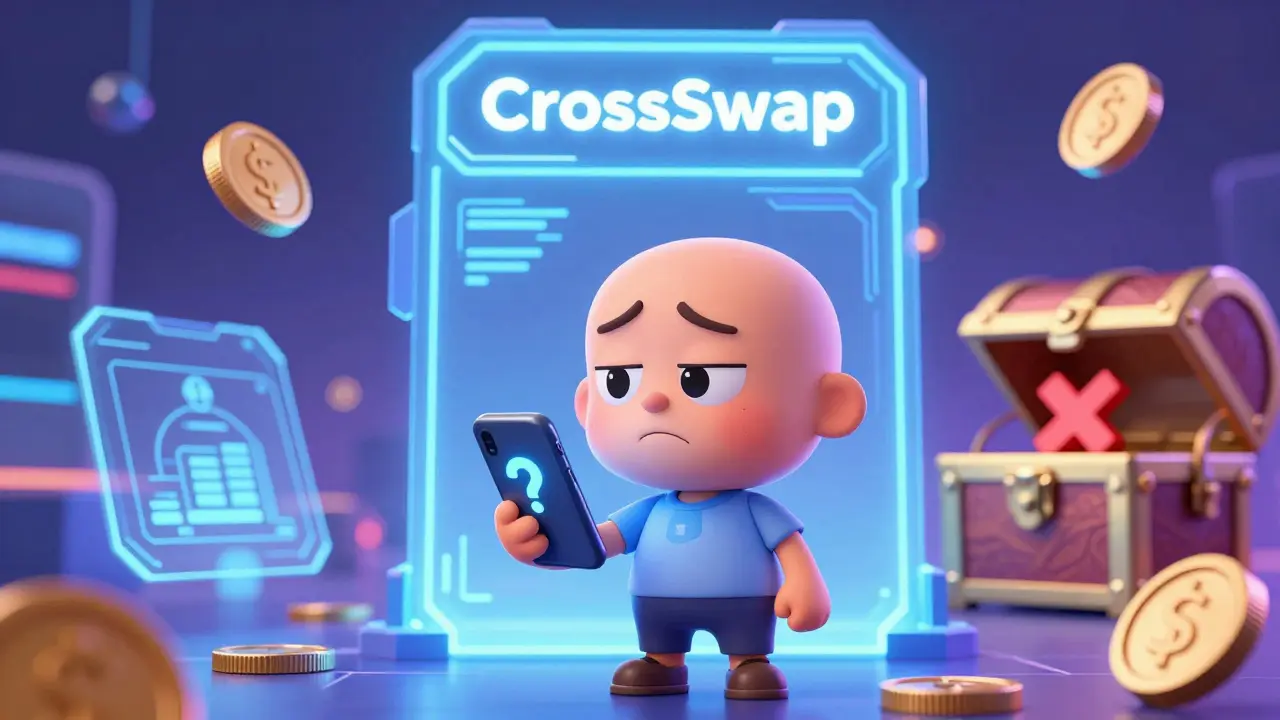
You’ve likely seen the buzz around CrossSwap, also known as CSWAP, and you’re wondering if there’s free money to be claimed. The short answer is complicated. While the project does have an allocation for distributions, it isn’t the typical "connect wallet and claim" scenario you might see with newer Layer 2 networks. Understanding the reality of the CSWAP airdrop mechanics requires looking past the hype and into the actual tokenomics and history of the protocol.
Many users confuse general ecosystem rewards with specific airdrops. In the case of CrossSwap, the primary benefit comes from staking within the CrossWallet ecosystem, rather than a one-time retroactive drop. Let’s break down exactly how this works, what the numbers say, and whether your time is better spent elsewhere in the current market landscape of 2026.
The Core Mechanism: Staking vs. Airdropping
To understand why you might not find a simple "Claim Now" button for CSWAP, we need to look at how the protocol was designed. Unlike projects like Uniswap or Arbitrum that handed out tokens to early users after launch, CrossSwap integrated its reward system directly into its utility model from day one.
The central entity here is the CSWAP token. It serves as the governance and utility token for the CrossSwap decentralized exchange and bridging protocol. The key mechanism isn't a random distribution; it's a revenue-sharing model. Here is how it functions:
- Fee Generation: When users perform swaps or bridges via CrossWallet, fees are generated.
- Revenue Distribution: 100% of these trading fees are distributed to those who stake their CSWAP tokens.
- Burn Mechanism: A portion of transaction fees is used to buy back and burn CSWAP, reducing supply.
This means the "airdrop" aspect is largely passive. You don’t get tokens just for existing; you get value by holding and staking. This is a crucial distinction. If you are looking for free tokens without capital investment, CrossSwap’s model may not fit your expectations. However, if you are already using CrossWallet, your activity contributes to the fee pool that rewards stakers.
Tokenomics Breakdown: Where Does the 1% Go?
Every serious crypto project publishes its tokenomics-the economic structure of its token. For CrossSwap, this document reveals the truth about the airdrop allocation. The total maximum supply of CSWAP is fixed at 500,000,000 tokens.
According to the official distribution plan, only 1% of the total supply is earmarked specifically for airdrops. To put that in perspective, that equals 5,000,000 CSWAP tokens. This is a relatively small slice compared to the allocations for liquidity providers, the development team, and marketing.
| Allocation Category | Percentage | Purpose |
|---|---|---|
| Airdrop | 1% | Community distribution and user acquisition |
| Liquidity Mining | Significant portion | Incentivizing traders to provide depth |
| Team & Advisors | Vested | Development and long-term roadmap execution |
| Public Sale/IDO | Initial Raise | Funding initial operations ($300k raised) |
The critical detail here is timing. The Token Generation Event (TGE) for CrossSwap occurred on August 27, 2021. At that moment, 100% of the initial circulating supply was unlocked. This suggests that any "airdrop" associated with that 1% allocation likely happened during or immediately after the initial launch phase in 2021, not as a recurring event in 2026.

Current Market Status: Is CSWAP Still Active?
If you check data aggregators like CoinMarketCap or CoinGecko today, you’ll notice something odd. The circulating supply often lists as near zero or extremely low, and trading volume is minimal-sometimes under $20 in a 24-hour period. Why is this happening?
This low activity doesn’t necessarily mean the project is dead, but it does indicate a shift in focus. CrossSwap operates primarily as infrastructure for CrossWallet. The token’s value proposition is tied to the usage of the wallet itself. If fewer people are actively swapping through the interface, the fee pool shrinks, and the incentive to trade CSWAP on external exchanges diminishes.
Furthermore, the "buy and burn" mechanism mentioned earlier has been active. As transactions occur, tokens are removed from circulation. Combined with the initial vesting schedules, this can lead to a situation where the token appears illiquid on major exchanges because most holders are either staking for rewards or holding long-term, rather than selling.
Comparison: CrossSwap vs. Modern Airdrop Models
To set realistic expectations, let’s compare CrossSwap’s approach to more recent airdrop campaigns that dominated headlines in late 2025 and early 2026. Projects like Midnight Network or CrowdSwap utilized different strategies.
- Midnight Network: Launched a structured "Glacier Drop" with a 60-day claim window, targeting holders of major assets like BTC and ETH. This was a clear, time-bound event with specific eligibility criteria.
- CrowdSwap: Used a task-based leaderboard system, distributing millions of tokens over time based on community engagement.
- CrossSwap: Relies on continuous utility. There is no single "claim window." Instead, value accrues through staking yields derived from protocol fees.
This comparison highlights a shift in the industry. Early DeFi projects (2020-2021) often used airdrops as a marketing stunt to bootstrap liquidity. Modern projects (2025-2026) tend to use airdrops for precise user segmentation or stick to yield-bearing models. CrossSwap falls into the latter category. It is not trying to attract speculators with free tokens; it is trying to retain active users through revenue sharing.

How to Participate Safely
If you are determined to engage with the CrossSwap ecosystem, safety must be your priority. Because official airdrop information is scarce and the token has low liquidity, the risk of scams is high. Scammers often create fake websites claiming to offer "CSWAP Airdrop Claims" to steal your private keys.
Follow these steps to stay safe:
- Verify Official Channels: Only interact with the official CrossWallet app or website. Do not click links from social media DMs or unsolicited emails.
- Check Contract Addresses: Always verify the CSWAP contract address on reputable blockchain explorers before interacting with any token. Fake tokens often have similar names.
- Use a Burner Wallet: If you decide to stake or swap, consider using a secondary wallet with limited funds. Never connect your main holding wallet to unverified interfaces.
- Ignore "Claim" Buttons: If a site asks you to pay a gas fee to "unlock" an airdrop, it is almost certainly a scam. Legitimate airdrops do not require upfront payments.
Future Outlook: What Lies Ahead for CSWAP?
The future of CrossSwap depends heavily on the adoption of CrossWallet. As the crypto market evolves towards seamless cross-chain experiences, the demand for efficient bridging solutions remains high. If CrossWallet gains significant market share among retail users, the fee pool will grow, increasing the rewards for CSWAP stakers.
However, competition is fierce. Established players like Chainlink CCIP and various Layer 2 bridges continue to innovate. CrossSwap’s advantage lies in its integration with a consumer-facing wallet, making it accessible to non-technical users. But until we see a surge in daily active users (DAU) on the platform, the CSWAP token will likely remain a niche asset with limited speculative upside.
For investors and airdrop hunters, the lesson is clear: Don’t chase ghosts. If a project doesn’t have clear, public documentation about an active airdrop campaign in 2026, assume there isn’t one. Focus your energy on protocols with transparent, ongoing reward structures or new launches with verified vesting schedules.
Is there currently an active CrossSwap (CSWAP) airdrop in 2026?
There is no widely advertised, active retroactive airdrop for CSWAP in 2026. The initial 1% allocation for airdrops was part of the 2021 launch. Current benefits come from staking CSWAP to earn a share of trading fees generated within the CrossWallet ecosystem.
How do I earn rewards from CrossSwap?
You earn rewards by staking your CSWAP tokens. The protocol distributes 100% of trading fees collected from swaps and bridges performed in CrossWallet to stakers. This is a continuous yield mechanism rather than a one-time airdrop.
Why is the CSWAP trading volume so low?
Low volume indicates that most holders are staking their tokens for rewards rather than selling them on exchanges. Additionally, the "buy and burn" mechanism reduces circulating supply over time, which can limit liquidity on secondary markets.
What is the total supply of CSWAP tokens?
The maximum total supply of CSWAP is 500,000,000 tokens. Of this, only 1% (5 million tokens) was allocated for airdrops, with the rest distributed to liquidity, the team, and public sales.
Is CrossSwap safe to use?
While the protocol itself has been operational since 2021, users should exercise caution due to low liquidity and potential phishing risks. Always verify contract addresses and never connect your primary wallet to unofficial sites claiming to offer airdrops.

13 Comments
nancy jarecki
The semantic drift in contemporary DeFi discourse is truly exhausting, isn't it? We are witnessing a regression to pre-2021 paradigms where the distinction between utility-based revenue sharing and speculative airdrop farming is obliterated by retail FOMO. The tokenomics presented here are not merely 'complicated'; they are a deliberate architectural choice to exclude the uninitiated from participating in the governance layer without significant capital commitment. It is an elitist filter, essentially. To suggest that this model is inferior because it lacks a 'claim button' demonstrates a fundamental misunderstanding of sustainable protocol economics versus mercenary liquidity extraction. The burn mechanism ensures deflationary pressure on the circulating supply, which is a sophisticated play for long-term value accrual rather than short-term price action. One must appreciate the nuance of the CrossWallet integration; it creates a sticky ecosystem where user activity directly subsidizes stakers, creating a self-reinforcing loop of value creation. Those who demand instant gratification through retroactive drops are merely speculators masquerading as investors. The reality is that true alpha lies in understanding these underlying mechanisms, not chasing the next viral marketing stunt.
Robert Hundley
Hey everyone! Just wanted to drop a quick thought here :) I've been watching CSWAP for a while and honestly, the whole staking thing sounds pretty chill if you're already using the wallet. No need to stress about claiming windows or anything like that. Just hold and earn, simple as that! Keep grinding folks! :)
Melissa L
i dont get why people make it so complciated. its just crypto. if u dont have money to stake then maybe dont do it. seems easy to me tbh
Routh Middaugh
I think we should all try to find common ground here, don't you agree? While some may view the lack of an airdrop as a negative aspect, others might see it as a positive sign of stability; after all, projects that give away free tokens often collapse shortly thereafter. It is important to remember that every participant has their own unique perspective on what constitutes value in this space. Perhaps we can appreciate the different models that exist today? Some prefer the excitement of a new launch, while others enjoy the steady drip of fees from staking. There is no single right way to approach investing, is there? Let us remain open-minded and respectful of each other's choices, regardless of how small or large our portfolios may be. After all, we are all learning together in this ever-evolving landscape.
John Curry
In the grand tapestry of human endeavor, few things are as ephemeral as digital currency. We chase these ghosts of value, believing that accumulation equates to security. Yet, look at CrossSwap. It stands as a monument to patience, a stark contrast to the frenetic energy of the modern market. Is it not profound that one can derive worth simply by holding still, by resisting the urge to sell? The low volume is not a sign of death, but of dormancy, a seed waiting for the right conditions to sprout. We must ask ourselves: what is the true nature of wealth? Is it the number on the screen, or the peace of mind knowing your assets are working silently in the background? This project forces us to confront our impatience, our greed, our desire for immediate validation. It is a philosophical test disguised as a financial instrument.
Jon Milton
You are all missing the bigger picture here. This isn't just about tokens, it's about infrastructure. CrossSwap is building the rails that the rest of you will eventually ride. Stop complaining about the lack of free money and start appreciating the engineering effort. If you can't handle a yield-bearing model, then go back to playing with memecoins. Real investors understand that utility drives long-term sustainability. The fact that you are even questioning this shows a lack of vision. Get educated or get left behind.
Rebecca Shoniker
Oh, please. Spare me the lecture on 'utility.' You sound exactly like the whitepaper bots they hire to pump sentiment. The reality is that without active trading volume, the fee pool is negligible, rendering the staking rewards practically worthless. You call it 'sustainability,' I call it stagnation masked as sophistication. The 1% airdrop allocation was a joke from day one, designed to create a false sense of community engagement while the insiders vested their holdings. Do not mistake silence for strength. In the crypto world, silence usually means abandonment. Wake up.
Jay Sharma
its all rigged man. the big players control the narrative. crossswap is just another tool for them to wash their hands of responsibility while letting the little guys bleed out. watch closely, they will dump on you when you least expect it. trust no one.
Abby Martin
Let’s be real for a second. If you’re looking for a handout, you’re in the wrong place. Crypto is not a charity. The people whining about no airdrop are the same ones who lost everything on rug pulls last year. CrossSwap is actually doing something rare: it’s trying to build a business model that doesn’t rely on printing more tokens to pay users. That takes guts. Most projects would rather scam you with hype than bore you with math. Respect the grind. If you can’t afford to stake, save up. Don’t blame the game for your lack of resources.
Mélanie Boulay
I appreciate the detailed breakdown provided in the original post, as it helps clarify the distinctions between various types of reward structures within the decentralized finance ecosystem, which can often be quite confusing for newcomers who are just beginning to navigate the complex landscape of blockchain technology and its associated economic models. It is crucial to recognize that while some projects prioritize rapid user acquisition through generous initial distributions, others focus on long-term retention and sustainable growth through mechanisms such as revenue sharing and buyback programs, which ultimately contribute to the health and stability of the protocol over time. Therefore, it is essential for participants to carefully evaluate their own risk tolerance and investment goals before engaging with any particular platform, ensuring that their actions align with their personal financial strategies and ethical considerations regarding participation in emerging technological systems.
Maurice Flynn
I guess we'll see what happens. I'm not really into the hype either way. Just observing from the sidelines. Maybe it works, maybe it doesn't. Time will tell. Not much to add there.
Rob Morton
This is a fascinating case study in behavioral economics. Why do we, as a collective, crave the dopamine hit of an airdrop claim? Is it the fear of missing out, or a genuine belief in fair distribution? CrossSwap challenges this norm by forcing users to engage with the product's utility rather than its marketing. I wonder if this model could scale to other sectors beyond DeFi. Could traditional finance adopt similar revenue-sharing staking models to retain customers? It raises interesting questions about loyalty and value perception. Let's keep an eye on how CrossWallet evolves. The data will speak louder than opinions.
Ryan Peters
Typical foreign garbage trying to infiltrate our markets with these shady tokenomics. Who approved this? Probably some offshore entity laughing at us while we waste time reading this trash. American innovation doesn't look like this. It looks like dominance, not passive staking for scraps. Burn this bridge and build a better one. Don't let these weak protocols dilute our financial sovereignty. Stay strong, stay local, ignore the noise.