You’ve seen the charts. You’ve read the whitepapers that promise to revolutionize everything from supply chains to gaming. But here’s the hard truth: most utility tokens fail not because the tech is bad, but because nobody checked if anyone actually wanted to use them. In 2018, a massive wave of Initial Coin Offerings (ICOs) crashed because projects sold dreams instead of products. Fast forward to today, and while the market has matured, the core problem remains. How do you tell the difference between a token with real economic value and one that’s just digital confetti?
Evaluating a utility token isn’t about guessing which coin will moon next month. It’s about forensic accounting meets product management. You need to verify that the token solves a real problem, that people are actually using it to solve that problem, and that the economics make sense without relying on new buyers to pay old holders. If you skip this step, you’re gambling, not investing. Let’s break down exactly how to do the work so you don’t get burned.
The Core Distinction: Utility vs. Security
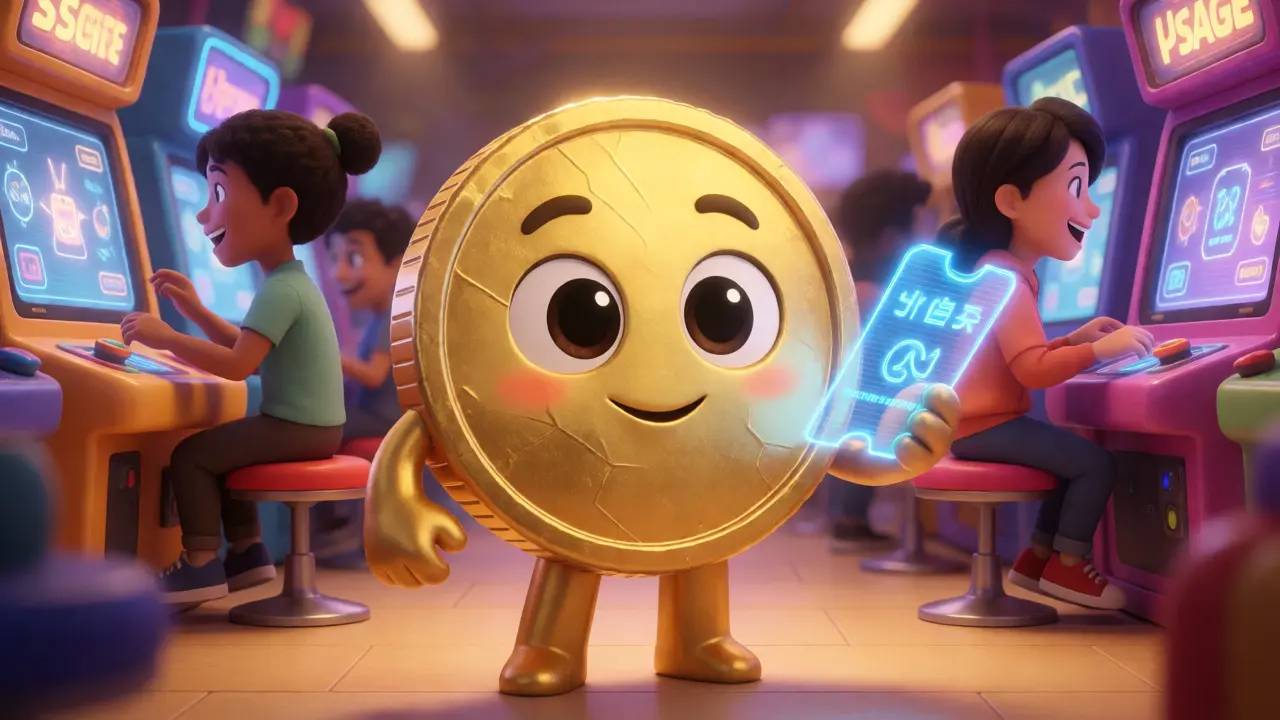
Before you look at a single chart, you have to understand what you’re buying. A utility token gives you access to a service or network. Think of it like an arcade token: you buy it to play games, not because you expect the plastic disc itself to appreciate in value because someone else wants to play games later. This distinction matters legally and economically.
The US Securities and Exchange Commission (SEC) uses the Howey Test to decide if a token is a security. If investors put money into a common enterprise expecting profits solely from the efforts of others, it’s likely a security. Many projects try to dodge this by calling themselves "utility" tokens while marketing them as investments. SEC Commissioner Hester Peirce noted in 2023 that 72% of tokens investigated for being unregistered securities failed this test because their marketing promised profit rather than functionality.
Your first job is to ignore the price action and look at the function. Ask yourself: What can I actually do with this token? Can I pay for transaction fees? Can I vote on governance proposals? Can I access premium data feeds? If the only answer is "I can sell it for more," you’re looking at a speculative asset, not a utility tool.
Analyzing Tokenomics: The Supply and Demand Engine
Tokenomics is often thrown around as buzzword soup, but it’s really just basic economics applied to code. You need to know where every single token came from and where it’s going. A poorly designed supply schedule can crush a good project before it even starts.
Start with the total supply. Is it capped, like Bitcoin’s 21 million, or inflationary, like Ethereum’s current model? Successful utility projects often use deflationary mechanisms. For example, Filecoin has a hard cap of 2 billion FIL. According to Bitbond’s 2024 analysis, projects with token burns (where tokens are permanently removed from circulation) saw 23% higher holder retention rates compared to those without. Why? Because scarcity drives demand when usage is high.
Next, look at distribution. Who holds the tokens? If the top 10 wallets hold more than 35% of the supply, you have a centralization risk. One whale dumping could crash the price. Check the vesting schedules too. Did the team unlock all their tokens at launch? Or is there a four-year linear vesting period? If insiders are free to sell immediately after listing, they’re likely treating the token as a cash-out mechanism, not a long-term commitment.
| Metric | Red Flag | Green Flag |
|---|---|---|
| Supply Cap | Unlimited or unclear emission rate | Hard cap or predictable deflationary burn |
| Distribution | >35% held by top 10 wallets | Broad distribution with <20% insider holdings |
| Vesting | Cliff unlocks for team/investors at TGE | Linear vesting over 2-4 years |
| Utility | Only used for speculation | Mandatory staking or payment requirement |
Verifying Real Usage: On-Chain Data Doesn’t Lie
This is where most retail investors fail. They look at the website, read the roadmap, and buy. Smart evaluators look at the blockchain. You need proof that people are using the token for its intended purpose, not just trading it against stablecoins.
Use tools like Dune Analytics or Nansen to track specific metrics. Don’t just look at volume; look at unique active addresses. Are these the same bots wash-trading back and forth, or are new users entering the ecosystem? A healthy project shows organic growth in daily active users (DAU). Dr. Garrick Hileman from Blockchain.com suggests a minimum viable ratio of 0.35 DAU per token holder. If you have 100,000 holders but only 1,000 active users daily, the token is mostly sitting idle in wallets, waiting to be dumped.
Another critical metric is "token velocity." This measures how fast tokens change hands. High velocity isn’t always good. If everyone is selling instantly, the token has no store-of-value properties. If nobody moves it, it has no liquidity. Successful utility tokens often maintain a velocity between 0.5 and 1.2 transactions per token annually. This indicates steady, functional usage rather than frenzied speculation.
Check the revenue. Does the protocol generate actual income? Chainlink, for instance, generates billions in verified data transactions. That revenue backs the LINK token’s utility. Compare this to a social media token that claims to be "the future of content" but has zero enterprise clients paying for API access. If the protocol doesn’t make money, the token has no fundamental anchor.
Technical Due Diligence: Code and Security
A great business model means nothing if the smart contract gets hacked. Technical evaluation is non-negotiable. First, check for audits. Reputable firms like OpenZeppelin or Trail of Bits conduct thorough reviews. These cost $15,000 to $50,000, so if a project skips them, ask why. More importantly, read the audit reports. Did they fix the critical bugs? Or did they just publish the report and move on?
Look at developer activity. GitHub is your friend. A dormant repository with no commits in six months is a zombie project. Vitalik Buterin’s framework suggests looking for consistent development velocity-ideally more than 50 weekly commits across major contributors. This shows the team is actively maintaining and improving the infrastructure.
Interoperability is also key. Does the token exist only on one chain, or does it bridge across ecosystems? Projects using cross-chain bridges like Chainlink CCIP tend to integrate better with other DeFi protocols. This increases the surface area for utility. If your token is trapped on a low-volume chain with no bridges, its utility is severely limited by network effects.

Regulatory Risk and Market Context
You can’t evaluate a token in a vacuum. The regulatory environment shapes its viability. In 2026, the lines are clearer but still dangerous. The SEC’s April 2024 framework clarified three tests for legitimate utility: a functional use case existing at launch, more than 50% of value derived from utility within 12 months, and no explicit profit promises in marketing.
Be wary of jurisdictions with loose rules. While some projects launch in places like Singapore or Switzerland to avoid immediate scrutiny, global enforcement is tightening. Switzerland’s FINMA requires that over 70% of a token’s value derives from actual usage. If a project relies heavily on hype cycles, it’s vulnerable to regulatory crackdowns that can freeze liquidity overnight.
Finally, consider the market cycle. Utility tokens with strong fundamentals survive bear markets better because their demand is tied to product usage, not sentiment. During the 2018-2019 correction, 92% of utility-lacking tokens disappeared. Those with verifiable usage, like Chainlink or Uniswap, recovered and grew. Always stress-test your thesis: Will people still need this token if Bitcoin drops 50%?
A Practical Checklist for Your Next Evaluation
Don’t rely on gut feeling. Use a structured approach. Here is a simplified workflow based on professional analyst standards:
- Define the Problem: What specific pain point does the token solve? Is it a nice-to-have or a must-have?
- Verify the Solution: Is the product live? Can you use it yourself? Try interacting with the dApp.
- Check Tokenomics: Look at supply caps, vesting schedules, and distribution concentration.
- Analyze On-Chain Data: Use Dune or Nansen to check DAU, unique addresses, and transaction volume vs. holder count.
- Review Security: Confirm multiple independent audits and check for unresolved vulnerabilities.
- Assess Developer Activity: Scan GitHub for recent commits and community engagement.
- Evaluate Regulatory Stance: Has the project received any warnings? Do they comply with local financial regulations?
If a project fails two or more of these checks, walk away. There are thousands of tokens out there; you don’t need to force a fit.
What is the difference between a utility token and a security token?
A utility token provides access to a product or service within a blockchain ecosystem, similar to a gift card or arcade token. A security token represents ownership or an investment contract, implying that holders expect profits from the efforts of others. The legal classification depends on factors like the Howey Test, which looks at whether there is an expectation of profit from external efforts.
Why is token velocity important for utility tokens?
Token velocity measures how frequently a token changes hands. Extremely high velocity suggests speculative trading with little holding, while extremely low velocity might indicate lack of liquidity or utility. Healthy utility tokens often maintain a moderate velocity, indicating steady functional usage rather than pure speculation. Monitoring this helps distinguish between organic adoption and artificial hype.
How do I check if a project's team is trustworthy?
Look for transparency in team identities and past achievements. Anonymous teams carry higher risk unless backed by significant institutional funding. Check their GitHub activity to see if they are actively coding. Review their vesting schedules; if team members have locked tokens for several years, they are aligned with long-term success. Also, search for any history of rug pulls or delayed deliverables.
Can a utility token still be affected by regulation?
Yes. Even if a token is marketed as a utility, regulators may classify it as a security if its primary value comes from speculation rather than function. The SEC and other global bodies monitor marketing materials closely. Promises of "passive income" or "guaranteed returns" can trigger security classifications, leading to fines or delistings from exchanges.
What tools should I use to analyze utility tokens?
For on-chain analytics, Dune Analytics and Nansen are industry standards for tracking user activity and wallet flows. For financial metrics, Token Terminal provides revenue and valuation data. Always cross-reference this data with the project’s official documentation and GitHub repositories to ensure consistency between claimed features and actual implementation.

Write a comment