
Remember the hype of 2021? Everyone was talking about buying digital art for millions. But while the bubble burst for many, a quiet revolution happened in the music industry. Artists stopped treating Non-Fungible Tokens (NFTs) as get-rich-quick schemes and started using them as actual business tools.
If you think music NFT success stories are just about Grimes selling $6 million worth of digital art, you’re missing the point. The real winners aren’t the celebrities who cashed out once. They are the independent producers and mid-tier artists who built loyal communities and earned sustainable income by bypassing traditional labels. As we move through 2026, the noise has settled. What’s left is a clear picture of what works and what doesn’t.
The Shift from Speculation to Utility
In the early days, people bought music NFTs hoping the price would go up. That model failed hard. By 2023, data showed that 89% of collections treated as pure speculation saw their value drop by over 90% within six months. The survivors changed their strategy completely. They stopped selling 'digital receipts' and started selling access.
Utility-driven releases became the new standard. Instead of just an MP3 file, fans bought tickets to private Discord channels, opportunities to vote on setlists, or even co-ownership of master recordings. This shift wasn't just marketing fluff; it changed the economics. According to industry analysis, successful projects like those by electronic artist 3LAU generated 73% of their revenue from these ongoing experiences rather than the initial sale. You weren't just buying a song; you were buying a seat at the table.
Sound.xyz: The Superfan Model
When looking at platforms, Sound.xyz stands out for its focus on community. Launched in 2022, it quickly became the go-to place for artists who wanted to build long-term relationships with collectors. The platform’s 'Superfan' model rewards early supporters with perks that keep them engaged long after the drop ends.
Why does this work? Because it solves the biggest problem artists face: retention. On Sound.xyz, the average primary sale price sits between 0.05 and 0.5 ETH (roughly $100-$1,000 depending on market rates). But the real value comes from the secondary market royalties. Artists keep 95% of the primary sale, plus they earn 10% every time a fan resells the NFT. This creates a passive income stream that streaming services simply cannot match. For context, Spotify pays fractions of a cent per play. A single NFT sale can equal thousands of streams.
Royal: Fractional Ownership and Shared Risk
While Sound.xyz focuses on community access, Royal pioneered a different approach: fractional ownership. Founded by JD Ross, Royal allows fans to buy shares of an artist's master recording rights. This means if the song makes money from streaming or licensing, the fans get paid too.
The most famous example is Nas’s track 'Montero.' In September 2022, 10,000 fans collectively bought 50% of the track for $1 million. It was a massive experiment in democratizing music publishing. However, it’s not without risks. Secondary market liquidity remains a challenge, with only about 37% of Royal collections seeing active trading. Also, regulatory bodies like the SEC have raised eyebrows, suggesting that some of these royalty-sharing models might qualify as securities. Despite the hurdles, Royal proved that fans are willing to invest directly in artists if the trust is there.
Hybrid Models: Physical Meets Digital
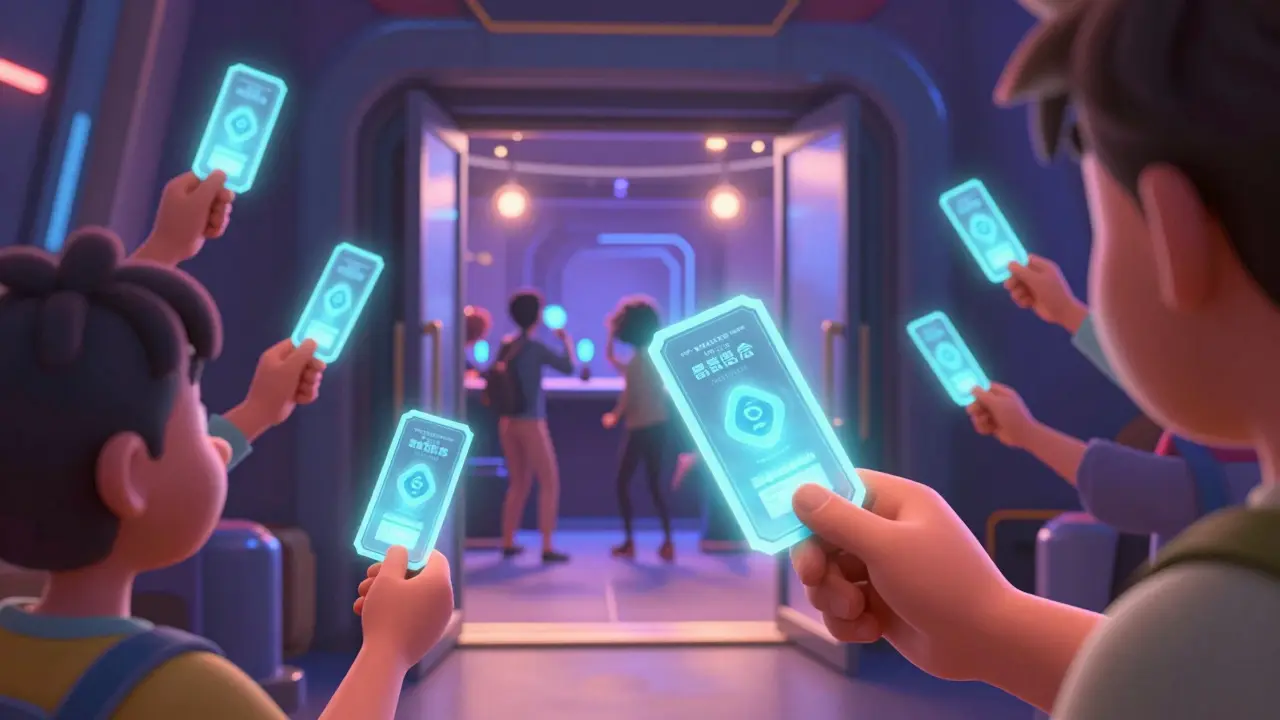
Not everyone wants purely digital assets. Some of the most successful campaigns combined physical goods with blockchain verification. Kings of Leon’s album 'When You See Yourself' is the textbook example here. They sold limited-edition vinyl records paired with NFTs that acted as 'Golden Tickets.'
These tickets offered concert perks and exclusive content. The result? Retention rates were 3.2 times higher than pure digital drops. Why? Because holding a physical object creates a stronger emotional connection. Fans didn't just want the token; they wanted the experience attached to it. This hybrid approach bridges the gap between old-school record collecting and new-school Web3 utility.
| Platform | Primary Focus | Artist Revenue Share | Key Feature |
|---|---|---|---|
| Sound.xyz | Community & Access | 95% | Secondary Royalties (10%) |
| Royal | Ownership & Royalties | Variable | Fractional Master Rights |
| OpenSea | General Marketplace | Variable | High Volume, Low Discovery |
What Went Wrong? Lessons from Failure
To understand success, you have to look at failure. EDM producer Blanke launched a project in 2022 that raised $450,000. It sounded great on paper. But he promised 12 different utility features and only delivered three. The result? The NFT price dropped 97%, and his reputation took a hit. This isn't unique. Many artists treated NFTs as a one-off cash grab rather than a service.
Technical issues also played a role. During high-demand drops, networks like Ethereum struggled. Don Diablo’s 2021 concert sale processed $1.2 million in four minutes, straining the network. Users faced high gas fees and slow transactions. Today, most serious projects use Layer-2 solutions like Polygon to keep fees low and speeds high. If you're an artist considering this route, don't underestimate the technical preparation. You need audited smart contracts and a solid customer support plan.
The Economic Reality for Artists
Let’s talk numbers. Traditional streaming pays artists roughly $0.003 to $0.005 per stream. To make $1,000, you need hundreds of thousands of plays. With NFTs, the math flips. Selling 10 NFTs at $100 each gets you $1,000 instantly, plus potential royalties. But there’s a catch: adoption.
Surveys show that 62% of independent artists have experimented with NFTs, but only 23% made meaningful revenue. Why the gap? Community building. Successful artists spent 37% more time engaging with collectors than on general promotion. You can't just mint and ghost. You need to nurture the people who hold your tokens. If you treat them like investors or superfans, they stay. If you treat them like wallets, they leave.
Looking Ahead: Experience Tokens
As we move further into 2026, the trend is shifting toward 'experience tokens.' Major players like Spotify and Apple Music are testing integrations. Spotify announced trials for verified artists to link NFTs to their profiles, while Apple Music partnered with Sound.xyz for exclusive drops. YouTube launched its Content Authenticity Initiative to verify NFT-linked music.
The future isn't just about owning a file. It's about verified access. Imagine buying a ticket that doubles as a collectible, grants backstage access, and earns you dividends if the tour merch sells well. Blockchain-verified ticketing is already being tested by companies like Ticketmaster. The technology is maturing, moving away from speculation and toward practical utility. For artists, the question is no longer 'Should I do NFTs?' but 'How can I use this to serve my fans better?'
Are music NFTs still profitable in 2026?
Yes, but the model has changed. Profit now comes from utility and community engagement rather than speculative price increases. Artists who offer ongoing value, such as exclusive access or royalty shares, see sustained revenue. Pure collectibles with no added benefit have largely lost value.
Which platform is best for independent musicians?
Sound.xyz is widely considered the best starting point for independents due to its user-friendly interface, strong community features, and favorable 95% revenue share. Royal is ideal if you want to offer fractional ownership, but it requires more legal and technical setup.
Do I need coding skills to create a music NFT?
No. Most modern platforms like Sound.xyz and Royal handle the smart contract creation for you. You need a digital wallet (like MetaMask) and some cryptocurrency to cover gas fees, but you do not need to write code. However, understanding basic blockchain concepts is helpful for managing your project.
What is the risk of investing in music NFTs?
The main risk is illiquidity. Unlike stocks, you may not be able to sell your NFT easily if there is no demand. Additionally, the value depends heavily on the artist's continued activity and the quality of the utility provided. If the artist stops engaging, the NFT often becomes worthless.
How do royalties work on secondary sales?
When an NFT is resold, the original creator can receive a percentage of the sale price, typically between 5% and 10%. This is enforced by the smart contract on platforms like Sound.xyz. It ensures artists continue to earn from their work as long as it changes hands, unlike traditional streaming which pays nothing on resale.
Write a comment