
If you're considering operating a cryptocurrency exchange in Japan, understanding the PSA registration requirements is non-negotiable. Payment Services Act (PSA) is Japan's primary law governing cryptocurrency exchanges and payment services, defining crypto-assets as legal property while excluding fiat-denominated instruments like prepaid cards. This framework sets one of the world's strictest regulatory standards. Let's break down exactly what you need to know in 2026.
Understanding Japan's PSA Framework
The Payment Services Act (PSA) treats cryptocurrencies as "crypto-assets," not currency. This means Bitcoin and Ethereum are legal property in Japan, but they can't be used as official payment methods like yen. The Financial Services Agency (FSA) Financial Services Agency (FSA) oversees this system. Unlike some countries that ban crypto, Japan has clear rules: exchanges must register, follow strict rules, and prove they can protect users. This creates trust but also high barriers to entry.
Who Must Register as a Crypto Asset Exchange Provider?
Any business handling crypto transactions must register as a Crypto Asset Exchange Service Provider (CAESP) with the FSA. This includes buying, selling, or trading crypto as part of your operations. The PSA defines "crypto-asset" precisely: it must not be tied to fiat currency (like yen or dollars). So, things like prepaid e-money cards or bank-issued coins don't count. If your business involves Bitcoin, Ethereum, or similar tokens, registration is mandatory. Skipping this step isn't an option-it's a criminal offense.
Key Financial and Operational Requirements
Operating a crypto exchange in Japan demands specific financial and operational standards:
- Minimum capital JPY 10 million with positive net assets to ensure financial stability
- Complete segregation of customer funds from company assets
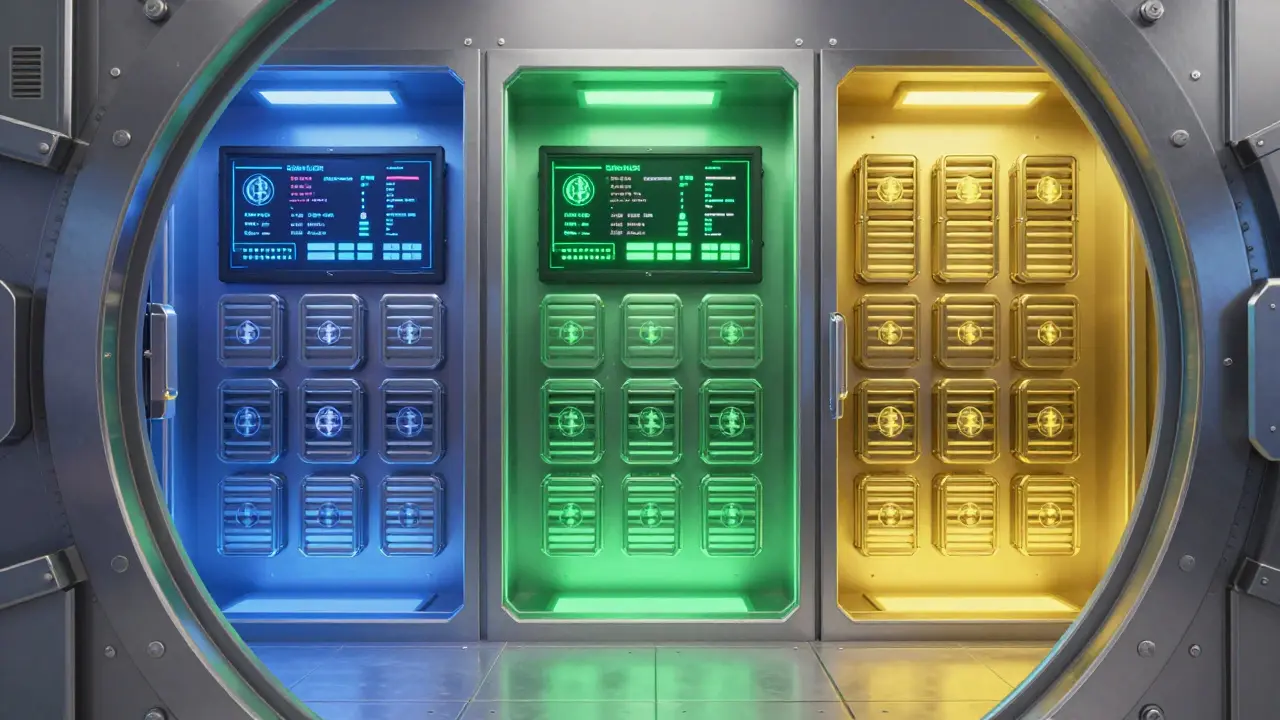
- At least 95% of user assets stored in offline cold wallet storage to prevent hacking
- Comprehensive internal systems for compliance and risk management
These aren't suggestions. The FSA requires documented proof of each requirement. For example, cold wallets must be physically disconnected from the internet. Customer funds must never mix with company money. This protects users if the exchange faces financial trouble.
Handling Foreign Entities: Subsidiaries vs. Branches
Foreign companies face unique hurdles when seeking PSA registration. The Financial Services Agency (FSA) has never approved a branch structure for crypto exchanges. Instead, all foreign applicants must establish a Japanese kabushiki-kaisha subsidiary. This means:
- Setting up a fully registered Japanese company with local directors
- Meeting the same JPY 10 million capital requirement as domestic entities
- Obtaining proper licensing in your home country before applying
While this adds complexity, it ensures foreign exchanges operate under Japan's regulatory framework with full accountability. No foreign company has successfully registered via a branch office to date.
| Requirement | Domestic Entities | Foreign Entities |
|---|---|---|
| Legal Structure | Kabushiki-kaisha (stock company) | Must establish Japanese kabushiki-kaisha subsidiary |
| Minimum Capital | JPY 10 million | JPY 10 million |
| Local Presence | Registered in Japan | Subsidiary must be registered in Japan |
| Home Country Licensing | Not required | Required for application |
Consequences of Non-Compliance
Operating without PSA registration is a serious crime. Before June 2025, violators faced up to three years in prison and fines up to JPY 3 million. Now, under the 2022 Penal Code amendments, imprisonment is replaced with "confinement punishment," but fines remain. The FSA actively enforces these rules, conducting regular checks on registered exchanges. Unlicensed operations trigger immediate shutdowns and criminal investigations. This isn't theoretical-it's real enforcement. For example, in 2024, a Tokyo-based exchange was fined JPY 2.5 million for operating without registration.

Recent Updates to Japan's Crypto Regulations (2025)
In early 2025, Japan's Diet reviewed amendments to the PSA. These changes give regulators more power to order specific actions against non-compliant exchanges. The new rules allow the FSA to issue binding orders for things like freezing assets or halting operations without lengthy court processes. This shows Japan's commitment to evolving its regulatory framework alongside market changes. The amendments also clarify that security tokens (like tokenized stocks) fall under the Financial Instruments and Exchange Act (FIEA), not the PSA. This dual-system approach ensures appropriate oversight for different crypto types.
Frequently Asked Questions
What's the minimum capital required for PSA registration?
JPY 10 million with positive net assets. This ensures the exchange has enough financial resources to protect users and cover operational costs.
Can foreign companies register under a branch structure?
No. The FSA has never approved branch registrations. Foreign companies must establish a Japanese kabushiki-kaisha subsidiary to apply for PSA registration.
What happens if an exchange operates without registration?
Operating without PSA registration is a criminal offense. Penalties include confinement punishment (replacing imprisonment) and fines up to JPY 3 million. The FSA actively monitors and enforces compliance.
How long does the registration process take?
The application review takes up to six months. However, preparing documentation, building compliance systems, and setting up infrastructure often takes longer-sometimes over a year.
Are all cryptocurrencies treated the same under the PSA?
No. The PSA covers plain crypto assets like Bitcoin. Tokens with investment features (security tokens) fall under the Financial Instruments and Exchange Act (FIEA), which has stricter requirements.



20 Comments
Freddie Palmer
Japan's PSA framework is a great example of clear regulation; crypto-assets are treated as property, not currency, which makes sense. The FSA's oversight ensures exchanges follow strict rules; this builds trust among users. The minimum capital of JPY 10 million is necessary for stability; segregating customer funds is crucial. Cold wallets must be offline; this prevents hacks. Foreign companies must set up a Japanese subsidiary. The recent amendments give the FSA more power; it's a solid system overall. I appreciate the clarity here; it's not perfect, but it's a solid foundation. The key is compliance; let's all follow the rules. This sets a good standard for other countries to follow. It's impressive how Japan balances innovation with security.
Oliver James Scarth
Japan's regulatory approach is exemplary; it demonstrates national sovereignty in financial matters. The requirement for foreign entities to establish a Japanese subsidiary is non-negotiable. This ensures complete adherence to local laws. The FSA's enforcement actions, such as the 2024 Tokyo exchange fine, are necessary to maintain integrity. The PSA framework is a model for other jurisdictions; it's robust and well-structured. There is no room for foreign entities to circumvent these rules. Japan's commitment to security and compliance is commendable. This is why the country remains a leader in crypto regulation.
Kieren Hagan
The establishment of a Japanese subsidiary for foreign entities is a necessary measure to ensure regulatory compliance. This structure allows for proper oversight by the FSA. The minimum capital requirement of JPY 10 million ensures financial stability. Segregation of customer funds is paramount; any mixing could lead to significant risks. Cold storage of 95% of assets is a critical security measure. The recent amendments to the PSA in 2025 have strengthened enforcement capabilities. These measures collectively protect users and maintain market integrity. It is imperative for all exchanges to adhere strictly to these requirements. The FSA's proactive stance is essential for preventing fraud. The regulatory framework is designed to foster trust in the crypto ecosystem. Compliance is not optional; it is the foundation of a secure market.
Kyle Pearce-O'Brien
Ah, the PSA framework - a masterpiece of regulatory foresight! 🤯 Crypto-assets as 'property' rather than currency? Genius! The FSA's stringent requirements are the only way forward. Segregating funds? Of course! Cold wallets? Absolutely mandatory! Foreign entities must form a subsidiary - no exceptions! The recent 2025 amendments? Pure brilliance! This is how you build trust in a volatile market. Japan's approach is the gold standard. 🌟 No wonder other countries are scrambling to emulate it. The future of finance is here, and it's Japanese. 🤩
Nathaniel Okubule
Japan's regulatory framework is clear and necessary. The minimum capital requirement ensures exchanges are financially stable. Segregating customer funds prevents misuse. Cold wallets protect against hacks. Foreign companies need a Japanese subsidiary. The recent updates give the FSA more power. This is all about protecting users. Compliance is important. It's a solid system that works. Following these rules builds trust in the market. The FSA's oversight is crucial for safety. This approach is a model for others. Everyone should adhere to the regulations.
Paul Gariepy
Hey everyone! The PSA requirements are tough but worth it. The minimum capital is JPY 10 million; it's important to have positive net assets. This ensures the exchange can handle financial issues. I've worked with several companies on this; they all followed the rules. Its tough but worth it! The FSA's oversight is necessary for security. Lets make sure we all stay compliant. No shortcuts! The cold wallet requirement is critical; 95% offline storage prevents hacks. Foreign companies must set up a subsidiary; no branches allowed. This is how Japan keeps things safe. Lets do this right!
Shruti Sharma
Ugh, the PSA rules are so strict, but honestly, they're necessary. I've seen so many exchanges fail because they didn't follow the rules. The minimum capital? JPY 10 million is not enough. It should be higher. And the cold wallet thing? 95% is not enough. It should be 100%. Foreign companies? They should just stay out. Japan has the best system. Why can't others just do it right? This is why we need strict regulations. No compromises.
Robin Ødis
Oh, you think the minimum capital is enough? It's not. The FSA should require more. And cold wallets? 95% is too low; it should be 100%. Foreign companies shouldn't even try to register; they don't understand the system. Japan's rules are perfect. The recent amendments? They're necessary. The FSA must enforce strictly. No exceptions. Compliance is everything. Without it, everything fails. This is why Japan is leading. Others should follow. No shortcuts. No compromises. The system is flawless. It's just common sense. Why can't others see that? It's obvious. The FSA knows best.
Jacque Istok
Japan's PSA requirements are strict, but necessary. The minimum capital of JPY 10 million ensures stability. Segregating customer funds is critical. Cold wallets must be offline. Foreign companies need a subsidiary. The recent amendments give the FSA more power. It's a solid framework. However, some might say it's too rigid. But without strict rules, exchanges could fail. Look at the Tokyo exchange fined in 2024. Compliance is key. No one wants another collapse. So yes, the rules are tough but essential.
David Bain
The Payment Services Act (PSA) in Japan represents a sophisticated regulatory framework that classifies crypto-assets as legal property. This nuanced approach balances innovation with consumer protection. The FSA's stringent requirements, including the JPY 10 million capital requirement and cold storage mandates, ensure financial stability and security. Foreign entities must establish a Japanese subsidiary, reinforcing regulatory sovereignty. The 2025 amendments empower the FSA to issue binding orders, enhancing enforcement capabilities. This comprehensive structure is a model for global crypto regulation. It demonstrates Japan's foresight in managing digital assets while safeguarding users. The segregation of customer funds prevents misuse. Cold wallets protect against hacks. Compliance is non-negotiable. Japan's approach sets the standard for others.
Brendan Conway
The PSA rules are pretty strict, but they make sense. Crypto is treated as property, not currency. That's a good thing. The FSA oversees everything. Exchanges need to register. Minimum capital is JPY 10 million. Customer funds must be separate. Cold wallets for 95% of assets. Foreign companies need a subsidiary. The recent changes give FSA more power. It's all about keeping things safe. Simple rules, but important. Japan's approach is balanced. They're not banning crypto, just regulating it properly. This is how you build trust in the market. No need for chaos.
Michael Sullivan
Japan's PSA is the gold standard 🌟 Crypto as property? Genius. Minimum capital? Check. Cold wallets? Mandatory. Foreign companies? Subsidiary only. No branches allowed. FSA has power. Compliance is everything. No compromises. Period. 💯
Reda Adaou
Japan's approach to crypto regulation is well thought out. Treating crypto as property makes sense. The minimum capital requirement ensures stability. Cold wallets protect against hacks. Foreign companies must form a subsidiary. This keeps everything secure. The FSA's oversight is crucial. Compliance is key. It's a solid framework. Well done, Japan.
perry jody
Hey! Japan's PSA rules are tough but necessary. Crypto as property? Yes! Minimum capital JPY 10M? Check. Cold wallets? 95% offline! Foreign companies need a subsidiary. FSA has power now. Compliance is key. Let's do this right! 💪
Katie Haywood
Just follow the rules; no exceptions.
Paul Jardetzky
Exactly! Follow the rules. No exceptions. The FSA's requirements are there for a reason. Cold wallets, segregated funds, minimum capital. All necessary. Let's keep it safe! 🚀
Matt Smith
Oh sure, 'follow the rules' - but what if the rules are wrong? Japan's system is too rigid. Crypto should be free. Why do we need all these restrictions? The FSA is overstepping. This is why people leave Japan for crypto. It's not safe; it's controlled. 💀
Alex Garnett
Japan's regulations are the best in the world. Foreign companies must form a subsidiary; branches are not allowed. The FSA's oversight ensures security. Minimum capital of JPY 10 million is necessary. Cold wallets must be offline. This is why Japan leads in crypto regulation. Other countries should follow our example. No exceptions.
aryan danial
Japan's regulatory framework is unparalleled; it sets the standard for global crypto regulation. Foreign entities must establish a Japanese subsidiary; no branches permitted. The FSA's strict oversight ensures market integrity. Minimum capital requirements are non-negotiable. Cold storage mandates protect against hacks. The recent amendments empower regulators to act swiftly. This is how you build trust in a volatile market. Japan's approach is perfect; others should emulate it. The system is flawless; compliance is mandatory. There is no room for error. This is why Japan is the leader. It's simple; follow the rules.
Ryan Chandler
Japan's crypto regulations are a masterpiece of governance. The PSA framework treats crypto as property, not currency - brilliant. Foreign companies must form a subsidiary; no exceptions. The FSA's strict rules protect users. Cold wallets, segregated funds, capital requirements - all essential. This is why Japan leads the world in crypto. 🌏