
You send a large order to buy Bitcoin, and within milliseconds, your price jumps. You didn’t click fast enough; a bot saw your pending transaction in the public mempool and bought before you, driving up the cost. This is Miner Extractable Value (MEV), and it costs Ethereum users hundreds of millions of dollars every year. It feels like cheating because, effectively, it is. Your trade was an open invitation for front-runners.
What if your trades were invisible? What if no one-not miners, not bots, not curious onlookers-could see what you are buying, how much you are spending, or when you are rebalancing your portfolio? That is the core promise of SiennaSwap, a decentralized exchange built on the Secret Network blockchain designed to provide privacy-preserving token swaps while eliminating front-running and MEV extraction.
In this review, we look past the marketing hype to see if SiennaSwap actually delivers on its privacy claims. We break down how it works, who it is for, and whether it is the right tool for your wallet in 2026.
How SiennaSwap Works: Privacy by Design
Most decentralized exchanges (DEXs) operate like glass houses. On platforms like Uniswap or Jupiter, every transaction is broadcast publicly before it settles. Anyone can see your address, the token you want, and the amount. SiennaSwap changes this dynamic fundamentally.
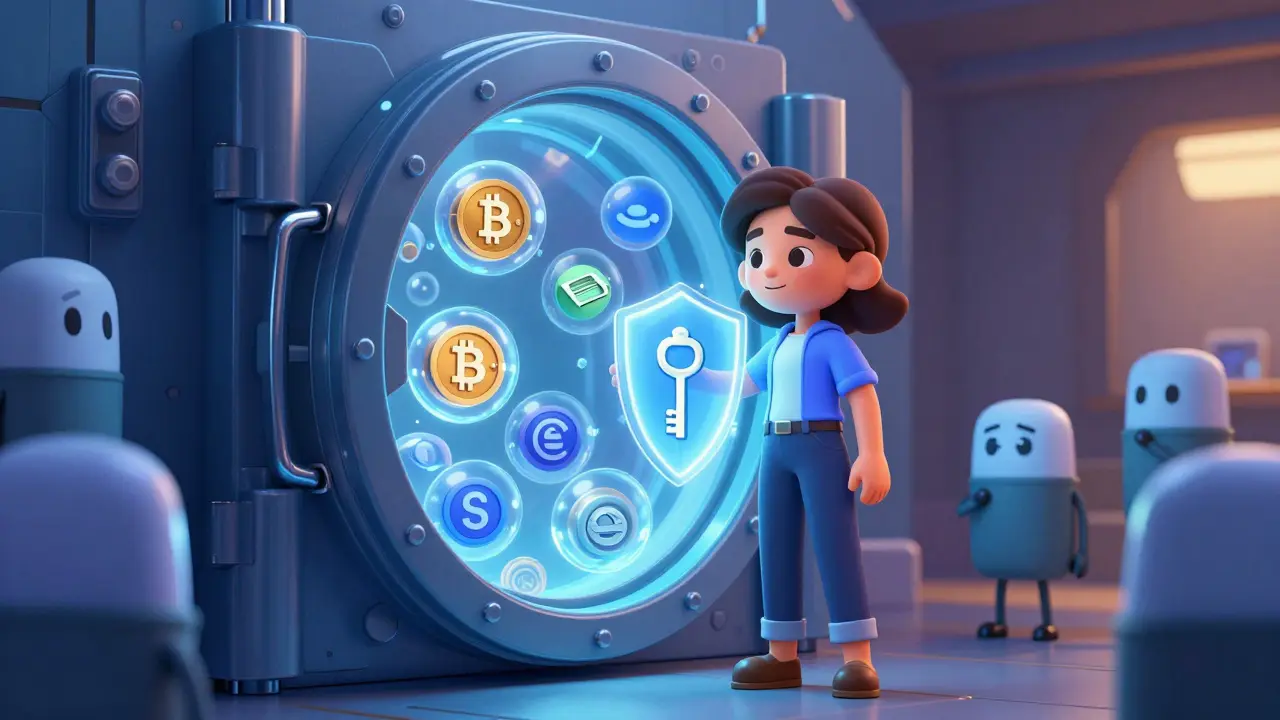
SiennaSwap is an Automated Market Maker (AMM). If you have used Uniswap, you know the mechanics: you swap tokens against liquidity pools using a constant product formula. The innovation here isn’t the math; it’s the encryption. SiennaSwap uses the Secret Network’s ability to perform encrypted computation. When you initiate a swap, your data is encrypted immediately.
Here is what stays hidden:
- Your Identity: Your wallet address is obscured from public view during the transaction.
- Your Intent: No one knows which tokens you are swapping or in which direction.
- Your Volume: The size of your trade remains private.
- Your Portfolio: External observers cannot track your holdings or trading patterns.
Only you hold the "viewing key" that decrypts this information. Total pool liquidity and aggregate volume remain public to ensure price discovery works, but your specific slice of that pie is yours alone.
The MEV Problem Solved
Let’s talk about why privacy matters beyond just keeping your finances secret. It matters because it saves you money.
On transparent blockchains, the mempool (the waiting area for transactions) is a hunting ground for sophisticated bots. They scan for large orders and sandwich them-buying before you and selling after you. This is called front-running. Because SiennaSwap encrypts the transaction details before they hit the network, these bots have nothing to target. There is no signal to exploit.
This means your execution price is determined solely by the current state of the liquidity pool, not by predatory algorithms. For active traders or those moving significant capital, this native front-running protection is a massive advantage over traditional DEXs.
Supported Assets and Ecosystem
A privacy exchange is useless if you can’t move the assets you care about. SiennaSwap integrates deeply with the Cosmos ecosystem and bridges to other chains.
| Asset Type | Description | Privacy Level |
|---|---|---|
| SCRT | Native token of the Secret Network | High (when wrapped) |
| sTokens | Privacy-wrapped versions of major assets (e.g., sBTC, sETH) | Full Encryption |
| IBC Assets | Tokens from other Cosmos chains via Inter-Blockchain Communication | Variable |
| Bridged Tokens | Assets from Ethereum and other chains via Secret Bridges | Dependent on Bridge |
If you are deep in the Cosmos ecosystem, SiennaSwap is likely your go-to. For Ethereum users, you will need to bridge your assets first. This adds a step to the process, but it ensures that once your funds are on Secret Network, they are protected by its privacy features.
User Experience and Wallet Support
Does adding complexity ruin the experience? Surprisingly, no. SiennaSwap aims for familiarity. If you have used Uniswap or PancakeSwap, the interface will feel intuitive. You connect your wallet, select your tokens, and swap.
Wallet compatibility is solid for the ecosystem:
- Keplr: The standard browser extension for Cosmos chains works seamlessly.
- Ledger: Hardware wallet integration ensures your private keys never touch your computer.
- Mobile Access: The design is responsive, allowing trading from smartphones without a clunky desktop interface.
Execution is near-instant, leveraging Secret Network’s fast finality. There are no long waits for confirmations that leave you anxious about price slippage. Slippage protection settings are available to ensure you get the rate you expect, though the lack of MEV often means better effective prices anyway.
SiennaSwap vs. The Competition
Is SiennaSwap the only option? No. But it serves a very different purpose than most alternatives. Let’s compare it to three major players in the 2026 landscape.
| Feature | SiennaSwap | Jupiter (Solana) | SimpleSwap | Binance (CEX) |
|---|---|---|---|---|
| Privacy | Encrypted Transactions | Public Mempool | KYC Required | Centralized Data |
| MEV Protection | Native (By Design) | Minimal | N/A (Centralized) | N/A (Internal Order Book) |
| Ecosystem Focus | Cosmos / Cross-Chain | Solana Only | Multi-Chain Aggregator | Global CEX |
| Custody | Non-Custodial (You hold keys) | Non-Custodial | Non-Custodial | Custodial (They hold keys) |
| Best For | Privacy-Conscious Traders | Solana DeFi Users | Quick Fiat-to-Crypto Swaps | High-Volume Retail Trading |
Jupiter dominates Solana with low fees and advanced order types like limit orders. However, it lacks the privacy layer SiennaSwap offers. If you are worried about your trade history being public, Jupiter is not the answer.
SimpleSwap is great for beginners wanting to swap fiat for crypto quickly across many chains. But it requires identity verification (KYC) and operates as a traditional swap service, meaning your data is held by a central entity. SiennaSwap keeps you anonymous and non-custodial.
Binance offers immense liquidity and ease of use, but it is a centralized exchange. You do not control your keys, and Binance has full visibility into your activity. For users prioritizing sovereignty and privacy, SiennaSwap is the antithesis of Binance.

Limitations and Risks
No platform is perfect. Before you deposit funds, consider these constraints:
- Liquidity Depth: While growing, SiennaSwap’s pools may not match the depth of top-tier Ethereum DEXs like Uniswap V3. Large institutional-sized trades might still experience slippage.
- Bridging Friction: Moving assets from Ethereum or Bitcoin to Secret Network requires using bridges. Bridges introduce counterparty risk until the asset is fully minted as an sToken on Secret.
- Regulatory Uncertainty: Privacy coins and protocols face increasing scrutiny globally. While SiennaSwap is permissionless, regulatory pressure could impact integrations or wallet support in certain jurisdictions.
- Learning Curve: Understanding viewing keys and managing encrypted balances adds a layer of complexity compared to standard DEXs. If you lose your viewing key, you cannot access your own history easily.
Verdict: Who Should Use SiennaSwap?
SiennaSwap is not for everyone. If you are a casual trader who buys $50 worth of meme coins and doesn’t care if the world sees it, stick with SimpleSwap or a major CEX for simplicity.
However, if you fall into one of these categories, SiennaSwap is a compelling choice:
- Privacy Advocates: You believe financial data should be personal, not public.
- Active Traders: You want to avoid MEV extraction and front-running bots eating your margins.
- Cosmos Ecosystem Participants: You hold SCRT or IBC assets and want a native, high-performance DEX.
- DeFi Purists: You want non-custodial trading without KYC hurdles.
As of mid-2026, SiennaSwap stands out as a mature, production-ready protocol. It has moved beyond experimental status to become reliable infrastructure for thousands of partners. It solves a real pain point-transaction visibility-with elegant technology rather than gimmicks.
Is SiennaSwap safe to use?
SiennaSwap operates as a non-custodial decentralized exchange, meaning you retain control of your private keys. The platform has achieved production stability with consistent mainnet uptime. However, as with any DeFi protocol, risks include smart contract vulnerabilities and bridge security. Always verify contracts and start with small amounts to familiarize yourself with the interface.
How does SiennaSwap prevent front-running?
SiennaSwap prevents front-running through its encrypted mempool. Unlike transparent blockchains where pending transactions are visible to all, SiennaSwap encrypts swap details before they are processed. Bots cannot see your trade intent or size, making it impossible for them to execute trades ahead of you for profit.
Can I use SiennaSwap with my hardware wallet?
Yes, SiennaSwap supports Ledger hardware wallets. This allows you to sign transactions securely without exposing your private keys to your computer or mobile device. Keplr browser extension is also supported for seamless interaction with the Secret Network.
What is the difference between SiennaSwap and Jupiter?
Jupiter is a DEX aggregator focused on the Solana ecosystem, offering low fees and advanced order types but with public transaction visibility. SiennaSwap is built on the Secret Network and prioritizes privacy, encrypting user data to protect against MEV and maintain financial confidentiality. Choose Jupiter for Solana speed; choose SiennaSwap for privacy.
Do I need to provide KYC to use SiennaSwap?
No, SiennaSwap is a permissionless decentralized exchange. You do not need to provide identification, proof of address, or any personal information to create an account or trade. You only need a compatible wallet like Keplr or Ledger.
Which assets can I trade on SiennaSwap?
SiennaSwap supports SCRT (Secret Network native token), sTokens (privacy-wrapped assets like sBTC and sETH), IBC-enabled assets from the Cosmos ecosystem, and bridged tokens from Ethereum and other blockchains. Liquidity varies by pool, so check the UI for available pairs.


Write a comment