Imagine trying to buy bread when your bank account is frozen, the local currency is crashing, and the government has just declared digital money a sin. That’s the daily reality for millions of Afghans. Since the Taliban returned to power in August 2021, they’ve imposed strict religious and economic rules that have effectively killed the formal banking sector. But here’s the twist: while the banks are dead, the money hasn’t stopped moving. It’s just gone underground.
Right now, in the shadows of Kabul and Kandahar, a secret economy is thriving. It’s not run by big exchanges with shiny websites, but by word-of-mouth deals and encrypted chats. This is the world of underground crypto trading. If you’re wondering how people send money home when Western sanctions block traditional channels, or why Bitcoin is booming in a country where it’s technically illegal, you’re asking the right questions. Let’s break down how this hidden financial system works, why it persists despite harsh bans, and what it means for the future of finance in one of the world’s most isolated nations.
The Ban That Didn’t Stop the Flow
In August 2022, the Taliban issued a blanket prohibition on all things crypto. They labeled it haram, or forbidden under Islamic law. Their argument? Cryptocurrencies like Bitcoin are speculative gambling without real-world asset backing. It’s a theological stance wrapped in economic policy. The government revoked licenses for every registered exchange and threatened traders with arrest.
You might think this would kill the market. After all, if the police are knocking on doors, surely people stop buying? Not exactly. The demand was too high, and the alternatives were too poor. With international reserves frozen and the banking system paralyzed, Afghans needed a way to receive remittances from relatives abroad. Traditional money transfer operators (MTOs) became slow, expensive, or non-existent. So, instead of disappearing, the market just went dark.
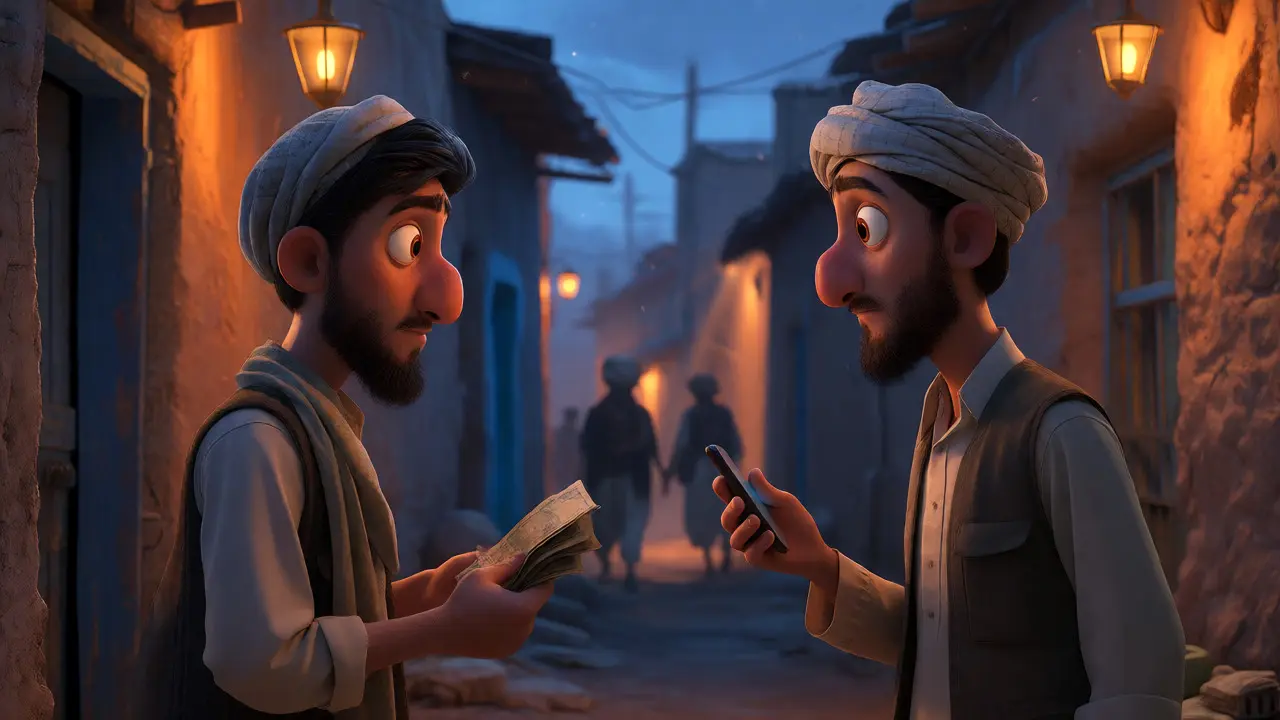
This shift wasn’t instantaneous chaos; it was an adaptation. Traders moved from public storefronts to private networks. You don’t walk into a shop and ask for Bitcoin anymore. You need a contact, a trusted intermediary who knows the current rate and can meet you in a quiet location to swap cash for digital tokens. It’s risky, sure. But for many, the risk of poverty outweighs the risk of arrest.
Why People Still Trade Despite the Risks
To understand why underground trading survives, you have to look at the desperation driving it. By 2022, the United Nations projected that 97% of Afghans would fall below the poverty line. That’s not just a statistic; it’s families choosing between medicine and food. In this context, cryptocurrency isn’t about getting rich quick. It’s about survival.
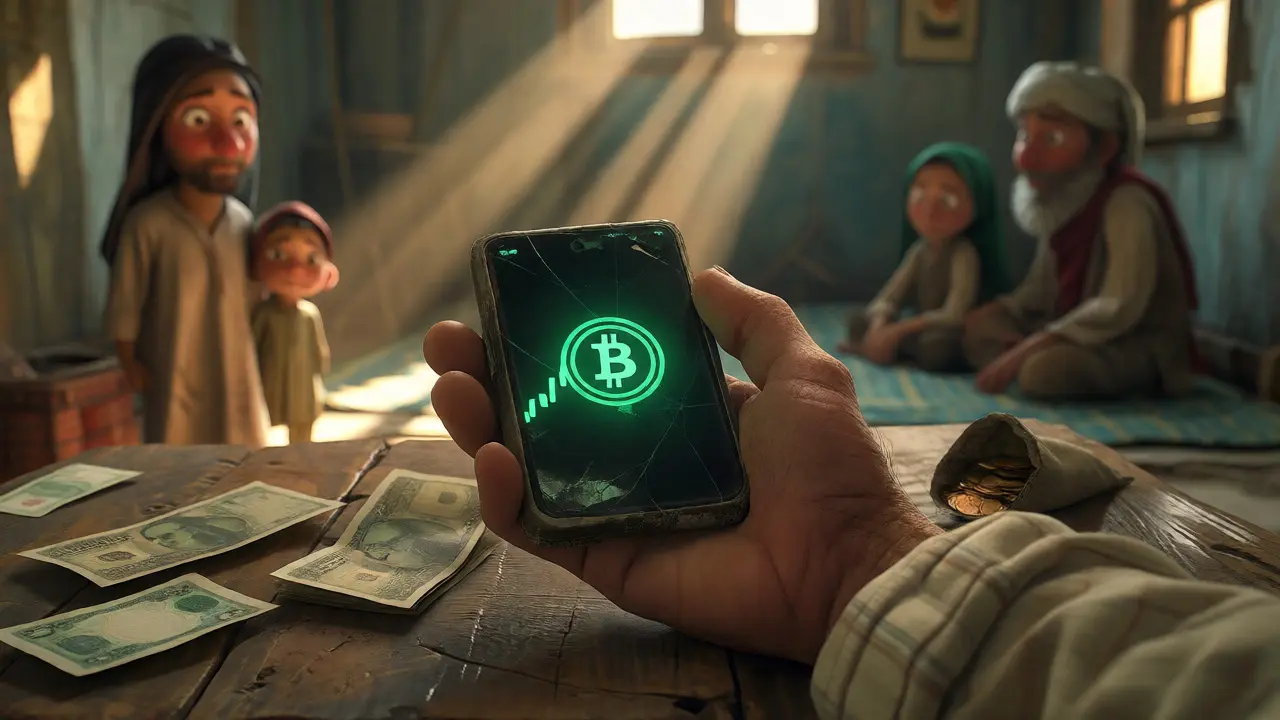
Here’s the core problem: isolation. When the Taliban took over, global sanctions kicked in. Banks couldn’t process international transfers easily. If your brother is working in Dubai or London and wants to send $200 home, he can’t just wire it through a standard bank without delays or fees skyrocketing. Enter USDT (Tether) and Bitcoin. These digital assets act as bridges. A relative buys USDT abroad, sends it to an Afghan wallet, and a local trader converts it into Afghanis (the local currency) or dollars, handing over the cash directly.
This peer-to-peer (P2P) model bypasses the broken infrastructure. It’s faster, often cheaper, and crucially, it works even when the internet is spotty. Yes, the Taliban banned it, but they didn’t create a viable alternative. Until they do, the black market remains the only lifeline for cross-border payments.
How the Underground Network Actually Works
So, how do you trade crypto in a place where the government is actively hunting for miners and traders? It relies on trust and technology gaps. The network is fragmented, operating through small cells rather than large centralized hubs.
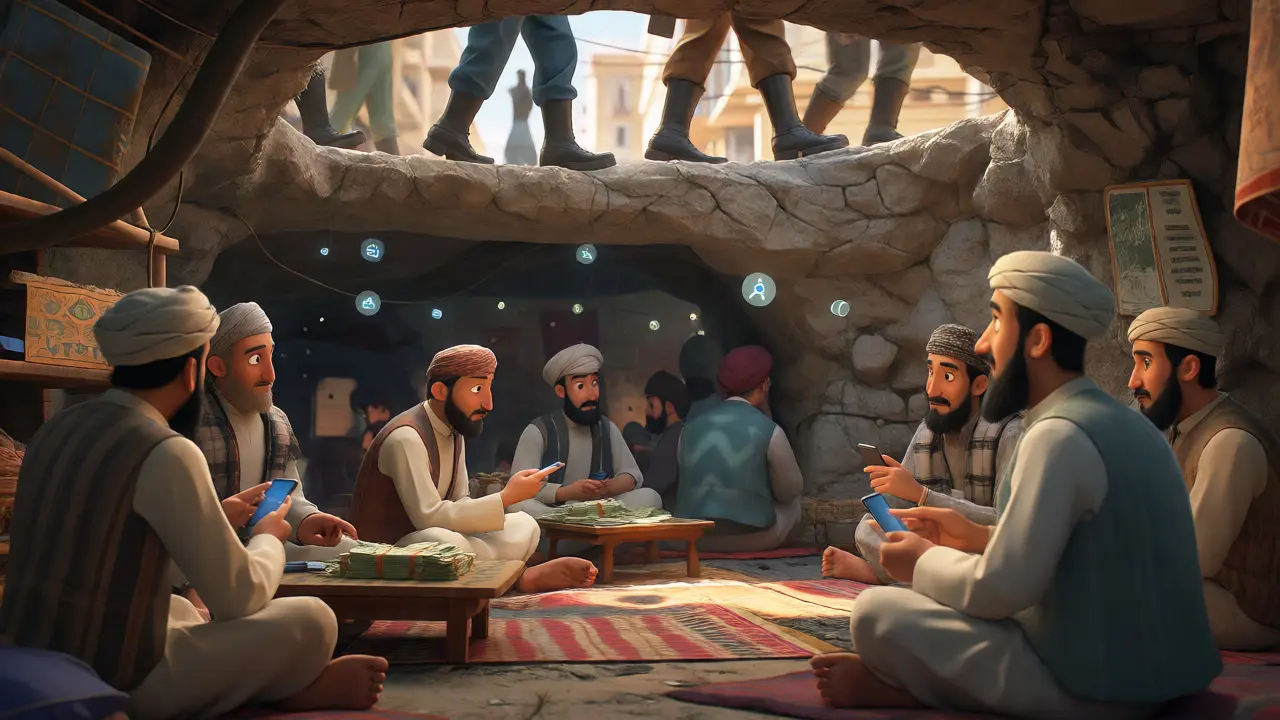
- The Broker System: Most transactions go through informal brokers. These are individuals who hold both fiat currency (cash) and crypto wallets. They advertise their rates via WhatsApp or Telegram groups, which are harder to monitor than open web exchanges.
- P2P Swaps: Buyers and sellers meet in person. Cash changes hands, and the crypto transfer happens on the blockchain. Because there’s no central authority tracking every transaction, it looks like a simple digital payment to any outside observer.
- Mining in the Shadows: Some operations continue mining, though at a much smaller scale. Miners often operate in remote areas or use residential setups to avoid detection. However, power instability makes this unreliable, so most activity focuses on trading rather than mining.
The role of HesabPay and similar mobile apps illustrates this resilience. Before the total crackdown, HesabPay allowed fund transfers between mobile phones and secured over 380,000 users in its first three months. While the official app faced regulatory hurdles, the concept of mobile-first finance stuck. Now, similar functionalities exist in unofficial capacities, using SMS-based confirmations or offline mesh networks to verify trades when the main internet goes down.
The Internet Blackout Challenge
If you think the ban is the biggest hurdle, think again. The Taliban’s control over information flow is a massive operational barrier. In recent years, authorities have implemented sweeping internet blackouts, sometimes reducing connectivity to less than 1% of normal levels. In September 2024, five northern provinces-including Kunduz, Badakhshan, and Balkh-faced severe restrictions justified as preventing "immoral activities."
For a crypto trader, this is catastrophic. How do you check the price of Bitcoin if you can’t load the chart? How do you verify a transaction if the blockchain explorer is blocked? Traders in border towns like Peshawar, Pakistan, report significant disruptions. They can’t communicate with customers who need product images before purchasing, which stalls legitimate commerce that often involves crypto payments.
This creates a paradox. The Taliban want to restrict "vice" associated with the internet, but they inadvertently cripple the very tools needed for economic survival. Traders have had to get creative, relying on cached data, delayed updates, and physical meetings to finalize deals. It slows everything down, increasing the premium paid for liquidity. You pay more for your cash because the seller takes on the risk of being offline when the market moves.
Sharia Law vs. Digital Reality
The Taliban’s justification rests on a specific interpretation of Sharia law. They argue that because cryptocurrencies lack tangible asset backing, they resemble gharar (excessive uncertainty) and speculation, which are forbidden. This isn’t unique to Afghanistan; other conservative Islamic scholars debate whether crypto is halal or haram. But in Afghanistan, this theological view has been codified into state law with teeth.
However, the practical application clashes with economic necessity. Many Afghans don’t see Bitcoin as gambling; they see it as a store of value against a collapsing national currency. For them, holding Afghanis is risky due to inflation, while holding USDT pegged to the US dollar offers stability. This disconnect between religious doctrine and financial reality fuels the persistence of the underground market. It’s not just rebellion; it’s rational economic behavior in an irrational environment.
Comparison: Formal vs. Underground Crypto Markets
Understanding the difference between the pre-2021 era and today helps highlight the stakes. The table below outlines the key shifts in the Afghan crypto landscape.
| Feature | Pre-Taliban Takeover (Before Aug 2021) | Current Underground Status (2025-2026) |
|---|---|---|
| Legality | Unregulated but tolerated; some licensed exchanges existed. | Strictly banned; declared Haram by Supreme Leader. |
| Access Method | Online exchanges, mobile apps, physical shops. | P2P networks, WhatsApp/Telegram groups, word-of-mouth. |
| Primary Use Case | Speculation, investment, early adoption experiments. | Remittances, survival, preserving wealth against inflation. |
| Risk Level | Market volatility, minor regulatory fines. | Arrest, confiscation, social stigma, internet blackouts. |
| Liquidity | High; easy entry/exit via credit cards or bank wires. | Low to Medium; dependent on cash availability and broker trust. |
What This Means for the Future
Is the underground crypto market sustainable? Probably, as long as the alternative is economic collapse. The Taliban’s grip on power seems firm, but their ability to enforce digital bans is limited by infrastructure gaps. You can’t ban what you can’t see, and decentralized ledgers are notoriously hard to erase.
We’re likely to see continued innovation in low-tech solutions. Expect more reliance on mesh networking, offline verification methods, and stronger community trust networks. International organizations may also find ways to integrate crypto into aid distribution, bypassing the Taliban’s banking restrictions entirely.
For now, the traders in Kabul’s back alleys are doing something remarkable. They’re keeping the economy breathing when the lungs-the banks-are failing. It’s dangerous, unregulated, and invisible to most outsiders. But it’s proof that when money needs to move, it will find a way, even if it has to crawl through the cracks of a closed society.
Is cryptocurrency completely illegal in Afghanistan?
Yes, since August 2022, the Taliban government has officially banned all forms of cryptocurrency trading, mining, and usage. They declare it 'haram' (forbidden) under Islamic law. However, enforcement varies, and peer-to-peer trading continues underground despite the legal prohibition.
Which cryptocurrencies are most popular in Afghanistan?
Bitcoin and USDT (Tether) are the primary cryptocurrencies used. USDT is particularly favored for remittances because it is stablecoin pegged to the US dollar, offering protection against the fluctuation of the local Afghani currency.
How do Afghans buy crypto if exchanges are banned?
Most purchases happen through peer-to-peer (P2P) networks. Users connect via messaging apps like WhatsApp or Telegram to find trusted brokers. Transactions involve meeting in person to exchange cash for a digital transfer, bypassing formal banking channels.
What are the risks of trading crypto in Taliban-controlled Afghanistan?
The main risks include arrest, confiscation of funds, and physical danger during in-person exchanges. Additionally, frequent internet blackouts make it difficult to monitor market prices or complete transactions securely, adding operational risk.
Did the Taliban ban affect crypto mining in Afghanistan?
Yes, mining was explicitly banned alongside trading. While some small-scale, covert mining operations may persist, the industry has largely collapsed due to the ban, unreliable electricity supplies, and the threat of government crackdowns.


Write a comment