
Ever tried to build a decentralized application only to get stuck in gas fee hell or slow transaction times? That’s the exact pain point Unification aims to fix. It’s not just another meme coin chasing hype; it’s a public-private blockchain ecosystem designed for serious developers who need speed without sacrificing security. If you’ve been hearing whispers about the switch from UND to FUND, you’re likely wondering if this project has legs or if it’s just another ghost town on the blockchain.
Let’s cut through the noise. Unification isn’t trying to be Ethereum or Solana. It’s positioning itself as a toolkit-a set of tools that lets companies and developers launch their own "Workchains." Think of these as private lanes on a highway that still connect to the main road. The goal? Predictable costs, unlimited scalability, and seamless interoperability. But with its price down nearly 98% from its all-time high, is it worth your attention in 2026? Let’s break down what FUND actually does, how the tech works, and whether the community behind it can deliver.
The Core Tech: What Are Workchains?
Most blockchains force every app to compete for space on one giant ledger. When Ethereum gets congested, everyone pays more. Unification flips this script by introducing Workchains. These are independent blockchains that run alongside the Mainchain but talk to each other constantly. Unlike traditional DApps that live entirely on the main network, Workchains operate separately. This means a gaming app can process thousands of transactions per second on its own chain without slowing down a DeFi protocol running on another.
The magic trick here is interoperability. Even though these chains are separate, they maintain 100% compatibility. You can move assets between them without needing complex bridges that often get hacked. For developers, this offers a massive advantage: predictable cost metrics. Because each Workchain manages its own resources, fees don’t spike randomly based on global network congestion. It’s like having your own dedicated server instead of sharing a crowded cloud drive. According to Holder.io, this architecture supports "unlimited horizontal scalability," which sounds great on paper but relies heavily on actual adoption to prove its worth.
From UND to FUND: The Token Swap Explained
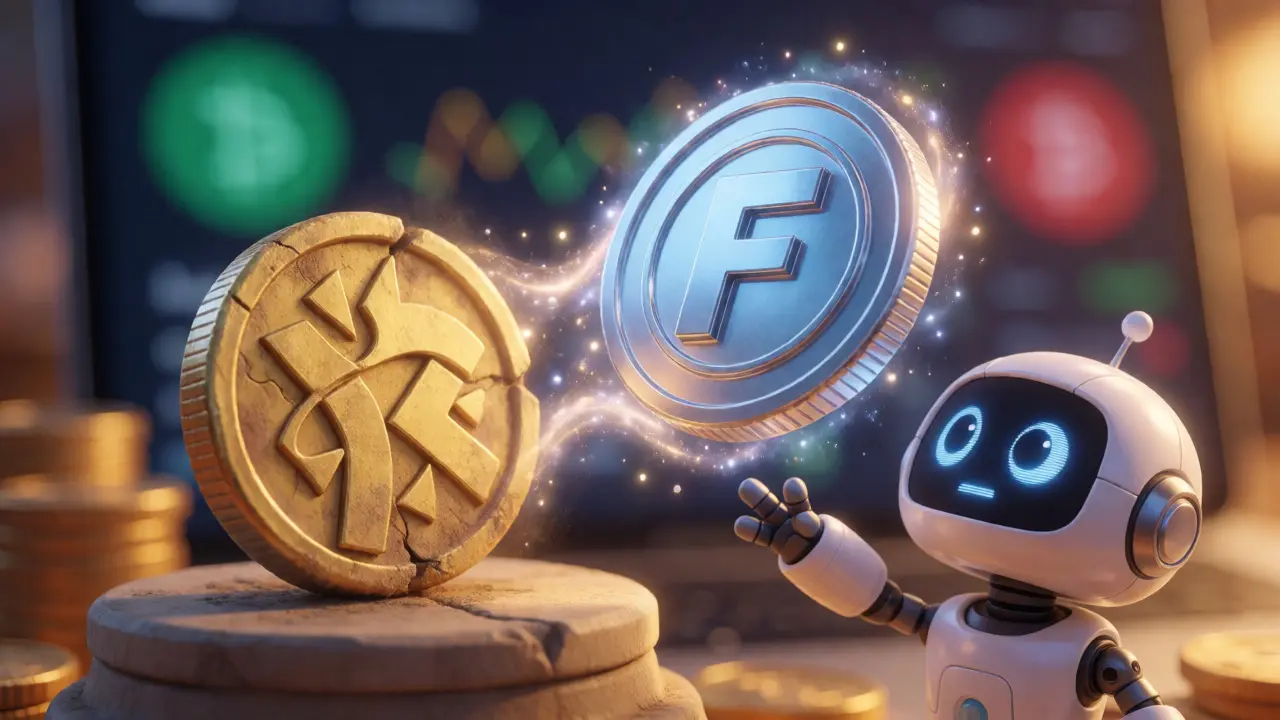
If you held UND tokens before late 2025, you might have noticed some confusion on exchanges. In October 2025, the project completed a significant migration, swapping all UND tokens for FUND. This wasn’t just a rebranding exercise; it was part of a broader technical overhaul to support the new Workchain infrastructure.
CoinMarketCap documented this shift clearly, warning traders that old pairs on Binance DEX and Bidesk were still trading the legacy UND token. If you didn’t participate in the swap correctly, you might still be holding an asset with zero liquidity. The three-phase swap mechanism wrapped up by October 10, 2025, aiming to streamline the supply and align incentives with the new staking model. Today, FUND operates primarily as an ERC-20 token on Ethereum, with the contract address ending in 7a7f75. While it started on its own native chain, leveraging Ethereum’s security layer helps bootstrap trust while the native ecosystem matures.
Staking Mechanics: The Top 96 Rule
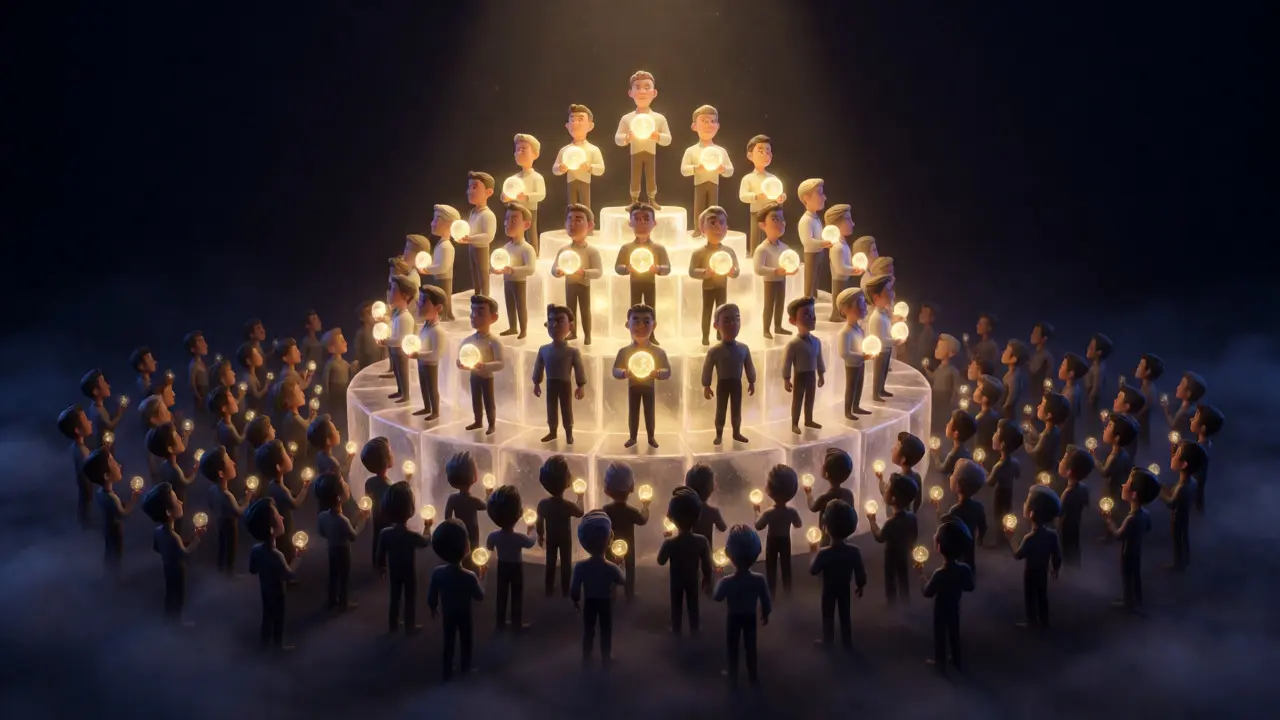
Here’s where Unification gets interesting-and slightly controversial. Most proof-of-stake networks reward everyone who stakes. Unification takes a different approach. The Mainchain issues block rewards specifically to the top 96 MasterStakers. That’s it. Only 96 people get the primary inflationary rewards.
Why limit it so tightly? The logic is efficiency. By concentrating rewards among a smaller group of highly committed validators, the network ensures that those securing the chain have significant skin in the game. However, this creates a barrier to entry. If you’re a small holder wanting to stake, you might find yourself earning negligible rewards unless you pool your funds or buy into one of the top validator positions. Critics argue this centralizes power too much, while supporters say it prevents the "dilution" of rewards seen in larger networks. As of late 2025, this mechanism remains a key talking point in community forums, with many users debating whether it truly decentralizes the network or just shifts control to a few whales.
Market Reality Check: Price and Liquidity
Let’s look at the hard numbers. Unification isn’t exactly dominating headlines right now. Ranked around #2473 on CoinMarketCap, it’s a micro-cap asset with significant volatility. The price data is messy, largely because liquidity is thin. Depending on where you look, the price fluctuates wildly:
| Metric | Value / Range | Source Context |
|---|---|---|
| All-Time High | $0.6818 | Recorded Feb 26, 2023 |
| Current Price Trend | $0.01 - $0.07 | High variance due to low volume |
| Decline from ATH | ~97.5% | Significant drawdown |
| Total Supply | 120M - 210M | Discrepancies across trackers |
| Primary Exchange | Uniswap v3 | ~52% of total volume |
The disconnect in pricing-ranging from $0.009 on CoinDesk to $0.078 on Holder.io-signals poor market depth. When there aren’t enough buyers and sellers, a single large trade can swing the price 20%. This makes FUND risky for short-term traders. You could enter a position and see a 10% loss simply because someone dumped a small bag into a thin order book. For long-term believers, however, this low cap represents potential upside if the Workchain narrative gains traction.
Who Is Using It? Adoption and Use Cases
So, who is actually building on Unification? The target audience isn’t the average retail investor buying JPEGs. It’s enterprise clients and niche developers. The project pitches two main solutions: "Permissionless Products" for DeFi, Gaming, and NFTs, and "Blockchain Business" tools for companies entering Web3.
Adoption remains modest. A ConsenSys survey indicated that 68% of developers using Unification are focused on niche DeFi applications. Enterprise uptake is even slower, with only three verified implementations documented in their case studies archive. This highlights a common struggle for mid-tier blockchains: great tech doesn’t always equal mass adoption. Companies want proven track records, and Unification is still proving itself. The roadmap includes "Workchain 2.0 integration" scheduled for late 2025, promising enhanced cross-chain messaging. If this update delivers smoother developer experiences, we might see a uptick in pilot programs.
Risks and Red Flags
No crypto analysis is complete without addressing the risks. Unification faces several headwinds that potential investors should weigh carefully.
- Liquidity Crisis: Trading volumes are tiny. On some days, reported volume drops near zero. Exiting a position quickly without moving the price significantly is difficult.
- Support Issues: Trustpilot reviews highlight slow customer support response times, averaging 72 hours. For a project targeting enterprises, this lag can be a dealbreaker.
- Tokenomics Confusion: With circulating supply reports varying from 34 million to over 128 million depending on the tracker, calculating true market cap is tricky. Always verify data directly from the blockchain explorer.
- Competition: Competitors like Polygon and Avalanche offer similar Layer-2 scaling solutions with vastly larger ecosystems and tooling libraries.
Messari analysts rated Unification as "high risk" due to unclear revenue models. Without clear value accrual to the FUND token beyond staking, the investment thesis relies heavily on speculative growth rather than fundamental cash flow.
Final Verdict: Should You Watch FUND?
Unification is a sleeper play. It’s not going to make you rich overnight, nor is it likely to disappear tomorrow. The Workchain architecture solves real problems regarding scalability and cost predictability. However, the execution needs to catch up with the vision. The recent token swap cleaned up some structural issues, but the community needs to grow beyond its current ~1,950 active holders.
If you’re a developer looking for a testnet environment to experiment with custom chains, Unification offers a compelling sandbox. If you’re an investor, treat FUND as a high-risk venture capital bet. Monitor the GitHub activity-bi-weekly updates suggest the team is still alive and kicking-but keep your expectations grounded until enterprise partnerships materialize.
Is Unification (FUND) the same as the old UND token?
Yes, FUND is the successor to the UND token. A swap occurred in October 2025 to migrate all existing UND holdings to the new FUND contract. Old UND tokens on certain exchanges may no longer hold value if they haven't been swapped.
How do I buy FUND cryptocurrency?
You can purchase FUND primarily through decentralized exchanges like Uniswap v3. Other platforms include MXC, Poloniex, and SaitaSwap. Note that centralized exchange listings are limited, so most trading happens via DEX pools, particularly the FUND/WETH pair.
What is the maximum supply of FUND?
Sources vary slightly, but Holder.io lists a maximum supply of 210,000,000 tokens. CoinMarketCap currently reports a total supply closer to 120 million, with approximately 34-128 million in circulation depending on the tracking method used.
Can I stake FUND tokens?
Yes, but staking rewards are concentrated. Block rewards are issued only to the top 96 MasterStakers. Small holders may need to join a staking pool or delegate to a top validator to earn meaningful returns.
Is Unification a good investment for beginners?
Generally, no. Due to low liquidity, high volatility, and technical complexity regarding Workchains, it is better suited for experienced crypto investors or developers who understand the underlying technology.

Write a comment