Have you seen the buzz around the Brokoli Network a decentralized finance and regenerative finance ecosystem built on Ethereum (BRKL) airdrop? If you are hunting for free tokens, you need to know exactly what is real, what is old news, and where the hidden traps lie. The landscape of crypto giveaways changes fast, and mixing up active campaigns with expired ones can cost you time-or worse, your wallet security.
This guide cuts through the noise. We will look at the specific details of the documented MEXC Exchange airdrop, break down how the BRKL token actually works, and explain why you should be cautious before clicking any "claim" buttons. By the end, you will know if this opportunity is worth your effort or if it is better left alone.
The MEXC Exchange "Vote to Win" Campaign
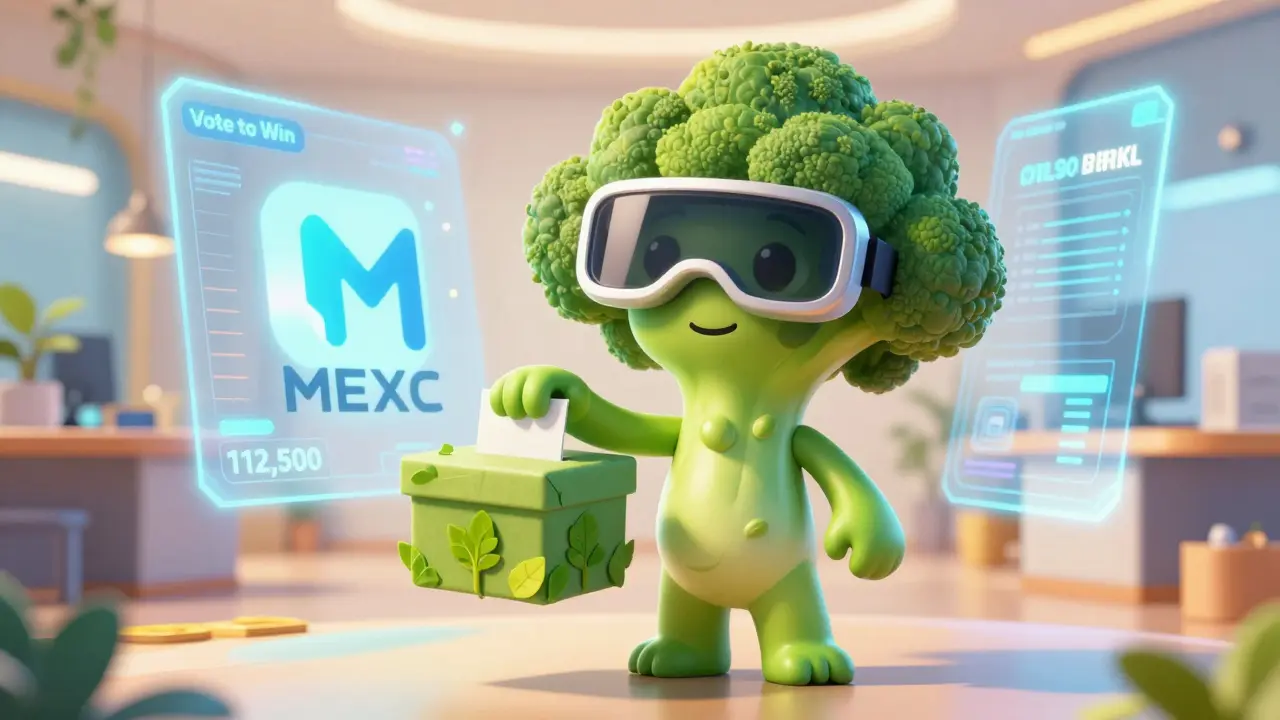
The most prominent piece of information available regarding a Brokoli Network giveaway comes from MEXC Exchange a centralized cryptocurrency exchange platform. This was not a simple "connect wallet and claim" drop. Instead, it operated as a competitive voting mechanism.
Here is how that specific program was structured:
- Reward Pool: The total pot consisted of 112,500 BRKL tokens.
- Mechanism: Participants had to vote using MX tokens, which is the native utility token of the MEXC platform.
- Cost to Enter: While the BRKL tokens themselves were listed at $0 USDT cost for winners, you needed to lock up MX tokens to cast your vote. There was a hard cap of 500,000 MX tokens per participant.
- Reference Value: At the time of the campaign, the reference price for BRKL was set at $0.65 per token.
This structure means that "free" was relative. To win, you effectively staked value in another asset (MX) to compete for a share of the BRKL pool. It favored users who already held significant amounts of MEXC's native token, rather than casual newcomers looking for easy money.
| Feature | Detail |
|---|---|
| Total Rewards | 112,500 BRKL |
| Voting Currency | MX Token |
| Max Vote Cap | 500,000 MX |
| Reference Price | $0.65 USD |
| Status | Historical / Likely Concluded |
Understanding Brokoli Network and ReFi
To understand the value behind the token, you have to look at what Brokoli Network actually does. Launched with its Token Generation Event (TGE) on October 5, 2021, the project positions itself in the Regenerative Finance a financial model that aims to restore natural ecosystems and social structures while generating profit (ReFi) space. Unlike traditional DeFi projects that focus solely on yield, Brokoli integrates environmental and social impact into its core mission.
The platform offers several services:
- Liquidity Provision: Users can provide assets to pools to earn fees.
- Yield Farming: Strategies to generate returns on crypto holdings.
- Gaming Metaverse: A play-to-earn and play-to-impact NFT environment where users earn income while supporting social causes.
The governance of the network is handled by a Decentralized Autonomous Organization (DAO). This means token holders theoretically have a say in the future direction of the platform, including potential future distributions or partnerships. However, the shift toward gaming and sustainable DeFi operations suggests that aggressive public airdrops may no longer be their primary growth strategy.
Tokenomics: Where Do the BRKL Tokens Come From?
Airdrops do not happen in a vacuum; they are part of the broader token distribution plan. Understanding the supply helps you gauge inflation and scarcity.
At the TGE in late 2021, only 20% of the total tokens were unlocked. The rest followed a vesting schedule with a three-month cliff, followed by monthly releases of 5.33% over 15 months. Today, the data shows that the "ecosystem incentives" allocation-which often funds airdrops and rewards-is fully unlocked. Specifically, 31.59 million BRKL tokens in this category represent 100% of that slice.
Currently, there are approximately 126 million BRKL tokens in circulation. The market capitalization hovers around $474,000 USD. When evaluating an airdrop, always check the circulating supply. If a massive amount of tokens is dumped via an airdrop without corresponding demand, the price can crash instantly.
The Reality Check: Price Discrepancies and Liquidity
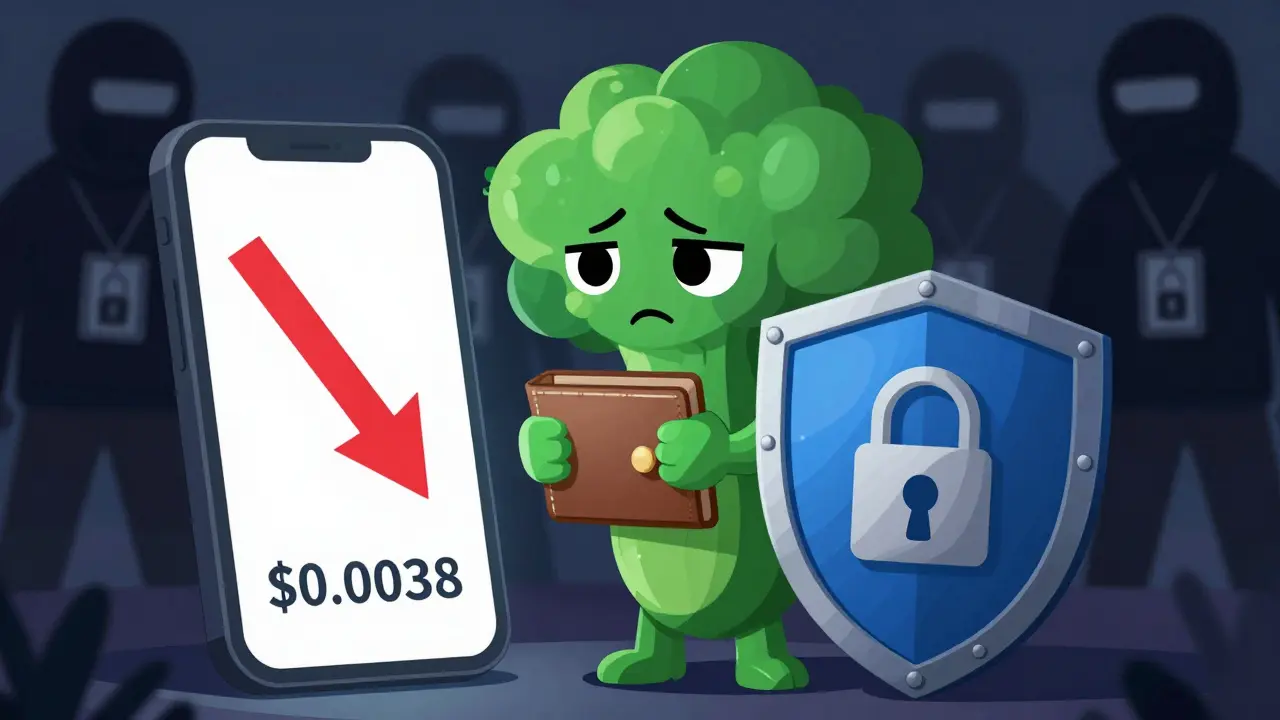
Here is the most critical part of this analysis. You might see references to the BRKL token being worth $0.65 during the MEXC campaign. As of May 2026, the trading price is significantly lower, hovering around $0.0038 USD.
Let us break down what this means for you:
- Massive Depreciation: The token has lost over 99% of its value compared to the reference price cited in older airdrop materials. If you find a website claiming you can claim tokens at the old value, it is likely a scam or outdated information.
- Low Liquidity: The 24-hour trading volume is roughly $13,200 USD. This is extremely low. It means if you did receive a large amount of tokens, selling them could be difficult without crashing the price further.
- Market Rank: Ranked #2864 on major trackers like CoinMarketCap, BRKL is considered a micro-cap asset. These assets carry high risk and low visibility.
Always verify the current price on a reliable aggregator before participating in any new campaign. Do not trust screenshots from two years ago.
Safety First: Avoiding Airdrop Scams
Because Brokoli Network had a notable past campaign, scammers often create fake websites mimicking the official branding to steal private keys. Here is how to stay safe:
- Never Share Your Seed Phrase: Legitimate airdrops never ask for your 12 or 24-word recovery phrase. They only require your public wallet address.
- Check the URL: Ensure you are on the official domain. Look for subtle misspellings like "brokolii-network.com" or "brokoli-airdrop-official.net".
- Use a Burner Wallet: For interacting with unknown contracts or small-cap projects, use a secondary wallet with minimal funds. Never connect your main holding wallet to unverified dApps.
- Verify on Official Channels: Check the project's verified Twitter/X account or Discord for announcements. If the team hasn't posted about a new airdrop recently, assume it doesn't exist.
Is There an Active Airdrop Right Now?
Based on current data, there is no widespread, publicly documented active airdrop for Brokoli Network as of mid-2026. The MEXC campaign is historical. The project appears to have shifted its focus toward its gaming metaverse and DAO governance rather than broad token distribution.
If you encounter a site promising a new BRKL airdrop, treat it with extreme skepticism. The lack of recent official announcements combined with the low liquidity makes the risk-to-reward ratio unfavorable for most investors. Your time is better spent researching projects with active development, clear roadmaps, and higher trading volumes.
How do I claim the Brokoli Network MEXC airdrop?
The MEXC airdrop was a "Vote to Win" campaign that required locking MX tokens. Since this campaign is likely concluded, you cannot claim it now. Always check the official MEXC events page for current status, but be aware that historical reference prices do not reflect current value.
What is the current price of the BRKL token?
As of May 2026, the BRKL token trades at approximately $0.0038 USD. This is a significant drop from the $0.65 reference price used in earlier marketing materials. Always check live data on exchanges like MEXC or DEXs for the most accurate pricing.
Is Brokoli Network a scam?
Brokoli Network is a legitimate project launched in 2021 with a functioning DAO and gaming platform. However, the low liquidity and high volatility of the token mean it carries significant financial risk. Additionally, many fake sites impersonate the brand to steal funds, so caution is essential.
Where can I buy BRKL tokens?
BRKL tokens are primarily traded on decentralized exchanges (DEXs) built on Ethereum and some centralized platforms like MEXC. Due to low liquidity, slippage can be high when buying or selling large amounts.
What is Regenerative Finance (ReFi)?
ReFi is a subset of DeFi that uses blockchain technology to incentivize positive environmental and social outcomes. Projects like Brokoli Network aim to align profit motives with sustainability goals, such as carbon offsetting or community development.
17 Comments
mark valmart
hey guys just wanted to say thanks for this breakdown honestly i was about to click some sketchy link and this saved me from losing my whole wallet balance so yeah big ups for the warning
Hadleigh Edwards
I have been following the trajectory of Brokoli Network since its inception in late twenty twenty one and it is truly fascinating to observe how the project has evolved from a simple DeFi protocol into a more complex ecosystem that incorporates elements of regenerative finance and gaming metaverses which suggests that the initial hype surrounding the token generation event was perhaps premature given the long term vision they are attempting to execute with their current roadmap focusing on sustainable yield farming strategies rather than quick speculative gains through aggressive marketing campaigns or misleading airdrop promotions that often seen in the broader cryptocurrency market today.
Joshua Alcover
The epistemological crisis inherent in decentralized autonomous organizations necessitates a rigorous examination of the ontological status of the BRKL token as a mere simulacrum of value within the hyperreal marketplace of digital assets where the dialectic between liquidity provision and speculative accumulation reveals the fundamental absurdity of assigning intrinsic worth to algorithmically generated scarcity mechanisms that serve only to perpetuate the hegemonic dominance of centralized exchange platforms like MEXC which operate under the guise of democratization while effectively consolidating power structures through opaque voting mechanisms that privilege those with pre-existing capital advantages thereby undermining the very principles of financial inclusion purported by the proponents of such systems.
Diana Morris
wake up people stop falling for these dead projects brkl is trash sell everything now dont let your emotions cloud your judgment this is basic trading strategy number one cut losses early and run away from microcaps with zero volume its suicide to hold these bags when you could be making real money elsewhere stay sharp and keep moving forward no excuses
Dianne Wright
i mean look at the chart its basically flatlining who cares about reFi if you cant even make a buck on it i spent hours trying to figure out how to claim something that doesnt exist anymore and now im just angry because someone posted old info without checking first really annoying how people spread misinformation like this its exhausting dealing with all these fake promises every single day
trisya hazriyana
the sheer audacity of calling this an opportunity when the price has crashed ninety nine percent is laughable really think the average user understands what liquidity means or do they just see free tokens and jump in blindfolded typical behavior for retail investors who lack any semblance of due diligence skills yet somehow expect to profit from high risk assets managed by teams with questionable track records and minimal transparency regarding their actual development progress
Debbie Lewis
just observing from the sidelines here seems like a lot of drama over a token that barely moves anymore maybe focus on projects with actual utility instead of chasing ghosts from two years ago
Eric Grosso
wait so ur saying the mexc thing is over already? i thought i had time to vote but looks like i missed the boat totally didnt realize the cap was that high either guess ill stick to bigger coins next time thx for clarifying tho
Edith Mair
We need to address the systemic issue of outdated information circulating in crypto communities which leads to unnecessary losses for inexperienced participants who rely on social media posts rather than official documentation from exchanges or project teams themselves therefore establishing clear channels for verification should be a priority for anyone looking to engage seriously with decentralized finance initiatives regardless of their specific niche or thematic focus areas
Sam Dashti
it feels like we're watching a slow motion car crash with this token supply dumping left and right while the team probably sits back counting their vested portions meanwhile we little folks are left holding the bag wondering why our portfolio looks like a graveyard of failed experiments in blockchain technology and greenwashing narratives that never quite took off despite all the buzzwords thrown around
Bill Gunn
Great point about the burner wallets! 🔥 Always keep your main stash separate. I use a hardware wallet for serious holdings and a hot wallet for testing new dApps. It’s saved me from phishing attempts multiple times. Stay safe out there friends! 🛡️💰
Dana Rapoport
It is important to consider the philosophical implications of Regenerative Finance not just as a financial instrument but as a potential framework for aligning economic incentives with ecological sustainability goals although the current implementation by projects like Brokoli may fall short of these ideals due to market pressures and speculative behaviors that dominate the crypto landscape
Crystal Davis
The technical analysis indicates a bearish divergence on the weekly charts coupled with declining on-chain activity metrics suggesting that smart money has already exited positions leaving retail investors exposed to further downside risks associated with low liquidity pools and high slippage costs during exit scenarios which makes any attempt to recoup losses through holding strategies fundamentally flawed based on quantitative evidence available from blockchain explorers
Christina Pearce
I appreciate the detailed breakdown of the safety tips especially the part about checking URLs carefully because I've seen too many close calls with typosquatting domains lately it's good to have resources like this that help us stay vigilant without being overly paranoid about every single interaction online
Barclay Chantel
How utterly tedious to witness the same cycle of hype and disappointment repeat itself ad nauseam with these so-called innovative projects that fail to deliver on their grandiose promises while the masses continue to flock towards them driven by greed and ignorance rather than rational assessment of value propositions which ultimately reinforces the inefficiency and volatility inherent in unregulated digital asset markets
Joe Clements
Hey everyone, just wanted to chime in and say that while the news might seem discouraging, it's always better to be informed than caught off guard. Learning from past mistakes helps us make smarter decisions in the future. Keep supporting each other and doing your own research!
Miss Masquer
I find myself deeply intrigued by the intersection of cultural narratives surrounding environmentalism and the technological aspirations embedded within projects like Brokoli Network which seem to reflect a broader societal desire for redemption through innovation yet simultaneously expose the vulnerabilities of trusting algorithmic governance models to resolve complex socio-ecological challenges without adequate oversight or accountability mechanisms that ensure equitable distribution of benefits among all stakeholders involved in the ecosystem.