
You’ve probably heard the hype: Artificial Intelligence and Blockchain are the two tech giants that will rule the next decade. But let’s be real-just throwing them together doesn’t magically fix your business problems. The magic happens when they actually talk to each other. If you’re wondering how these two distinct technologies can shake hands and create something better than the sum of their parts, you’re in the right place. We’re not talking about sci-fi here; we’re talking about real numbers, real speedups, and a massive shift in how data is handled as of late 2025.
| Speed Boost: | AI optimizes consensus mechanisms, pushing transaction speeds from ~15 TPS to over 15,000 TPS in optimized networks. |
| Security Upgrade: | AI-driven anomaly detection identifies breaches 227ms faster than traditional protocols. |
| Adoption Rate: | 78% of Fortune 500 companies have initiated pilot programs for this integration as of Q2 2025. |
| Market Growth: | The sector hit $8.7 billion in Q1 2025, growing at 67% year-over-year. |
Why Your Blockchain Needs a Brain
Let’s look at the core problem. Blockchain is great at being secure and transparent, but it’s historically been slow and rigid. It’s like a vault that’s incredibly safe but takes forever to open because every guard has to sign off before anyone moves a dollar. Enter AI. By integrating machine learning algorithms into the blockchain infrastructure, we give that vault a brain. The AI analyzes patterns, predicts network congestion, and optimizes which transactions get processed first. This isn’t just theory. According to Deep Data Insight’s benchmarks from early 2025, AI-optimized networks hit 15,000 transactions per second (TPS). Compare that to the traditional 15-20 TPS of older setups, and you see why enterprises are scrambling to adopt this. It turns a sluggish ledger into a high-speed data highway.
Supercharging Smart Contracts with Predictive Logic
If you’ve ever worked with smart contracts, you know they’re dumb by design. They execute exactly what they’re coded to do, no more, no less. That’s good for trust, but bad for flexibility. What if the price of an asset spikes while the contract is waiting for confirmation? Traditional contracts might miss the window or settle at a suboptimal rate. AI changes the game by adding predictive logic. Instead of just executing code, the contract can now consult an AI model that reads market data in real-time. IBM’s research confirms this reduces friction in multi-party processes by 43%. Think of it as upgrading from a basic calculator to a financial advisor that lives inside your code. It doesn’t just follow rules; it understands context.
Fortifying Security Against Modern Threats
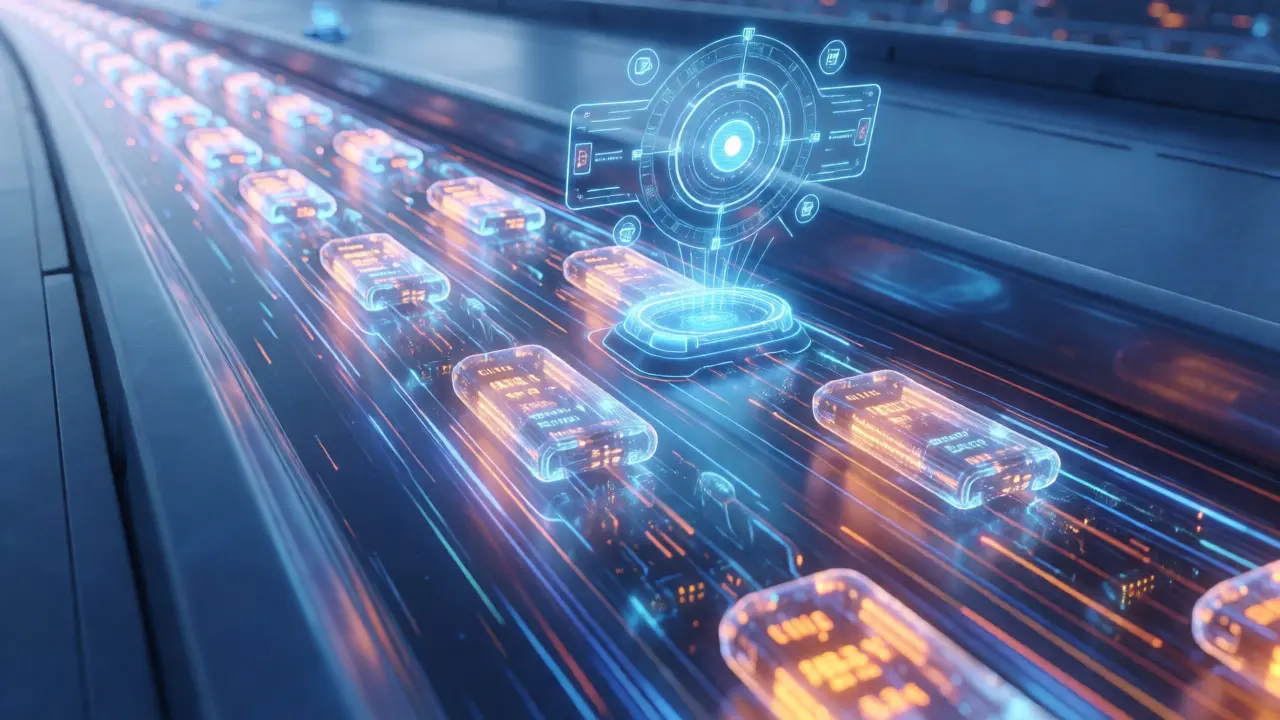
Security is usually the selling point for blockchain, but hackers are getting smarter too. They don’t just attack the wallet; they attack the interface between systems. Here is where the synergy gets interesting. Blockchain provides an immutable audit trail-you can’t delete history. AI uses that history to spot weird behavior instantly. An AI system monitoring a decentralized network can detect anomalies 227 milliseconds faster than conventional methods. That sounds small, but in high-frequency trading or healthcare data transfers, milliseconds are money-and privacy. Plus, because the data is spread across a decentralized ledger, there’s no single point of failure. IBM Security noted that removing these single points accounted for preventing 68% of data breaches in 2024. You get the transparency of blockchain with the proactive defense of AI.
Real-World Wins: Supply Chain and Healthcare
Enough with the tech specs. Where is this actually working? Look at supply chains. Maersk, a global shipping giant, used AI-blockchain integration to cut shipment verification time from 72 hours down to 22 minutes. That’s not a typo. Minutes, not days. The AI verifies the data coming from IoT sensors, and the blockchain records it immutably. If a container’s temperature drops, the AI flags it, and the blockchain proves when and where it happened. No more arguing over who lost the cargo.
In healthcare, the stakes are even higher. Patient data needs to be accessible but private. Keragon’s study showed that AI-enhanced blockchain networks process patient requests 92% faster while keeping HIPAA compliance tight. A hospital CIO reported a 41% reduction in medical record errors after implementation. When you combine AI’s ability to sort through messy data with blockchain’s ability to prove who accessed what, you solve the biggest headache in digital health: trust without bureaucracy.
The Cost of Entry: Complexity and Talent
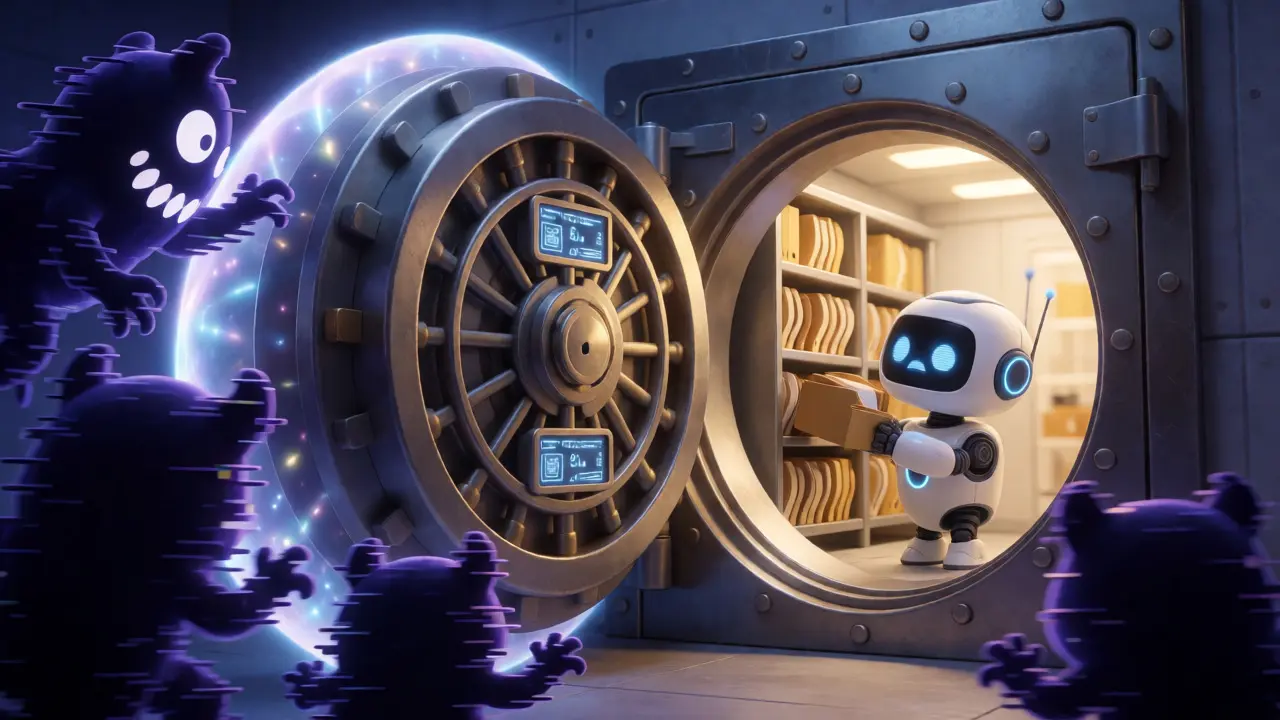
It’s not all sunshine and rapid transactions. Integrating these two beasts is hard. Architect Partners warned that 23% of early implementations faced vulnerabilities at the interface layer-the exact spot where AI meets blockchain. Why? Because they speak different languages. AI is probabilistic (it guesses based on likelihood); blockchain is deterministic (it knows for sure). Bridging that gap requires specialized talent. LinkedIn’s workforce analysis found only 12,000 professionals globally with deep expertise in both domains. If you’re planning a rollout, expect to hire cross-functional teams of 12-15 specialists. Budget also takes a hit; successful projects allocate nearly 25% of their budget just to data preparation and standardization. Don’t underestimate the cleanup work needed before the AI can start doing its job.
Future Outlook: Specialization is Key
We are moving away from generic "AI + Blockchain" solutions toward highly specialized tools. IDC predicts that by 2027, 75% of enterprise blockchain implementations will use purpose-built AI components. We’re already seeing this with IBM integrating Watson into Hyperledger Fabric for real-time predictive analytics. The trend is clear: the more specific the use case, the better the result. Whether it’s autonomous DAOs managing funds or AI optimizing energy consumption in consensus mechanisms (down by 82% in new models), the technology is maturing fast. If you’re sitting on the fence, remember that ROI for enterprise users averages 14 months, with financial services seeing payback in under 12. The question isn’t if this integration works, but whether you can afford to wait for your competitors to perfect it.
Does AI make blockchain slower?
No, generally it makes it faster. While AI processing adds some computational load, its ability to optimize transaction ordering and predict network congestion typically results in a net increase in throughput. Benchmarks show optimized networks achieving up to 15,000 TPS compared to the traditional 15-20 TPS.
What are the main risks of integrating AI with blockchain?
The primary risks involve complexity and new vulnerability layers. The interface where AI models interact with blockchain ledgers can introduce bugs or security gaps if not properly secured. Additionally, there is a significant talent shortage, making implementation difficult and expensive for many organizations.
Can AI change historical data on a blockchain?
No. One of the core features of blockchain is immutability. AI can analyze, predict, and optimize future transactions or interpret existing data, but it cannot alter past blocks on the chain. This ensures that the audit trail remains tamper-proof.
Which industries benefit most from this integration?
Healthcare, financial services, and supply chain management are currently the top adopters. These sectors require high levels of data integrity, speed, and regulatory compliance, all of which are enhanced by combining AI's analytical power with blockchain's security.
Is this technology ready for small businesses?
It is becoming more accessible, but adoption is still lower among SMBs (14%) compared to large enterprises (41%). The complexity and cost of specialized personnel can be barriers, though cloud-based solutions are gradually lowering the entry threshold.


Write a comment