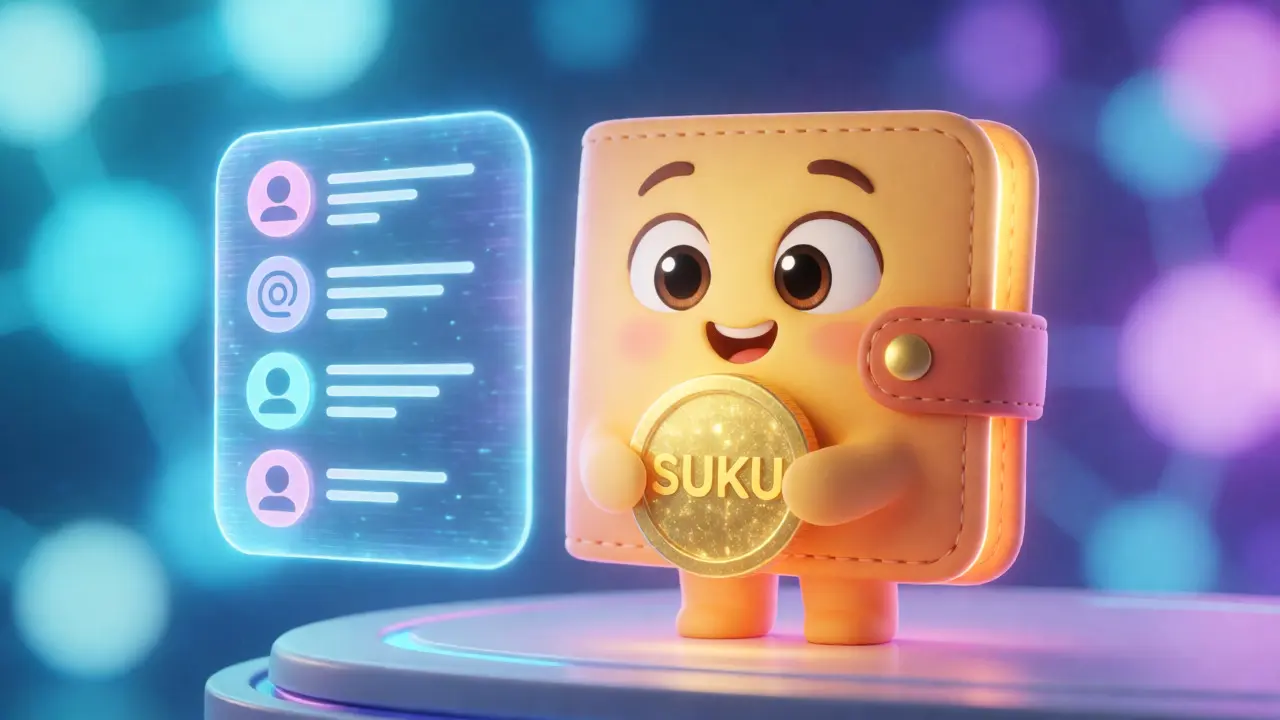
Everyone loves free money, right? But in the world of Crypto and Web3, "free" usually comes with strings attached. If you've been hearing whispers about the SUKU airdrop, specifically regarding their NFT initiatives, you're probably wondering if it's worth your time or just another hype train leaving the station without you. Let's cut through the noise. The reality is that while SUKU has made waves with its user-friendly approach to blockchain, the specific details around an NFT-focused drop require a closer look at how they actually operate.
The Reality Check on SUKU NFT Claims
Here is the tricky part: many projects slap the word "NFT" onto everything these days to catch attention. When we dig into what SukuWallet actually does, it becomes clear that SUKU isn't primarily an NFT marketplace like OpenSea or Rarible. Instead, it’s a Web3 infrastructure project designed to lower the barrier to entry for regular people. Their main selling point? Using social media handles instead of those scary, long hexadecimal addresses. So, when people ask about "SUKU NFTs," they are often conflating general token distribution with specific non-fungible token drops.
As of September 2026, the most concrete data we have suggests that SUKU's primary reward mechanism has been centered around its native token, SUKU, rather than exclusive NFT collections. There was a notable community initiative where approximately $10,000 worth of ETH was distributed to active users. While this wasn't strictly an "NFT airdrop" in the traditional sense of dropping unique digital art, it served the same purpose: rewarding early adopters who engaged with the ecosystem. If you are hunting for a specific, limited-edition NFT collection from SUKU, keep your expectations grounded. The project’s focus remains on utility and accessibility over speculative digital collectibles.
How SukuWallet Actually Works (And Why It Matters)
To understand any potential future rewards, you need to understand the product. SukuWallet is built to simplify interactions with decentralized applications (dApps). Think of it as the bridge between the complex backend of blockchain and the simple interface of social media. By integrating with Reown (formerly WalletConnect), it allows seamless transactions across major platforms like Uniswap, Rarible, and Curve.
The killer feature here is "zero-onboarding." You don't need to memorize a seed phrase immediately or worry about gas fees in the traditional way. The wallet handles the complexity, letting you send assets using an X (Twitter) handle. This is huge for mass adoption. If SUKU decides to launch an NFT-specific campaign in the future, it will likely leverage this handle-based system. Imagine claiming an NFT by simply tweeting at a bot-that’s the kind of frictionless experience they are building toward.

Tokenomics: Where the Value Comes From
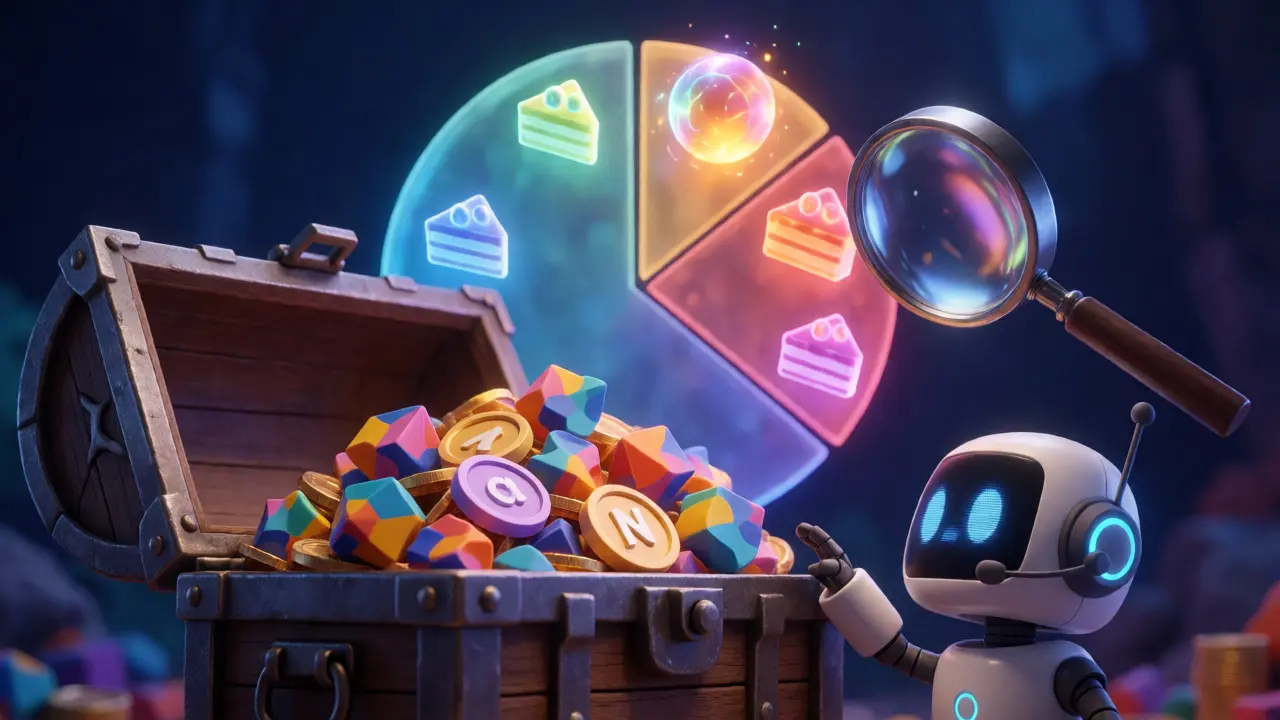
Airdrops aren't magic; they are funded by the project's treasury. Understanding the tokenomics of SUKU helps you gauge whether there is room for future distributions. The total supply structure is quite detailed, designed to balance incentives for partners, developers, and the team itself.
| Allocation Category | Percentage of Supply | Purpose |
|---|---|---|
| Trading Partners | 28% | Incentivizing exchanges and market makers |
| Ecosystem Partnerships | 7.5% | Existing integrations and collaborations |
| Tech & Community Dev | 26.8% | Funding development and community growth |
| Operations & Expansion | 20% | Running the business and scaling |
| Private Sales | 12.9% | Early investors (locked) |
| Founding Team | 10% | Vested over time to align interests |
| Listings & Liquidity | 2.3% | Initial exchange listings |
Notice that a significant chunk-over 26%-is reserved for technology partnerships and community development. This is your pool. If SUKU launches an NFT campaign, it would likely draw from this budget to fund the creation and distribution of assets. However, remember that private sales tokens are locked, which reduces immediate sell pressure but also means less liquid capital for spontaneous marketing stunts.
Eligibility: Who Gets the Drop?
If you missed the initial ETH distribution, don't panic. Crypto projects rarely stop rewarding users after one event. Based on SUKU's history and similar Web3 projects, eligibility for future drops typically hinges on three factors:
- Active Engagement: Did you use SukuWallet for transactions? Simply holding the app isn't enough. Interacting with dApps via Reown integration counts.
- Social Presence: Since SUKU relies on handle-to-handle transactions, having an active X account linked to your wallet is crucial. They track activity through these identifiers.
- Community Participation: Early testers and bug reporters often get priority. If you were part of the beta testing phase, you might already be in line for retroactive rewards.
There is no public registry of "winners" for past drops that lists every single address, so checking your own activity log is the best bet. Keep an eye on official channels for snapshot dates. A "snapshot" is when the blockchain records the state of wallets at a specific block height to determine who qualifies.
Market Performance and Future Outlook
Let's talk numbers. As of late 2025/early 2026, the SUKU token has been trading around $0.0269 USD. With a daily volume hovering near $425,000, it’s not a whale-sized asset, but it shows steady interest. Predictions suggest modest growth, with some analysts projecting a 4-5% ROI over short-term holds. This stability is good news for airdrop hunters because it means the rewards won't instantly crash to zero due to volatility.
However, SUKU faces stiff competition. Projects like MetaMask and Phantom dominate the wallet space. For SUKU to justify further airdrops, they need to prove that their handle-based system drives more transaction volume than competitors. If adoption spikes, expect more frequent, smaller rewards rather than one massive jackpot.
How to Position Yourself for Future Drops
You can't control the blockchain, but you can control your actions. Here is a practical checklist to maximize your chances of catching the next SUKU reward wave:
- Download and Verify: Ensure you are using the latest version of SukuWallet from official sources only. Phishing sites love fake airdrop announcements.
- Link Your Handles: Connect your X (Twitter) account securely. This is the core of their identity verification.
- Execute Transactions: Don't just sit idle. Swap small amounts on Uniswap or mint a test NFT on Rarible through the wallet. Activity beats existence.
- Follow Official Announcements: Subscribe to their newsletter or Discord. Real airdrops are announced clearly, not hidden in obscure tweets.
Remember, if an "airdrop" asks you to pay a large fee upfront to claim it, it’s likely a scam. Legitimate SUKU rewards are usually distributed directly to eligible wallets or claimed via a simple, low-cost transaction.
Is there a specific SUKU NFT collection I should buy now?
Currently, SUKU does not have a widely recognized standalone NFT collection comparable to Bored Apes. Their focus is on the wallet utility. Buying speculative NFTs hoping for a pump is risky unless SUKU explicitly announces a partnership or launch.
How do I check if I received the previous ETH airdrop?
Check your transaction history in SukuWallet or your linked Ethereum address explorer. Look for incoming transfers from known SUKU treasury addresses during the announcement period. Small amounts (around $4-$5 equivalent) were typical for individual allocations.
Why is SUKU using Twitter handles instead of wallet addresses?
To reduce friction. Traditional crypto requires copying long alphanumeric strings, which leads to errors. Handle-to-handle payments make sending crypto as easy as tagging a friend, aiming to bring non-crypto natives into the ecosystem.
What is the current price of the SUKU token?
As of recent data, SUKU trades around $0.0269 USD. Prices fluctuate based on market sentiment and trading volume, which has been averaging roughly $425,000 per day.
Are airdrops guaranteed for all SukuWallet users?
No. Airdrops are typically reserved for active users who meet specific criteria, such as transaction count, social engagement, or early adoption status. Passive holders may miss out.

Write a comment