It is easy to stumble upon the name ZUBR when researching old-school crypto derivatives platforms. You might see it listed in historical data or mentioned in discussions about institutional-grade trading infrastructure. But here is the hard truth you need to know right now: ZUBR is no longer an independent, active trading platform for retail users. The story of this exchange is tied directly to one of the biggest collapses in cryptocurrency history.
If you are looking to open a new account today, you will not find a working registration page. If you are researching past transactions or trying to understand what happened to your funds from years ago, you have come to the right place. This review breaks down exactly what ZUBR was, why it mattered, how it ended up under FTX Trading Limited, and where things stand in 2026.
What Was ZUBR?
To understand the current status, we first need to look at what the platform promised. ZUBR launched as a high-performance crypto derivatives exchange focused on professional traders. Unlike many spot exchanges that started with simple buy-and-hold features, ZUBR built its entire infrastructure around perpetual contracts and futures.
The core value proposition was speed and fairness. In the early days of crypto derivatives, large institutions often got preferential treatment-faster execution speeds and better tools-while smaller traders were left behind. ZUBR’s CEO, Ilgar Alekperov, publicly criticized this model. He argued that the market was "suffocated by players who marginalise smaller traders." ZUBR aimed to fix this by offering microsecond execution speeds and institutional-grade technology to everyone, regardless of their account size.
Key features included:
- Perpetual Contracts: Traders could speculate on price movements without owning the underlying asset.
- Leverage: Up to 20x leverage was available, allowing for amplified gains (and losses).
- Low Fees: They claimed to have the lowest fee structure in the market at the time.
- Colocation: London-based facilities provided ultra-low latency for high-frequency traders.
The Quest for Trust and Regulation
In the wild west of crypto, trust is everything. ZUBR knew this, so they invested heavily in third-party verification to prove they weren’t just another sketchy offshore operation.
One major milestone was achieving A+ Verified Exchange certification from Nomics in November 2020. Nomics is an institutional ranking program that requires deep data integration. To get this badge, ZUBR had to feed historical execution data and order book snapshots to Nomics. This level of transparency was rare. It placed ZUBR in the same league as established names like Deribit and IDEX.
They also partnered with Exactpro, a specialist firm known for testing financial infrastructure. Exactpro tested ZUBR’s trading engine for functional and non-functional performance. Being the first live digital derivatives platform to pass this rigorous testing was a significant technical achievement. It meant their risk engine could handle high-frequency trading environments without breaking.
From a compliance standpoint, ZUBR labeled its wallets as "Trusted Exchange" in Crystal’s database. This indicated they followed Anti-Money Laundering (AML) and Know Your Customer (KYC) checks aligned with Financial Action Task Force recommendations. For a derivatives platform, this was a strong signal of legitimacy.
The FTX Acquisition and Collapse
This is where the story takes a dark turn. ZUBR did not fail on its own merits; it was swallowed by a giant that subsequently imploded.
ZUBR was acquired by FTX Trading Limited. Following the acquisition, the platform rebranded as "ZUBR an FTX Company." As part of this corporate restructuring, ZUBR obtained a Distributed Ledger Technology (DLT) Provider License in Gibraltar. On paper, this looked like a win. Gibraltar is a respected jurisdiction for fintech, and having a license there suggested stability and regulatory oversight.
However, the parent company, FTX, collapsed in November 2022. The fraud allegations, bankruptcy proceedings, and loss of billions of dollars in customer funds sent shockwaves through the entire industry. Because ZUBR was fully integrated into the FTX ecosystem, its operational status became uncertain almost overnight.
As of mid-2026, ZUBR does not operate as an independent entity. There is no public evidence of it reopening under new management. The assets and liabilities of FTX subsidiaries are typically handled within the broader bankruptcy estate. This means that for all practical purposes, ZUBR is defunct.
Is ZUBR Safe to Use Today?
No. You cannot use ZUBR today. There is no website, no app, and no support team accepting new deposits.
If you are asking this question because you still have funds stuck in an old account, the situation is complex. Generally, claims related to FTX subsidiaries must be filed through the official FTX bankruptcy claim process. However, timelines for these recoveries can stretch for years, and outcomes vary based on individual circumstances and local laws.
For new traders, the lesson here is critical: even platforms with strong technical credentials, third-party audits, and regulatory licenses can vanish if their parent company fails. Diversification of custody and choosing platforms with transparent proof-of-reserves are essential practices.
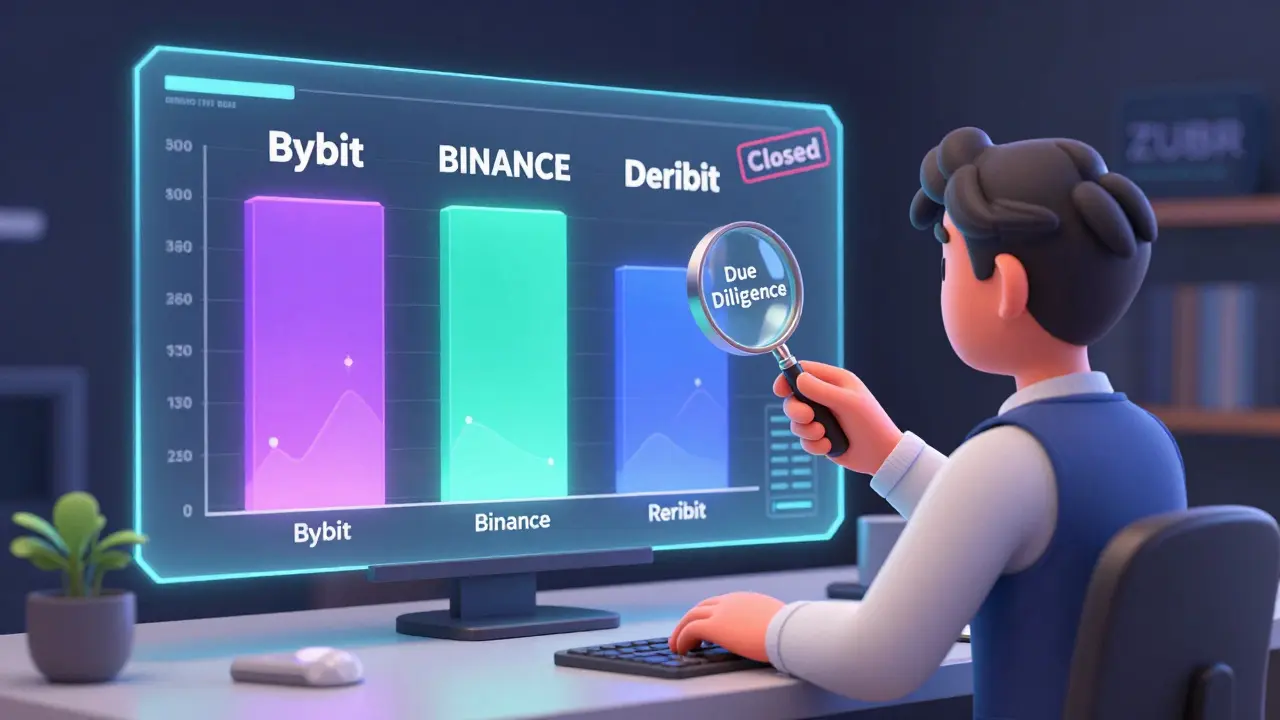
Comparison: ZUBR vs. Modern Alternatives
| Feature | ZUBR (Pre-2022) | Bybit | Binance Futures | Deribit |
|---|---|---|---|---|
| Status | Defunct / Acquired by FTX | Active | Active | Active |
| Primary Focus | Crypto Derivatives | Derivatives & Spot | Derivatives & Spot | Options & Futures |
| Regulation | Gibraltar DLT License | Varies by Region | Varies by Region | Seychelles / Global |
| Leverage | Up to 20x | Up to 100x+ | Up to 125x | Up to 100x |
| User Base | Institutional & Pro Retail | Retail & Pro | Retail & Institutional | Professional Traders |
Lessons Learned from the ZUBR Case
The rise and fall of ZUBR offers several key takeaways for anyone involved in cryptocurrency trading:
- Parent Company Risk Matters: Even if a specific platform like ZUBR was well-run, being owned by a risky entity like FTX created a contagion effect. Always check who owns the exchange.
- Audits Are Not Insurance: ZUBR had Exactpro testing and Nomics certification. These are excellent indicators of quality, but they do not protect against corporate fraud or bankruptcy at the holding company level.
- Regulatory Licenses Can Be Fragile: A Gibraltar license sounded secure, but it did not prevent the platform from disappearing when the parent company collapsed. Regulatory status changes quickly in crises.
- Data Transparency Helps: ZUBR’s commitment to sharing data with Nomics and Crystal helped build trust while it was active. Today, look for exchanges that publish regular Proof-of-Reserves.
Frequently Asked Questions
Is ZUBR crypto exchange still operational in 2026?
No, ZUBR is not operational. It was acquired by FTX Trading Limited and ceased independent operations following the collapse of FTX in late 2022. There is no current way to trade on the ZUBR platform.
What happened to my funds on ZUBR after the FTX acquisition?
Funds held on ZUBR were likely consolidated into the FTX ecosystem. Due to the bankruptcy of FTX, recovery of funds depends on the official bankruptcy claim process. Users should consult legal advice or monitor official updates from the FTX bankruptcy estate for any potential distributions.
Was ZUBR a legitimate and safe exchange before it closed?
Yes, during its independent operation, ZUBR was considered legitimate. It held a Gibraltar DLT license, passed rigorous testing by Exactpro, and achieved A+ Verified Exchange status from Nomics. Its failure was due to its association with FTX, not inherent flaws in its own initial operations.
Who founded ZUBR exchange?
ZUBR was led by CEO Ilgar Alekperov. He positioned the platform as a fair alternative to other derivatives exchanges, focusing on democratizing access to institutional-grade trading infrastructure.
What types of products did ZUBR offer?
ZUBR specialized in crypto derivatives, specifically perpetual contracts. It offered leverage up to 20x and focused on providing low-latency execution for both retail and institutional traders.
Can I still log in to the ZUBR website?
The original ZUBR website is no longer functional for trading. Any attempt to access it may lead to archived pages or error messages. Do not enter personal information or login credentials on any site claiming to be the active ZUBR exchange, as this could be a phishing scam.



Write a comment