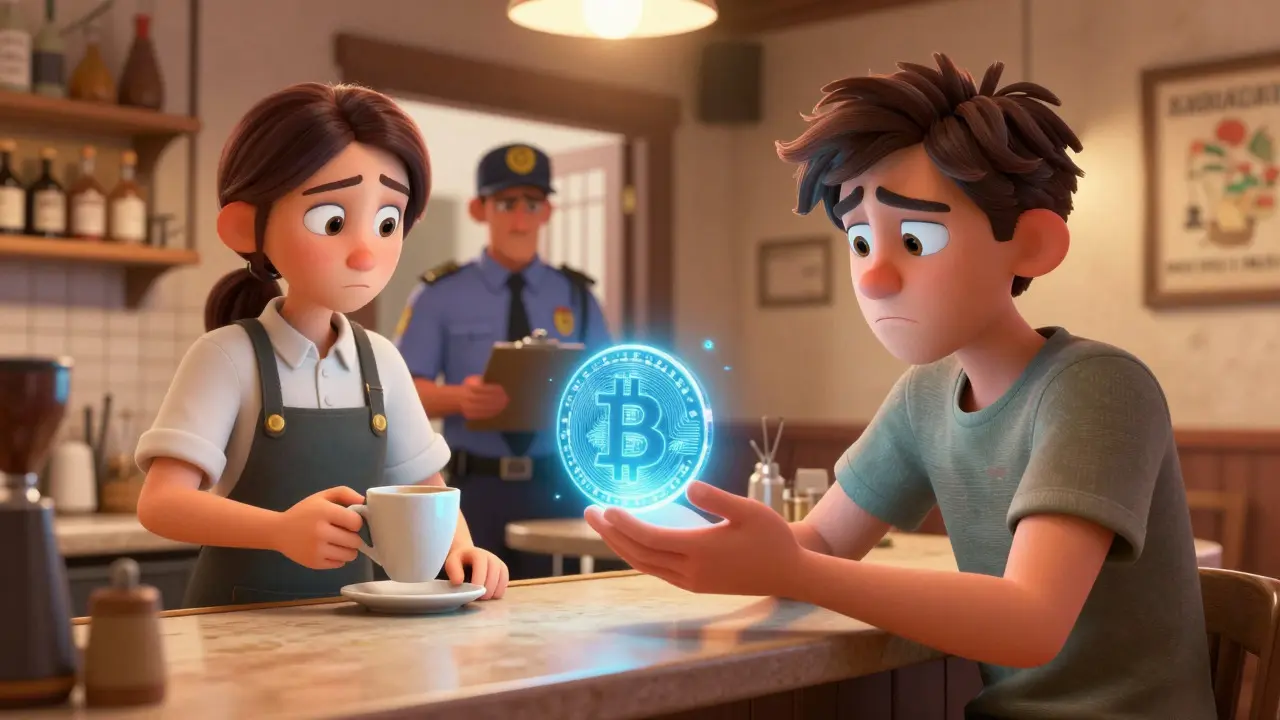
Imagine trying to buy a coffee with Bitcoin in Tunis. You’d likely end up with nothing but a headache-and possibly a visit from customs officials if you tried to bring the mining rig needed to earn that Bitcoin in the first place. For anyone living in or doing business with Tunisia is a North African nation that has implemented one of the world’s strictest prohibitions on virtual currencies, the reality of the cryptocurrency landscape is stark. It isn’t just discouraged; it is effectively criminalized.
If you clicked this title, you are probably wondering why a country would go so far as to ban digital assets entirely, how they enforce such a rule, and whether there is any light at the end of the tunnel for tech enthusiasts and investors. The short answer? It comes down to protecting the national currency, preventing capital flight, and maintaining tight control over financial flows. But the story is more nuanced than a simple "no."
The Core Legal Framework: Why Everything Is Banned
To understand the current situation, we have to look back to May 2018. That is when the Central Bank of Tunisia (BCT) issued a directive prohibiting all transactions involving virtual currencies without explicit state authorization. This wasn’t a soft suggestion. It was a blanket prohibition that covers almost every aspect of the crypto ecosystem.
Here is what is strictly forbidden under this framework:
- Trading and Exchanges: Operating a crypto exchange or even facilitating trades between individuals is illegal.
- Mining: Running mining operations is prohibited. Customs authorities are empowered to seize ASIC miners upon import. Even if you manage to mine coins, converting them into the Tunisian dinar violates the 2018 directive.
- Payments: Merchants cannot accept Bitcoin, Ethereum, or any other token as payment for goods or services.
- Banking Support: Local banks are barred from processing transactions related to crypto. If you try to use your Tunisian bank card on a foreign exchange like Binance or Coinbase, the transaction will likely be blocked.
The penalties for breaking these rules are severe. Under currency-control regulations, violations can lead to heavy fines and imprisonment of up to five years. This applies to everyone-from the big-time operator running an underground exchange to the teenager who tried to swap a small amount of Bitcoin for cash. In fact, a high-profile case in 2021 involving a jailed teenager sparked national debate, highlighting how aggressively the law is applied to individual citizens.
The Economic Logic Behind the Ban
Why does Tunisia take such a hardline stance compared to its neighbors or global peers? It boils down to three main economic fears identified by the Central Bank of Tunisia and the Ministry of ICT & Digital Economy oversees digital transformation initiatives while monitoring compliance with financial regulations.
- Capital Flight: Tunisia faces ongoing balance of payments challenges. When people move money into cryptocurrencies, that capital often leaves the country’s formal banking system. This makes it harder for the central bank to manage foreign exchange reserves and stabilize the dinar.
- Money Laundering: The anonymity features of some cryptocurrencies make them attractive for illicit activities. The government wants to ensure that all financial movements are traceable to prevent fraud and terrorism financing.
- Monetary Policy Control: If citizens start using stablecoins or Bitcoin as their primary store of value, the Central Bank loses leverage over inflation and interest rates. By banning alternatives, they maintain exclusive control over the monetary supply.
This approach puts Tunisia in a small club of countries with total bans, alongside nations like China, Egypt, and Morocco. While places like Germany and Singapore have built robust regulatory frameworks to welcome crypto innovation, Tunisia prefers the safety of prohibition.

Enforcement in Practice: How Do They Catch You?
You might wonder how a government enforces a ban on something that lives on the internet. The enforcement mechanisms in Tunisia are surprisingly effective because they target the entry and exit points of value.
First, there is the banking chokehold. Since local banks block transfers to known exchanges, users have to find creative ways to move fiat money out. This usually involves peer-to-peer (P2P) meetings or using informal hawala-style networks, which are risky and unregulated.
Second, customs play a huge role. If you try to import mining hardware, expect trouble. Customs officers are trained to identify ASIC rigs and will confiscate them. This creates a physical barrier to entry for miners.
Third, the legal system uses Anti-Money Laundering (AML) laws as a tool. Businesses must perform Customer Due Diligence (CDD) and Know Your Customer (KYC) checks. If a suspicious transaction occurs-say, a large, unexplained deposit-it gets reported to the Tunisian Financial Analysis Committee (CTAF) handles financial intelligence and investigation of suspicious transactions within ten days. This means that even if you aren’t directly trading crypto, holding unexplained wealth derived from it can trigger an investigation.
| Feature | Tunisia | Global Average (e.g., EU, UK) |
|---|---|---|
| Legal Status of Trading | Criminalized | Regulated/Legal |
| Mining Operations | Banned (Hardware Seized) | Legal (Taxed) |
| Merchant Payments | Prohibited | Allowed |
| Banking Integration | Blocked | Integrated |
| Penalties | Fines + Up to 5 Years Jail | Fines/Taxes |
The Exception: Blockchain Without the Coin
Here is where things get interesting. While Tunisia hates *cryptocurrencies*, it doesn’t hate *blockchain technology*. In fact, there is a growing distinction being made between the speculative asset (the coin) and the underlying ledger technology.
In 2020, the Central Bank launched a regulatory sandbox. This allowed a select group of fintech startups to test blockchain solutions under strict supervision. Companies like VFunder (for crowdfunding) and Hydro E-Blocks (for carbon tracking) participated. These projects used permissioned ledgers to improve transparency and efficiency without issuing tradable tokens.
The government sees potential in using blockchain for:
- Land Registry: Digitizing property records to reduce fraud.
- Subsidy Distribution: Ensuring social aid reaches the right people without leakage.
- Supply Chain Transparency: Tracking agricultural products from farm to export.
This shows that the ban is specifically targeted at the financial instability caused by volatile digital assets, not necessarily the technological benefits of distributed ledgers. However, for the average user wanting to trade Bitcoin, this distinction offers little comfort.
What Does the Future Hold?
As of 2026, the winds of change are beginning to blow, though slowly. The absolute ban is showing cracks. Parliamentary committees have been discussing draft bills to decriminalize the mere possession of cryptocurrency. The goal isn’t necessarily to open the floodgates, but to create a licensing regime that allows for controlled participation.
Several factors are pushing for this shift:
First, the underground market is too big to ignore completely. Despite the risks, P2P trading continues. A regulated framework could bring these transactions into the light, allowing for taxation and oversight rather than leaving them in the shadows.
Second, international pressure is mounting. Organizations like the Financial Action Task Force (FATF) encourage countries to regulate rather than ban, arguing that bans drive activity underground where it is harder to monitor. As global adoption grows-with giants like Microsoft and PayPal integrating crypto-Tunisia risks becoming increasingly isolated in the digital economy.
However, don’t expect a sudden liberalization. The Central Bank remains cautious. Any future changes will likely come with heavy restrictions, such as requiring licensed custodians, limiting daily transaction volumes, and imposing strict KYC requirements. The focus will remain on protecting the dinar and preventing capital flight.
Practical Advice for Residents and Expats
If you are living in Tunisia and want to engage with the crypto world, proceed with extreme caution. Here are some practical steps to consider:
- Avoid Public Transactions: Do not advertise that you accept crypto payments. Keep your activities private.
- Use Non-Custodial Wallets: Store your assets in wallets where you hold the private keys. Avoid keeping funds on exchanges linked to your identity, as these can be frozen or traced more easily.
- Be Careful with Imports: Never declare crypto-related hardware on customs forms unless you have specific clearance. Assume it will be seized.
- Understand the Risk: Accept that the legal risk is real. The five-year prison sentence is not theoretical; it has been applied. Weigh the potential gains against the possibility of losing your freedom.
For businesses, the safest route is to explore the regulatory sandbox if you have a legitimate use case for blockchain technology that doesn’t involve issuing tokens. Partnering with established fintech firms already in the sandbox can provide a layer of protection and guidance.
Is it illegal to own Bitcoin in Tunisia?
Technically, yes. The 2018 Central Bank directive prohibits all virtual currency transactions without authorization. While owning a coin isn't always prosecuted, exchanging it for dinars or importing hardware to mine it is strictly illegal and carries penalties including fines and up to five years in prison.
Can I use my Tunisian bank card to buy crypto on Binance?
No. Tunisian banks are instructed to block transactions with foreign cryptocurrency exchanges. Attempts to pay via credit or debit card will typically result in a declined transaction. Users often resort to peer-to-peer methods, but these carry higher risks of fraud and legal scrutiny.
Will the crypto ban be lifted soon?
There is no set date for lifting the ban, but discussions are underway. As of 2025-2026, parliamentary committees are considering bills to decriminalize possession and introduce a licensing regime. However, full legalization similar to Europe or Asia is unlikely in the immediate future due to concerns about capital flight and currency stability.
Are there any exceptions for blockchain technology?
Yes. While cryptocurrencies are banned, blockchain technology itself is being explored through the Central Bank's regulatory sandbox. Startups can apply to test blockchain solutions for supply chain, land registry, and remittances under strict supervision, provided they do not issue tradable tokens.
What happens if customs finds a mining rig?
Customs authorities are authorized to seize ASIC mining rigs upon import. Additionally, if you are found to be operating a mining operation domestically, you face fines and potential imprisonment. The equipment is considered contraband related to illegal financial activities.



Write a comment