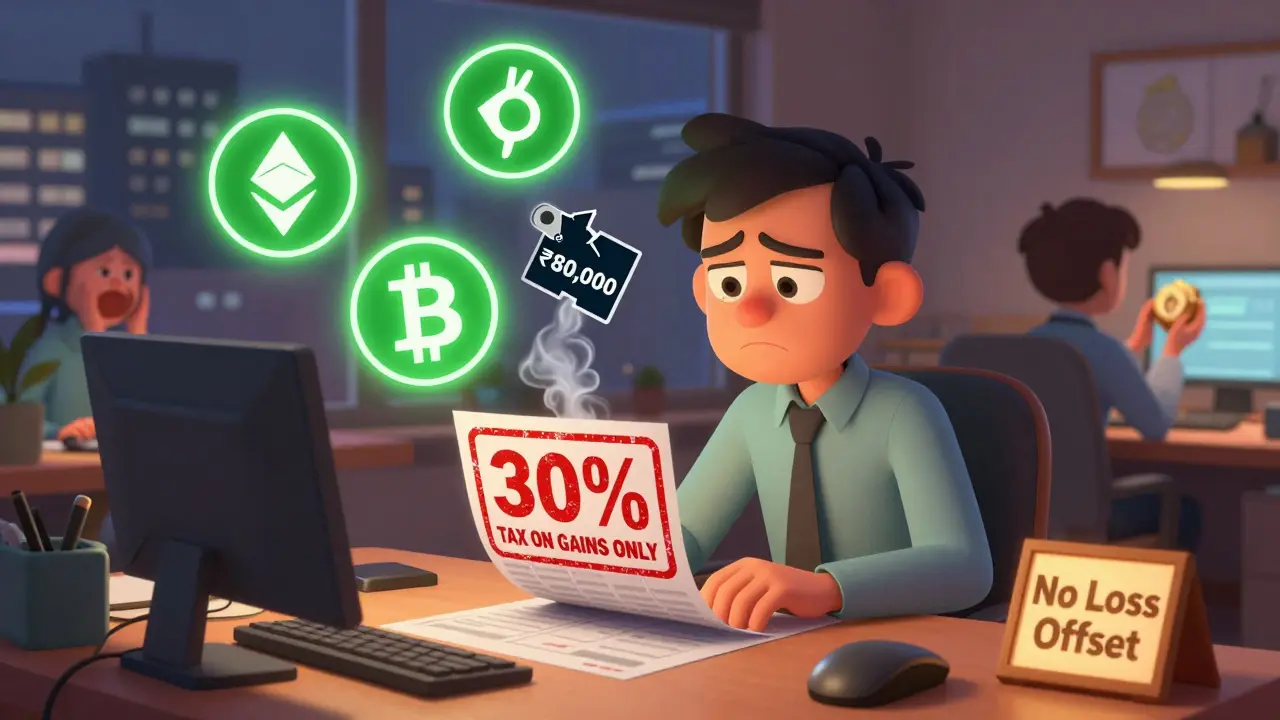
No Loss Offset Rule in India: How It Hurts Crypto Traders
India's no loss offset rule forces crypto traders to pay tax on every profit while ignoring losses, creating a harsh and unfair tax burden that's unlike any other asset class in the country.
 6 Mar 2026
India's no loss offset rule forces crypto traders to pay tax on every profit while ignoring losses, creating a harsh and unfair tax burden that's unlike any other asset class in the country.
 5 Mar 2026
Crypto exchanges in 2026 are no longer just trading platforms - they’re evolving into full-service financial hubs powered by AI, regulated by clear rules, and backed by institutions. Here’s how they’re changing - and what it means for you.
 4 Mar 2026
The Kimchi premium explains why Bitcoin costs significantly more in South Korea than elsewhere. This price gap, driven by high local demand and strict capital controls, persists despite global arbitrage attempts and remains a key indicator of Korea’s unique crypto market dynamics.
 1 Mar 2026
ASIC resistance keeps cryptocurrency mining open to everyday users by making specialized hardware unprofitable. Monero leads the way with RandomX, but it's an ongoing battle against powerful ASIC manufacturers.
 28 Feb 2026
Broccoli (BROCCOLI) is a meme crypto coin tied to a viral moment involving Binance CEO CZ's dog. With zero trading fees, a fixed supply of 1 billion tokens, and community-driven governance, it's a low-cost, high-risk play for crypto traders looking for fun-not fundamentals.
 27 Feb 2026
Shanghai Inu (SHANG) is a meme crypto token with no real utility, minimal trading volume, and no development activity. Despite its catchy name tied to the Ethereum Shanghai Upgrade, it remains a high-risk, low-value asset with almost no adoption.
 26 Feb 2026
Despite regulatory restrictions, over 4 million Saudis access cryptocurrency exchanges through global platforms like Binance and P2P trading. Learn how they bypass banking bans, fund accounts, and navigate legal gray zones-with real data from 2025.
 24 Feb 2026
Virtual land ownership in the metaverse is no longer just speculation-it's a functional digital economy. Learn how it works, who's making money, and what you need to know before buying in 2026.
 23 Feb 2026
The FEAR token airdrop in 2021 was a simple social media giveaway that offered free tokens to anyone who clicked a link. Today, it's a relic - with no active development, no game, and minimal trading volume. Here's what happened, why it failed, and how crypto airdrops have changed forever.
 22 Feb 2026
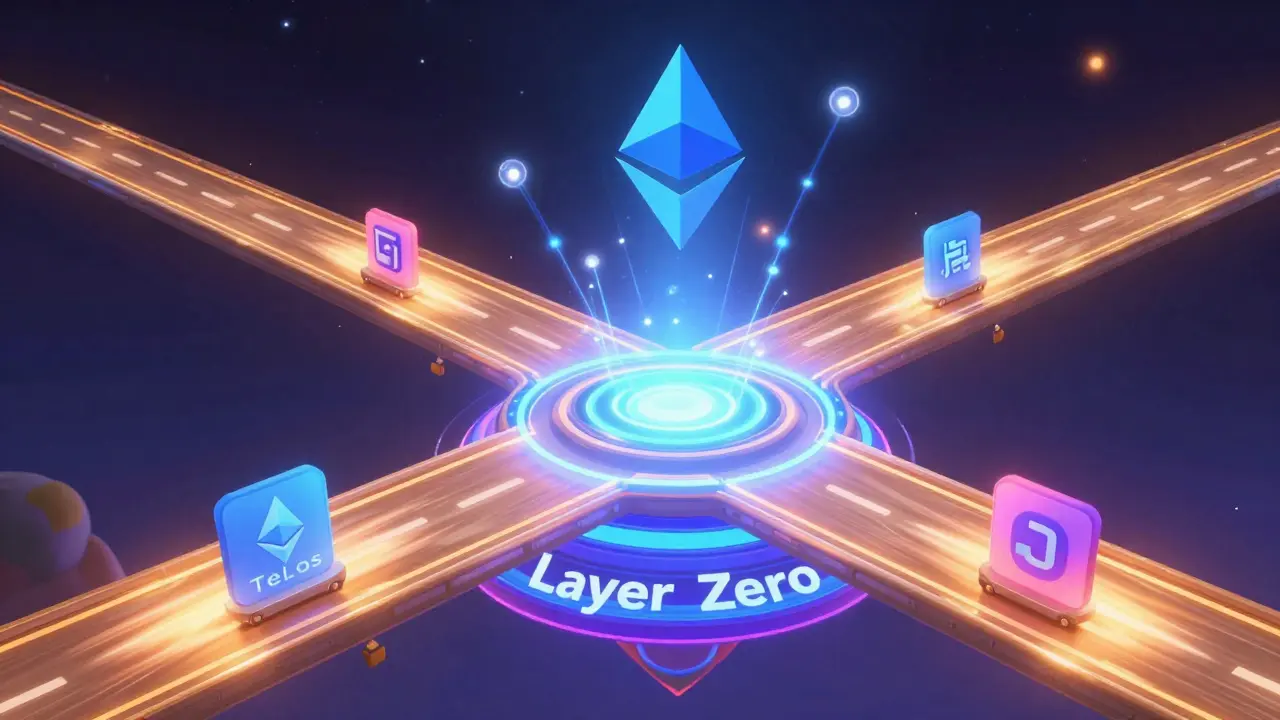
Telos (TLOS) is a high-speed blockchain built for real-world apps, offering Ethereum compatibility with 15,200 TPS and built-in privacy. Unlike most cryptos, it's governed by its community - not a company.
 21 Feb 2026
In 2025, U.S. sanctions on Syria were fully lifted, allowing Syrian crypto users to access global exchanges, mining tech, and DeFi services for the first time in over two decades. Compliance now focuses on targeting regime affiliates, not civilians.
 20 Feb 2026
Despite being officially banned, Pakistan's crypto market surged to $300 billion in annual trading volume by 2025, driven by millions using peer-to-peer platforms to bypass banking restrictions and protect savings from currency collapse.